Cameroon Faces Instability as Biya Death Rumors Rock Financial Markets
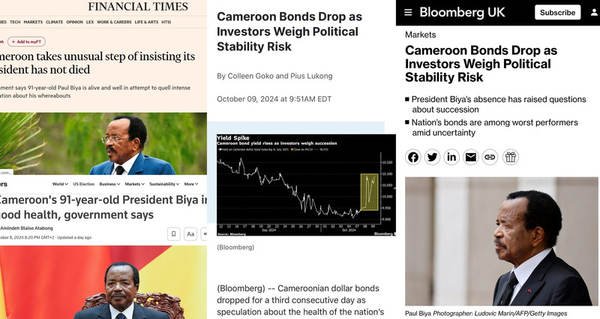
The recent panic within the Cameroonian government over the rumored death of President Paul Biya has exposed deeper underlying concerns about the country's political and economic stability.
A political analyst with knowledge of the Biya regime offers insights into the broader implications of this situation. Here's a breakdown of why the regime reacted so sharply and what it signals for Cameroon’s future:
The Immediate Crisis: Rumors of Biya’s Demise
The Cameroonian government's unusual silence in the face of widespread rumors regarding President Biya’s death raised significant questions. For nearly a week, no official statement was released, fueling speculation and concern among Cameroonians. The government's eventual response seemed to be triggered less by internal pressure and more by international reactions, particularly the attention from international media and the financial markets.
Why the Panic?
-
International Capital Markets Reaction: Cameroon has increasingly relied on the international sovereign debt market to secure funding through the sale of bonds. The latest issuance of $550 million in sovereign bonds in July 2024 came with higher interest rates (10.75%) and a shorter maturity period compared to previous bonds. This shift reflected growing concerns among investors over political stability, specifically regarding the uncertainty surrounding President Biya's eventual succession.
When the rumor of Biya’s death gained traction internationally, it caused a swift and negative reaction in the financial markets, with Cameroon’s bonds dropping for three consecutive days. Investors, already wary of Biya’s health and the possibility of instability in his absence, saw the news as confirmation of their worst fears. This was not just about one man’s fate, but about the fragility of the entire political system that has been built around his 40-year rule.
-
Damage Control: Calming the Markets: The multiple communiqués released by Cameroonian officials were primarily aimed at the international community, particularly investors. They needed to reassure the markets that the country remained stable, regardless of the status of the president. However, the conflicting nature of these statements further undermined their credibility, amplifying concerns about leadership transparency and coherence within the regime.
-
Political Succession Concerns: Investors’ fears over Biya’s potential departure are rooted in the absence of a clear succession plan. At 91 years old, Biya’s long tenure has left the country’s political future uncertain. His party, the Cameroon People's Democratic Movement (CPDM), lacks a well-defined successor, and there are fears that his death could trigger internal power struggles within the regime, or worse, civil unrest. The regime’s response to the rumors was not just an attempt to manage perceptions but a reflection of the very real instability that could arise from Biya’s departure.
Lingering Questions
-
Where is President Biya?: Despite the government’s reassurances, Biya’s absence from key international events like the UN General Assembly and the Francophonie Summit has only fueled speculation. If he is indeed healthy, as claimed, his public appearances have been conspicuously missing during critical moments. This absence exacerbates the anxiety both within Cameroon and among international investors.
-
Why the Silence?: The regime's initial silence may reflect deeper internal uncertainties about how to manage the situation. It is unusual for a head of state to be absent from the public eye during a crisis of this magnitude, and this further calls into question the government's ability to handle a post-Biya scenario. The fact that it took international market panic to spur a response speaks volumes about where the regime’s priorities lie.
The Broader Implications
The current situation highlights the fragility of Cameroon’s political system, which is heavily centered around one figure. The absence of a clear succession plan has created a power vacuum that could lead to instability, both within the ruling elite and in the broader political landscape. For years, Cameroon has been able to maintain relative calm despite mounting internal challenges, such as the ongoing Anglophone crisis. However, the potential end of Biya’s era has made the cracks in the system more visible.
In the short term, the government's frantic efforts to calm international markets may provide temporary relief. However, without addressing the underlying issues of political succession and leadership transparency, these efforts will only delay a reckoning that seems increasingly inevitable.
Conclusion
The panic surrounding President Biya's rumored demise reveals deep-seated concerns about Cameroon’s future without him. The government’s erratic response, driven by international financial pressures, suggests that the regime is aware of its vulnerability. Without a clear plan for succession and a transparent approach to leadership, Cameroon risks facing political and economic instability in the near future. The pressing questions regarding Biya’s health and the future of the regime remain unanswered, and the country's fate hangs in the balance.
- Details
- News Team
- Hits: 1830
