Cameroon on Edge Ahead of October 12 Poll
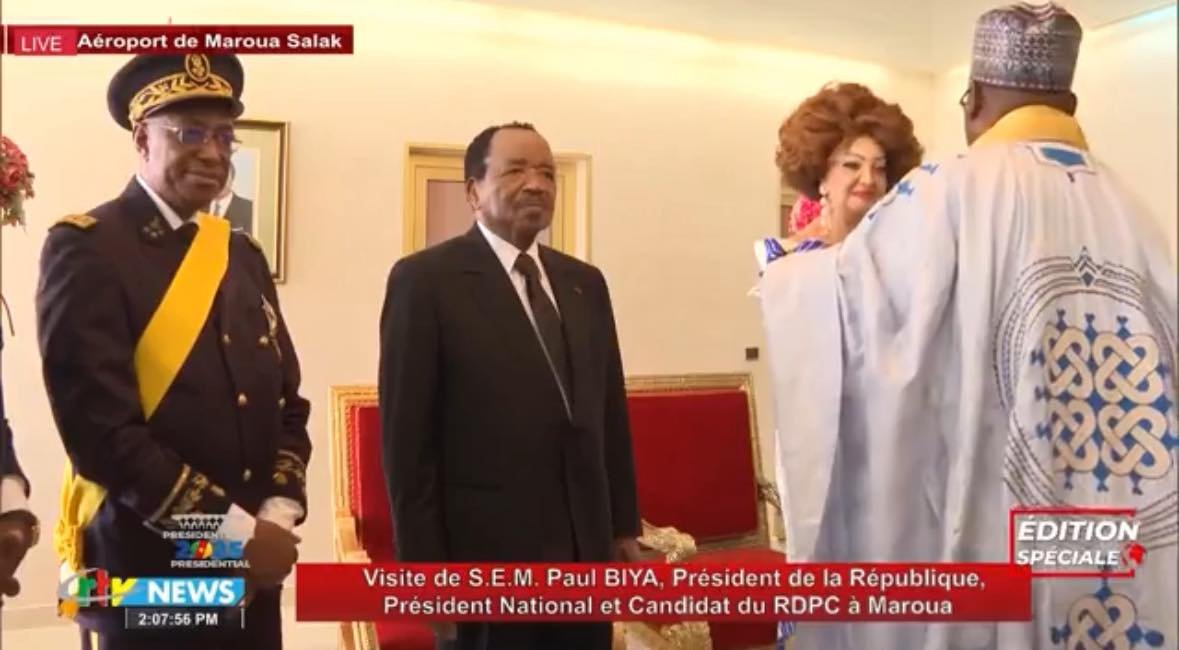
YAOUNDÉ, Oct 8 – Cameroon Concord — A fragile calm hangs over Cameroon as rebels fighting for the restoration of the statehood of former British Cameroon tighten their lockdown on the North West and South West regions, while President Paul Biya stages a carefully choreographed comeback in the Far North.
Lockdown Turns Regions Into Ghost Towns
Since 8 September, rebel militias have enforced a sweeping lockdown across the two English-speaking regions to disrupt the upcoming presidential election. Schools, markets, and bus stations stand deserted; the few travellers who dare the highways pass burned-out checkpoints and improvised barriers.
The shutdown has sent thousands fleeing toward Francophone cities. Local sources report that at least nine soldiers and a gendarme were killed between 5 and 12 September in the South West’s Fako division. In the North West, up to six civilians were allegedly executed near Bamenda for defying rebel orders, and armed groups mounted ambushes in Boyo, Momo and Bui divisions.
Behind the violence lies a political vacuum. Many residents say they feel trapped between state reprisals and rebel coercion, their faith in both sides long exhausted.
Biya Silent, Surrogates on Tour
President Biya’s July declaration of candidacy—made on social media—was followed by weeks of silence. In his stead, Prime Minister Joseph Dion Ngute and cabinet ministers criss-crossed the regions, rallying party officials and promising stability.
The ruling CPDM fears losses in the Far North, where two former allies, Issa Tchiroma and Bello Bouba, now run against their onetime leader. Biya’s prolonged absence—punctuated by a 21 September to 1 October stay in Switzerland “for private reasons”—fed speculation about his health and his grasp on the campaign.
Fractured Opposition, Familiar Weakness
Meanwhile, the opposition remains scattered. The Union for Change 2025, a coalition of 53 groups, endorsed Tchiroma on 13 September. Critics denounced the choice, recalling his years defending government abuses in both the northern and English-speaking zones.
Barred candidate Maurice Kamto urged the 11 remaining contenders to unite behind a single name—a call that yielded only partial results. By late September, Ateki Caxton and Akere Muna withdrew to back Bello Bouba, exposing the familiar pattern of fragmented ambition that has defined Cameroonian opposition politics for two decades.
Northern Front: Violence Beyond Politics
While attention centred on the Anglophone regions, insecurity persisted in the Far North. Boko Haram fighters 6–7 September killed at least four people in Mayo-Tsanaga division. Security forces 15 and 18 September repelled Islamic State West Africa Province (ISWAP) raids near Fotokol, and villagers reported some 20 abductions over the month.
The overlapping crises—jihadist in the north, separatist in the west—have drained the army and deepened public fatigue.
Biya’s Return in Maroua
After weeks of criticism, Paul Biya re-emerged 7 October in Maroua for his first campaign rally. The setting was deliberate: the Far North remains the CPDM’s most loyal base and a symbol of continuity. Under a blazing sun and amid fervent chants, the 85-year-old leader addressed thousands.
He promised jobs for the youth, better security in the north, and empowerment programs for women. Observers noted flashes of emotion as he thanked the region for its “unfailing loyalty.” His speech, though steeped in gratitude, offered little policy detail beyond assurances of peace and prosperity.
For supporters, the moment rekindled confidence. For critics, it underlined a pattern—Biya’s appearances timed to affirm control, not to engage.
Between Rebellion and Ritual
As Sunday’s vote nears, Cameroon drifts between rebellion and ritual. In the west, fear enforces silence; in the north, loyalty rehearses the familiar script of applause. Few expect surprises at the ballot box, yet many fear what follows it.
The government vows that elections will proceed nationwide. On the ground, polling officials whisper doubts about turnout and safety. The rebels’ threat to “make the region ungovernable” collides with the state’s determination to project order, leaving civilians to weigh risk against duty.
Cameroon stands again at a crossroads—where endurance passes for stability, and silence for peace.
- Details
- News Team
- Hits: 693
