Cameroon’s Political Crossroads: Nyamding Reveals Regime’s Succession Plans
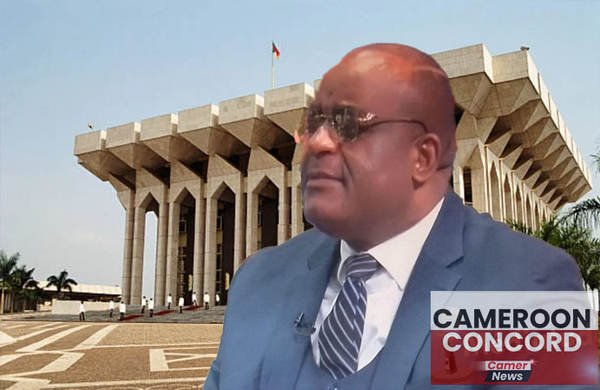
The Cameroonian political landscape has been shaken by a revealing statement from Charlemagne Messanga Nyamding on Vision 4’s Club d’élites talk show. Messanga Nyamding, known for his insider status within the regime, confirmed that Biya loyalists have already drawn up a list of 13 potential successors, with René Emmanuel Sadi, the current Minister of Territorial Administration, positioned at the top.
This declaration unveils the complex calculations within the ruling elite, anticipating the end of President Paul Biya’s reign as the 2025 elections loom closer.
Beyond the revelation of a potential successor list, Nyamding’s remarks shed light on growing tensions within the ruling party—the Cameroon People's Democratic Movement (RDPC)—as well as the challenges facing a divided opposition. His comments provide insight into both the fear of political upheaval and the regime’s strategy to maintain power in a post-Biya era.
A Controlled Succession: Political Survival at All Costs
Messanga Nyamding’s statement that “if the president does not run in 2025, we will sit down and appoint one of them” suggests that Biya’s inner circle is working to avoid a chaotic power vacuum. This strategy signals the RDPC’s preference for a controlled transition, ensuring that any succession remains firmly within the Biyaist network. Such a plan reflects a common feature in long-standing authoritarian systems: the imperative to maintain continuity by keeping political power within a loyal cadre, thus avoiding external influence or regime collapse.
At the top of the alleged list of successors is René Emmanuel Sadi, a seasoned politician with deep ties to the current establishment. Sadi’s prominence on the list suggests that the regime is seeking a figure with administrative experience and loyalty to Biya’s legacy. However, the absence of democratic engagement in this succession process raises concerns about the legitimacy of any future leader handpicked by the regime.
The real challenge for these elites will be managing the transition while placating the public, whose frustration with the status quo continues to grow. If the RDPC fails to orchestrate a seamless transition or if internal rivalries surface, it risks destabilizing a political system already under strain from economic mismanagement, corruption, and security challenges, including the Anglophone conflict.
The RDPC’s Struggles to Groom New Leadership
Messanga Nyamding’s blunt criticism of the RDPC—“the party does not know how to nurture intelligent people”—is a scathing indictment of the ruling party’s inability to renew its leadership over the past four decades. The party has long relied on a small, aging elite tied to Biya, leaving little room for fresh voices or innovative policies. This stagnation not only weakens the RDPC’s internal cohesion but also limits its ability to respond effectively to new political challenges.
The lack of leadership renewal poses a significant threat to the party’s long-term survival. As the Biya era draws to a close, the RDPC must confront the reality that it will struggle to maintain power without genuine reform. Unless the party finds a way to attract and elevate younger, capable leaders, it risks being outpaced by rising political movements or factions that can tap into the frustrations of a restless population.
The Opposition’s Dilemma: A Missed Opportunity for Unity
Messanga Nyamding’s candid admission—“If Cabral Libii, Maurice Kamto, Madame Ndam Njoya, Akere Muna, Joshua Osih, and Olivier Bilé unite, we are defeated. But they won’t do it”—underscores both the strengths and weaknesses of Cameroon’s political opposition. Individually, these opposition figures represent significant political clout, each commanding pockets of influence across different regions and demographics. However, the lack of unity among them remains a critical barrier to challenging the entrenched RDPC regime effectively.
The regime’s survival has long depended on the fragmentation of the opposition. In previous elections, division among opposition candidates allowed Biya to maintain power by splitting the vote. Despite growing public discontent, opposition leaders have repeatedly failed to form coalitions capable of mounting a serious challenge. Personal rivalries, ideological differences, and regional interests have kept these leaders apart, squandering opportunities for collective action.
If the opposition hopes to capitalize on the transition period ahead of the 2025 elections, they must urgently overcome their differences and present a united front. With political uncertainty on the rise and growing disillusionment among Cameroonians, a well-organized opposition coalition could mobilize the electorate and force significant change at the ballot box.
What Lies Ahead: A Volatile Road to 2025
The road to the 2025 elections promises to be turbulent, with both the ruling party and the opposition facing existential challenges. For the RDPC, the priority will be managing a smooth succession that maintains elite control while appeasing public demands for change. However, the internal divisions and leadership vacuum within the party complicate this task. The risk of factionalism could derail the transition process, leaving the country vulnerable to instability.
On the other side, the opposition has a rare window of opportunity to shift the political landscape, but only if they can unite around a common agenda. With growing dissatisfaction among the population—particularly among young people frustrated by unemployment and corruption—the appetite for change is palpable. However, if opposition leaders fail to coordinate their efforts, they will once again allow the RDPC to consolidate power, despite the deep fractures within the ruling elite.
Conclusion: A Country on the Brink of Change
Charlemagne Messanga Nyamding’s revelations are more than just insider gossip—they expose the fragility of the Biya regime as it approaches a critical juncture. The list of potential successors and the RDPC’s efforts to control the transition reflect a regime aware of its vulnerabilities. However, the party’s inability to nurture new leadership, combined with the ongoing fragmentation of the opposition, leaves Cameroon at a political crossroads.
As 2025 approaches, the key question is whether the country’s political actors—both within the RDPC and the opposition—can rise to the occasion and steer Cameroon toward a more stable and democratic future. Without significant reform and genuine efforts at unity, the risk of political turmoil looms large. The next few months will be crucial in determining whether Cameroon’s leaders can chart a new course or whether the country will continue to be trapped in a cycle of stagnation and missed opportunities.
- Details
- News Team
- Hits: 1684
