Democrats Face Unprecedented Shift as Biden Ends Re-election Bid and Endorses Harris
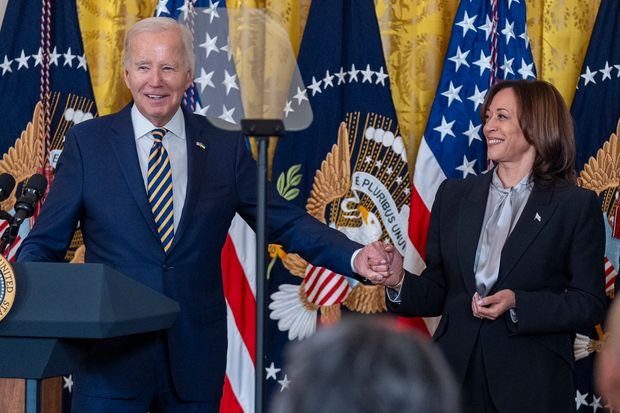
With President Joe Biden’s unexpected decision to end his re-election bid and endorse Vice President Kamala Harris, the Democratic Party is now navigating an unprecedented shift this late in the election cycle.
The upcoming Democratic National Convention in Chicago this August, originally intended to be a coronation for Biden, is now set to be an open contest where nearly 4,700 delegates will choose a new standard-bearer to challenge Republican Donald Trump in the fall.
"This is quite obviously such a moment in American politics and American history," said Bill Barrow, The Associated Press' National Political Reporter. "There's not an obvious precedent."
The logistics, financial implications, and political fallout of Biden’s decision pose significant challenges. Despite Biden's sweeping primary victories earlier this year, the Democratic Party’s rules prevent him from transferring his pledged delegates to another candidate. Politically, however, his endorsement of Harris is expected to carry substantial weight.
With Biden stepping aside, the Democrats technically enter an open convention. Realistically, though, his endorsement thrusts the party into uncharted waters. Harris now faces the immediate task of securing the support of nearly 4,000 delegates from across the states, territories, and the District of Columbia, along with over 700 superdelegates, which include party leaders and certain elected officials.
Even before Biden’s announcement, speculation about other potential contenders included California Governor Gavin Newsom and Michigan Governor Gretchen Whitmer. However, many Democrats argue that elevating Harris — the first woman, first Black woman, and first person of South Asian descent to hold national office — is a logical and symbolic choice given her significant role in Biden’s administration and the vital support of Black voters, particularly Black women, in the Democratic base.
Choosing a white nominee over Harris could be seen as a risky move, potentially alienating key voter demographics. Newsom, Whitmer, and any other Democrat considering a bid must weigh the immediate benefits of challenging Harris against the potential long-term impact on their political careers.
Vice Presidential Nomination Dynamics
The vice presidential nomination is decided through a separate convention vote. In typical years, the convention simply ratifies the nominee's choice. However, if Harris secures quick support, she could nominate her vice presidential pick for a straightforward ratification by the delegates. In the event of an extended contest, the vice presidential spot could become a bargaining chip, reminiscent of earlier convention practices.
The Democratic Party’s convention in August promises to be a historic and potentially tumultuous event, as delegates must now navigate the complexities of selecting a new nominee under unprecedented circumstances. The decisions made in Chicago will have far-reaching implications for the party’s unity and its chances in the 2024 presidential election. As Harris seeks to consolidate support, the Democratic Party faces the challenge of unifying its diverse factions to present a strong front against Donald Trump in the general election.
For continued updates on this developing story and the 2024 election, stay tuned to reliable news sources.
- Details
- News Team
- Hits: 1207
