Mamfe Rally: Support and Criticism Emerge as Senator Tabetando Backs Biya’s 2025 Re-Election
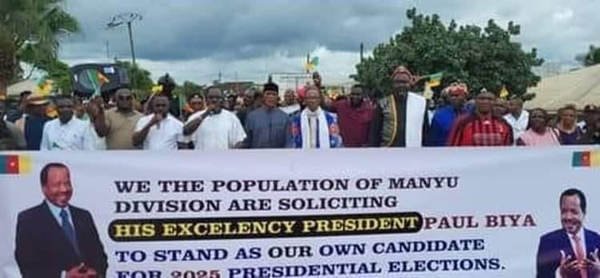
Mamfe, August 17, 2024 — In a highly publicized rally in Mamfe, Manyu Division, Senate Vice President Nfor Tabetando Ndiep Nso urged the local population to support President Paul Biya's bid for another term in the upcoming 2025 presidential elections, despite the President’s advanced age of 91.
The event, held on August 17, 2024, drew various community leaders, including traditional rulers, Regional Councillors, and members of local unions, all of whom pledged their support for Biya.
Infrastructure Achievements or Basic Necessities?
During the rally, Senator Tabetando highlighted what he described as significant achievements under Biya's administration, particularly infrastructure developments in Manyu Division. He cited the tarring of the Kumba-Mamfe Road and the construction of a bridge over the Mfou River as examples of the regime’s commitment to improving local commerce and the quality of life in the region.
However, these accomplishments, which the Senator presented as pivotal, have been met with skepticism by some observers who argue that they represent the bare minimum of what any government should provide. Critics point out that while these projects may have facilitated trade, the region still suffers from poor access to clean water, inadequate healthcare facilities, and a lack of quality education. The celebration of these basic infrastructural developments, they argue, underscores the broader issue of low expectations that have been cultivated over decades of underdevelopment.
March to the SDO’s Office
The rally concluded with a march to the office of the Senior Divisional Officer (SDO), Awounfack Alienou Yves Bertrand, where a motion of support for Biya’s candidacy was presented. The SDO encouraged the community to continue working towards peace and unity, while also contributing to the region’s development.
Growing Debate and Dissatisfaction
Despite the strong show of support at the rally, there is ongoing debate within the ruling Cameroon People’s Democratic Movement (CPDM) and among the general population regarding the appropriateness of extending Biya's tenure. With over 42 years in power, Biya's potential re-election has sparked concerns about the stagnation of democratic progress in Cameroon.
Dr. David Makongo, a prominent figure in African legal and business circles, voiced his disappointment with the continued push for Biya’s presidency. In a sharp critique, he questioned the mindset of those who resist change, describing it as a deeply ingrained mentality that accepts poverty and suffering as normal. Dr. Makongo lamented the challenge of changing these entrenched attitudes, likening it to the futile task of trying to remove the spots from a leopard’s skin.
Makongo’s sentiments reflect a broader frustration with the state of leadership in Africa, where long-standing regimes often prioritize personal and political survival over meaningful progress for their citizens. He argues that the real issue lies in the collective ignorance of the African people about their own potential and the possibilities for a better future.
A Culture of Poverty
Another commentator, further criticized the situation, pointing out that many citizens have been so impoverished by years of economic mismanagement that they are easily swayed by the promise of small, immediate gains. He observed that the desperation for daily sustenance has led some to support leaders who offer little more than temporary relief in exchange for long-term stagnation.
Felix’s remarks highlight a troubling reality in many parts of Africa, where economic hardship has become a tool for political manipulation, undermining the democratic process and perpetuating cycles of poverty.
The Road Ahead
As Cameroon approaches the 2025 elections, the debate over President Biya’s potential re-election is likely to intensify. While his supporters continue to champion his leadership, the growing chorus of voices calling for change cannot be ignored. The outcome of this debate will have significant implications not only for Cameroon but also for the broader trajectory of democratic governance in Africa.
For now, the nation remains at a crossroads, with the choice between continuity and change hanging in the balance.
- Details
- News Team
- Hits: 1333
