Philémon Yang Leads the 79th UN General Assembly's Call for a More Just World at 'Summit of the Future'
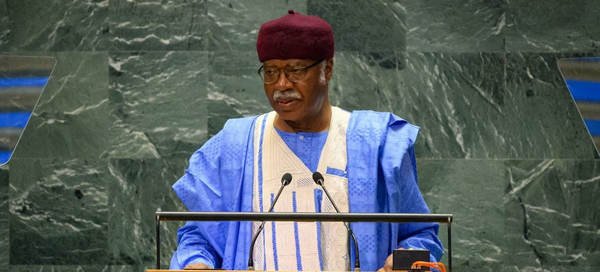
In his inaugural address as President of the 79th session of the United Nations General Assembly, Philémon Yang, former Prime Minister of Cameroon, issued a passionate call for global reform at the Summit of the Future.
Held at the UN headquarters in New York this past weekend, the two-day event was attended by heads of state, diplomats, and world leaders committed to rethinking the global order amid escalating global challenges.
Yang, elected to his prestigious role in June 2024, highlighted the urgent need to rebuild international frameworks to address persistent issues such as inequality, climate change, and geopolitical tensions. "This summit is not just another meeting," Yang declared in his opening remarks on Sunday. "It is an imperative moment for the world to reimagine multilateralism, placing human dignity at the core of a system rooted in justice and equity."
A Shift Toward Global Unity
The Summit of the Future, convened as a response to growing fragmentation in global governance, aims to re-energize the spirit of international cooperation established after World War II. The summit’s agenda focuses on long-term solutions to pressing global problems, including the growing impacts of climate change, rising authoritarianism, and the stark inequalities exposed by the COVID-19 pandemic.
"At a time when global issues are testing the resilience of our institutions," Yang said, "it is our responsibility to reinforce the principles of fairness, solidarity, and mutual respect that the United Nations was built upon."
Yang’s call to action comes amid ongoing geopolitical tensions and the increasingly complex challenges that have paralyzed meaningful global responses. The summit's discussions are framed around several critical pillars: global governance reform, climate action, poverty reduction, and peacebuilding.
Addressing Long-Term Crises
Leaders from across the globe, including U.S. President Joe Biden, French President Emmanuel Macron, and African Union Chairperson Azali Assoumani, gathered to engage in debates and panels on how to strengthen international mechanisms to better address global crises. At the heart of these discussions is the question of how to ensure a more inclusive global system that does not leave behind developing nations or marginalized communities.
Biden, speaking on the first day of the summit, echoed Yang's call for reform, advocating for a more adaptable and transparent multilateral system. "The international community must evolve in the face of unprecedented global threats," Biden stated. "We must ensure that every nation, regardless of size or wealth, has a voice and a stake in our collective future."
Climate and Economic Inequities
One of the central focuses of the summit was the global climate crisis. António Guterres, Secretary-General of the United Nations, warned that current climate policies are far from sufficient. He pushed for an accelerated shift away from fossil fuels and urged wealthier nations to uphold their financial commitments to climate-vulnerable countries.
"We are at the precipice," Guterres said, "and time is running out. We need to act now, not tomorrow, not next year."
Meanwhile, Yang emphasized the need for solutions that integrate economic equity into environmental action. He stressed that the most affected by the climate crisis are often the least responsible for it, particularly in regions like sub-Saharan Africa and Southeast Asia. The UN chief called for a reevaluation of global economic structures to better support developing countries in transitioning to sustainable practices.
Multilateralism Under Pressure
The summit also underscored the strain on multilateral institutions, as they face criticism for being outdated and ineffective in a rapidly changing world. From the war in Ukraine to deteriorating security in West Africa, the inability of bodies like the UN Security Council to prevent or quickly resolve conflicts has led to calls for urgent reforms.
Yang, in his address, acknowledged these criticisms, asserting that the United Nations must evolve to stay relevant. He called for expanded representation within the Security Council to better reflect today’s geopolitical realities, a sentiment echoed by many leaders at the summit.
Emmanuel Macron, who has been a vocal advocate for reform, supported this initiative. "The multilateral institutions we have today were designed in a different era," Macron stated. "They must adapt if we are to build a fairer world."
Hope for the Future
Despite the challenges, the mood at the summit was not entirely bleak. Several initiatives were announced, including a multibillion-dollar commitment from the World Bank and International Monetary Fund to fund green energy projects in the developing world. There was also significant progress in negotiations around the Global Digital Compact, a framework aimed at regulating the global digital economy and ensuring data privacy.
As the summit drew to a close, Yang reminded the global leaders in attendance of the stakes. "This summit is a call to conscience," he said. "We must work together to create a future where every person, regardless of where they live, can enjoy the rights and dignity they deserve."
Yang's leadership in his first major session as General Assembly president suggests he intends to use his tenure to advocate for substantive change within the United Nations, pushing the international community toward a more just, inclusive, and sustainable future. Whether the world’s most powerful nations will heed that call, however, remains an open question.
The Summit of the Future continues through Monday, with high-level panels on peacebuilding, human rights, and the future of artificial intelligence. The outcomes of these discussions could set the stage for UN reforms in the coming years.
- Details
- News Team
- Hits: 1591
