The State Summit: The Four Groups Steering Cameroon's Ship
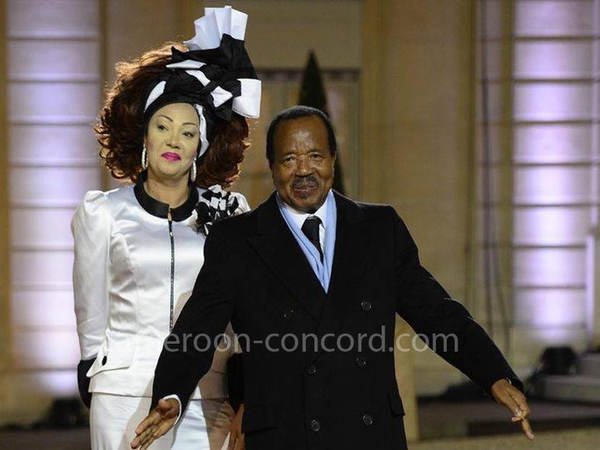
While the pan-African weekly "Jeune Afrique" presents Chantal Biya as the true "president" of Cameroon, "Le Jeune Enquêteur," the newspaper of Désiré Casimir Tagne, explores a different angle, highlighting four groups currently managing the country's affairs.
In a recent publication, Jeune Afrique showcased a dossier demonstrating that it is Chantal Biya who runs Cameroon. However, the journal "Le Jeune Enquêteur," in its edition of April 9, 2019, delves into four lobbying groups that control the country's affairs and opportunities. These groups are the Nangas, the loyalists, the faithful friends, and the Sunday opponents.
According to Casimir Désiré Tagne's journal, the first group consists of the Nangas, led by Ferdinand Ngoh Ngoh, the Secretary-General of the Presidency. Grouped around the First Lady, they are supervised by this "vice-god," a Minister of State and holder of the "old lion's" permanent signature. Described as a "serious group," it displays limitless voracity and is ready to crush political adversaries. Increasingly positioning itself as the likely and best candidate for Paul Biya's succession, it benefits from the umbrella of Chantal Biya and the President's trust. This network extends from the Minister of Defense to the Minister of State, Secretary-General of the Presidency, encompassing culture. Essentially, the First Lady has sufficiently encircled and secured the system not to be sidelined and intends to play a role in the transition.
The second group consists of the "loyalists," led by Jacques Fame Ndongo. These are Paul Biya's putative sons, with Alain Edgard Mebe Ngo'o, until very recently, being their figurehead. Is his incarceration merely a settling of scores to sideline this group from power? It's difficult to affirm. If there's talk of antagonism between Bulu and Beti, it's a reality. Fame Ndongo remains the undisputed leader of this second group, along with Louis Paul Motazé, who is involved in all battles. They behave like "creations of God the Father." Their financial power is unrivaled, and they are willing to do anything to reach the top of the state.
Then, there's the third group, the faithful friends, composed of die-hard loyalists of the creator god. Exuding exceptional and legendary restraint, they never display their pretensions or ambitions. It consists mostly of natives of the littoral region, with affinities from anglophone regions and sons and daughters of the west. Notable figures include Laurent Esso, Peter Mafany Musonge, Niat Njifendji, Achidi Achu, Jean Kuete. These individuals serve as mere window dressing to justify the advancement of democracy.
The fourth and final group comprises a few Sunday opponents. They are termed "Sunday opponents" because the real opposition is known. These individuals are merely token figures used to justify the progress of democracy. Ill-composed, structured, and weak, they are rewarded for their constantly renewed loyalty to the President. Mostly from the Far North region without distinction of allegiance, figures like Bello Bouba Maigari, Issa Tchiroma, and Hamadou Moustapha are part of this group.
With the last presidential election on October 7, 2018, this group saw a new recruit in Jean de Dieu Momo. They can be pushed around from left to right. The game of musical chairs from one ministerial department to another means they can be manipulated as desired.
The sedentary state in which Biya has placed Cameroon is leading the country to ruin. Someone once asked who governs Cameroon. Here's the answer: it's the four groups, each trying to position its pawns to the maximum. Amid family pressures, friendly constraints, and recognition, it's extremely challenging for the man since November 6, 1982, to find a successor capable of assuming power. The future President of the Republic could emerge from any of these groups.
- Details
- News Team
- Hits: 1614
