Headlines
- Details
- Headlines
Opposition lawmakers in Brazil's lower house have approved impeachment proceedings against President Dilma Rousseff. Her ruling Workers' Party and allies have described the impeachment drive as a "coup."
Opponents of the president gained the necessary 342 votes - a two-third majority in the 513-seat chamber - to secure the next step in the impeachment process.
The dramatic ballot took place with delegates voting one by one, each announcing their decision - often accompanied by a heated short speech - to the packed assembly.
The ruling Workers' Party conceded defeat moments before the lower house approved of the Senate's ability to decide on impeachment proceedings, with the party caucus leader saying it was inevitable.
The vote marked the first legislative signal that the president may be tried before the Senate over manipulating budgetary accounts before she was re-elected in 2014.
The impeachment drive will now move to the Senate, where a separate vote could see Rousseff suspended for six months pending an investigation and trial, handing over the presidency to Vice President Michel Temer for the duration of the proceedings.
A raucous debate preceded the vote, with lawmakers from both sides of the aisle interrupting the debate with patriotic anthems or singing parodies of Brazil's first female president.
The political showdown was broadcast live on television to the country of 204 million, with popular TV shows and football games being cancelled to air the vote.
The opposition's drive to impeach Dilma has been described by her and her supporters as a "coup."
"The fight is going to continue now in the streets and in the federal Senate," said Jose Guimaraes, who leads the Workers' Party in the lower house. "We lost because the coup-mongers were stronger."
DW
- Details
- Elangwe Pauline
- Hits: 1969
- Details
- Headlines
The Gambian government is defending the arrest of several opposition leaders and their supporters. This, as the U.N. secretary-general has called for the immediate and unconditional release of those arrested.
The United States has also condemned what it calls the Gambian government’s severe response to recent peaceful protests.
Gambian security forces Saturday arrested Ousainu Darboe, leader of the country’s main opposition United Democratic Party (UDP) and some of his supporters. There are also reports that Solo Sandeng, the party’s National Organizing Secretary, had been tortured to death while in police detention.
Sheriff Bojan, Gambia’s information minister said he knows nothing about anyone being killed. But he said opposition leader Darboe and his “cohorts” broke Gambian law by holding a demonstration without permission from the police.
“Mr. Darboe is veteran lawyer and he’s quite an informed that in the Gambia just like in every other country there is something called the Public Order Act which forbids procession, street protests, meetings, and so forth without first seeking and being granted permission by the police. But he and his cohorts decided to completely flout that law, and in the Gambia, just like in any other country, there acts and reactions; there causes and effects. So, I don’t they have anyone to blame for their dispersal and subsequent arrests,” he said.
But Pa Samba Jow, spokesman for the Democratic Union of Gambian Activists in the Diaspora said Gambia’s constitution guarantees the right to peaceful protest.
“First of all, let us be very clear. Section 25, subsection 1-D of the Gambian constitution gives every Gambian the right to peacefully protest. So, it is absolute incorrect to suggest that one needs a permit to protest. But what is important to us is, what has those people done to warrant a brute that was used by the government to confront them. So the matter here is, if there are any law breakers, the law breakers are the government and the security forces because they violated the fundamental human and constitutional rights of Gambians by attacking peaceful protesters,” Jow said.
Bojan said those arrested will be taken to court in due time, but he said security and maintenance of the public is paramount in Gambia.
“The president of the Islamic Republic of the Gambia, His Excellency Sheikh Professor Alhaji Yahya A.J.J. Jammeh has been saying time and again that public law and order and security will not be compromised in the Gambia. The Gambia is known for its civility, is known for its stability, is known for its tranquility, and no one will be allowed to put a pin in that balloon of tranquility,” Bojan said.
Jow described Bojan as the minister of misinformation. He challenged the government to produce Solo Sandeng and others believed to have been killed by security forces.
“I wish that we were talking about somebody who was speaking for a credible government, but this is a government that has no credibility and of course what they have to do is to resort to denials. The simple matter here is that if Solo Sandeng is alive, if Fatoumata Jawara is alive, and if Ngoi Njie is alive, all they can do is to parade them on national TV and let them speak to the Gambian people to tell them that guess what, we are alive and well,” Jow said.
President Jammeh, who seized power in 1994, is regularly accused of rights abuses and of running Gambia with an iron fist.
Amnesty International in its 2015 annual report accused Jammeh’s government of enforced disappearances, torture, ill-treatment, custodian deaths and a flawed criminal justice system.
But Information Minister Bojan said most of those talking about human rights abuses in Gambia are former government officials who had been fired from the government and fled to Europe and America where they are now “stoking the fire of violence and anarchy."
“Right now in the Gambia, there are newspapers of all opinions. If you buy a newspaper in the streets you will see the most hard-hitting being printed against the government. So the Gambia is definitely a free country. Although we have issues like any other country, but I think it is a haven of peace. The Gambia is right now on the cuff of great things to come,” he said.
Bojan said Gambia has been notified recently that it will be hosting the 2018 Organization of Islamic Cooperation summit.
“A lot of good things are about to happen to the Gambia and nobody will be allowed to distract the government of his Excellency Sheikh Professor Alhaji Yahya A.J.J. Jammeh from developing the Gambia to where he wants it to be,” he said.
He also said President Jammeh last year granted amnesty to more than 320 inmates, some of them on death row.
Gambians will go to the polls at the end of the year to elect a new president.
Gambian opposition leader Lamin Waa Juwara of the National Democratic Action Movement Party last week called for presidential term limits in Gambia.
President Jammeh is one of a number of African leaders who have removed term limits from their constitution.
But Bojan said it was Gambians who voted to remove term limits.
“We have to be clear, before the 1997 constitution was ushered in, there was a referendum, and according to the outcome of that referendum, Gambians do not want term limits. If somebody is doing a good job, you don’t need term limits,” Bojan said.
VOA
- Details
- Elangwe Pauline
- Hits: 2359
- Details
- Headlines
The death toll from the powerful earthquake in Ecuador has risen to 77. Hundreds are injured.
Vice President Jorge Glas said the toll is likely to rise as reports from around the country continue to come in.
Rescue crews are struggling to get to the sparsely populated fishing ports and tourists beaches where the earthquake struck Saturday night.
"It's very important that Ecuadorians remain calm during this emergency," Glas said.
The U.S. Geological Survey said the shallow 7.8-magnitude quake struck late Saturday along the South American country's coast.
It was felt 170 kilometers away in Quito, the capital, where it knocked out electricity and cell phone coverage in several neighborhoods.
In Quito, buildings swayed for about 40 seconds, causing people to rush into the streets.
A bridge collapsed in the port city of Guayaquil.
In Manta, the airport was closed after the control tower was damaged.
Glas said the national guard has been mobilized to maintain public order.
A tsunami warning has been issued, but there were no immediate reports of waves.
President Rafael Correa was not in Ecuador at the time of the quake. He was in Rome after attending a Vatican conference Friday.
Correa said the earliest he could return to Ecuador is Sunday afternoon.
VOA
- Details
- Elangwe Pauline
- Hits: 1874
- Details
- Headlines
DEMONSTRATORS in Zimbabwe held the largest protest against President Robert Mugabe in nearly a decade on Thursday, marching through central Harare demanding that the “tired” leader make a “dignified exit.”
Under the watchful eye of riot police, more than 2,000 supporters of the Movement for Democratic Change (MDC) carried anti-Mugabe placards and sang party songs before their leader Morgan Tsvangirai gave a speech attacking Mugabe’s rule.
Anti-government protests in Zimbabwe have often been brutally broken up by police under the authoritarian regime of the president, who has been in power since independence in 1980.
Mugabe, 92, remains active but his increasingly fragile health has sparked intense speculation over his successor and the fate of the country when his rule comes to an end.
Zimbabwe has suffered years of economic collapse and mass emigration during an era marked by intolerance of dissent, vote rigging and accusations of human rights abuses.
“Mugabe has no solution to the crisis,” Tsvangirai said in a brief speech to supporters gathered in Africa Unity Square wearing T-shirts in the party’s red colours.
“We are here to tell Mugabe and his regime that you have failed.
“We are not demanding an overthrow of the government… We are demanding a dignified exit for the tired Mugabe.
“It’s time Mugabe listens to the voice of the people. The people shall liberate themselves.”
The march, which had been authorised on Wednesday in a last-minute court ruling, was peaceful, with police on duty in full riot gear armed with batons and water canon.
“This is a demonstration against poverty and corruption,” Douglas Mwonzora, an MDC party spokesman told journalists.
“We have an empty promise of 2.2 million jobs which are not there. We have massive corruption.”
The MDC has vowed to hold more protests around the country, which is also beset by severe food shortages worsened by its economic decline since land reforms started in 2000.
“Old clueless Mugabe must go,” read one protest placard, while another said “Enough” in Zimbabwe’s three main languages.
Marchers were greeted by blaring car horns, and clapping and whistles by onlookers including some people waving from windows in high-rise buildings.
Mugabe, who still gives fiery 90-minutes speeches on his feet, is expected to stand again for election in 2018.
AFP
- Details
- Elangwe Pauline
- Hits: 2216
- Details
- Headlines
Official results have yet to be released from Chad's April 10 presidential election. But opposition candidates say their vote count indicates the country is headed to a run-off, and they will not accept any other results. It is the latest sign of tension as President Idris Deby seeks a fifth term in office.
Mahamat Ahmad Alhabo, president of the opposition Party for Liberty and Development (PLD) and spokesperson of opposition presidential candidates, says the political opposition is poised for a run-off after result sheets from their representatives in all poling stations indicated no candidate had won an absolute majority in the first round of polling Sunday.
He says they are surprised that although no candidate won the first round of the presidential election incumbent President Idriss Deby is already asking them to accept results being prepared by the country's electoral commission to declare him as winner for the sake of peace. He says they will never accept such an abuse of democracy and are therefore calling for the second round of the polls to be organized, according to Chad's constitution.
Mahamat did not give details of their count.
Chad's electoral commission has two weeks from the day of the election to proclaim results. Mahamat Zen Bada, Deby's campaign manager, says all candidates should be ready to respect the verdict of the ballot.
He says they are committed to respecting republican values and democratic principles and that he is inviting other candidates and their political parties to maintain the peace and serenity that has characterized the election so far.
Dioncounda Traore, former president of Mali and head of the African Union Observer mission, acknowledged irregularities marred the election, but said it was peaceful and fair.
Deby and his ruling party, the Patriotic Salvation Movement, came to power after ousting President Hissene Habre in a 1990 coup. Deby, an ex-army commander, has since then resoundingly won the first round in presidential elections, except the first multi party election in 1996. Deby changed the constitution in 2004, eliminating its two term limit on presidential tenure.
Thirteen candidates, including Deby, competed in this year's election.
VOA
- Details
- Rita Akana
- Hits: 2268
- Details
- Headlines
As Chinese influence grows, Taiwan struggles to maintain its grip on its partners in Africa. Kenya has deported Taiwanese nationals to China and there are other examples.
The Cold War is not dead – at least between China and Taiwan. In the mid-20th century both Taipei and Beijing had sought recognition as China's official government. On an international level, this meant establishing relationships with countries around the world.
While Beijing has in the meantime won this diplomatic race, a small number of countries still maintain diplomatic relations to Taiwan and recognize it as an independent entity. In January, Taiwan elected a new president, Tsai Ing-wen of the pro-independence Democratic Progressive Party (DPP). She has made it clear that while she wants to maintain a peaceful relationship with China, she would not allow it to meddle in Taiwan's affairs.
For Africa, the relationship to the world's second biggest economy, China, has meant an alternative to relying on the former colonial powers of the West. China is a strong market for Africa's minerals and other exports. The pull of China's economic might has also meant a shift away from diplomatic ties that existed during the Cold War era for ideological reasons. China and Taiwan demand that countries decide in favor of just one of them. Relations with both are not possible under the "one China" policy.
Today only three African countries, namely Sao Tome and Principe, Burkina Faso and Swaziland, maintain official ties to Taiwan. Yet recent events in Kenya and Gambia have demonstrated that Taiwan and China can be difficult diplomatic terrain for African nations.
Kenya
A diplomatic row surfaced earlier this week, when Kenya deported 45 Taiwanese nationals to the Chinese mainland. The Taiwanese were part of a group of 77 people arrested in Kenya in November 2014 over cyber fraud and visa offenses. There are plans to try the group in mainland China. Earlier this week, a video circulated online of the Taiwanese nationals blocking acces to their prison cell and resisting attempts by Kenyan police to deport them. Now that the group has been extradited, Taiwan is negotiating with China over visiting rights for its nationals.
In recent years, Chinese firms have been involved in major road and infrastructure projects in Kenya. "We don't have official relations with Taiwan. We believe in the "One China" policy,” Kenya's Foreign Minister Amina Mohamed told news agencies.
Gambia
Gambia was the last African country to break diplomatic ties with Taiwan. In 2013, President Yahya Jammeh declared that he would rather work with Beijing. The Chinese government, however, declined the offer. At the time, Taiwan had a China-friendly leader and the two sides had agreed not to take advantage of the other's diplomatic partners. China kept its promise for three years. In March 2016, however, it decided to take Gambia up on its offer. Observers believe that this could be a reaction to the election in Taiwan of a pro-independence candidate for the presidency.
Swaziland
There were once 30 African states which had ties to Taiwan. Now there are just three and they include Swaziland. The relationship to the democratic Taiwan could be seen as an attempt of Africa's last absolute monarchy to polish its image, according to political analysts Timothy Rich and Vasabjit Banerjee in a study for Hamburg's GIGA Institute. It is easy to see why the Chinese have not yet made headway in Swaziland, they say. Unlike Zambia, it has few rare minerals that could interest China. Additionally Swaziland has profited from Taiwanese development aid. In 2012, the kingdom received computers at the value of $300,000 (265,000 euros) and $150,000 worth of rice.
Zambia
Zambia is often referred to as a strong partner of China in Africa and has profited from Chinese investment, particularly in the mining sector. In 2006, however, that relationship looked likely to fall apart. At the time, presidential candidate Michael Sata criticized labor conditions in Chinese firms in Zambia. He threatened to cut ties to China and instead turn to Taiwan. China countered his statements, saying that it would pull its diplomats and businesses out of Zambia should Sata win the upcoming elections. The British paper ‘The Telegraph' called the Zambia's elections a ‘referendum on China'. When Sata finally won the elections, he however swallowed his election promises and maintained the relationship to Beijing.
South Africa
Under apartheid, South Africa's government enjoyed a very strong relationship to Taiwan. Beijing on the other hand supported the ANC and anti-apartheid movement. In 1998 South Africa severed its political ties to Taiwan. Today, South Africa and China are strong economic partners – they both belong to the five-country group of BRICS states – and South Africa's ruling ANC enjoys a close relationship to China's Communist Party. According to a study by political analysts Sven Grimm and Yejoo Kim, Taiwanese businesses were given a relatively humane farewell in South Africa as they were given a one-year period to settle their affairs. Taiwan still maintains a liaison office in Pretoria and Cape Town, but Taiwanese nationals have found it increasingly difficult to do business in the country.
In 2011, South Africans felt the heavy hand of Chinese influence when the country refused entry to the Dalai Lama. He had been invited to a world summit of Nobel Peace Prize laureates. Fellow laureate Archbishop Desmond Tutu was outraged by the South African government's decision. China views the Dalai Lama, the exiled Tibetan spiritual leader, as a violent separatist.
- Details
- Rita Akana
- Hits: 2680
Breaking News Article Count: 2
# Breaking News
Get the latest and most urgent news from Cameroon and the world with our breaking news section. We deliver you the news as it happens, with live updates, alerts, and analysis. You'll find out about the major events and incidents that affect Cameroon and its people, such as conflicts, disasters, elections, and protests. Our breaking news section also provides you with the reactions and responses from the authorities, experts, and the public. Stay tuned and stay informed with our breaking news section.
Out of Cameroon Article Count: 10
# Top Stories out of Cameroon
Don't miss the most important and trending news out of Cameroon and beyond Africa with our top stories section. We bring you the latest and breaking news from various domains, such as politics, economy, health, security, and diplomacy. You'll also find exclusive reports, investigations, and features that showcase the diversity and challenges of Cameroonians in the diaspora. Our top stories section is updated regularly to keep you informed and aware of the current affairs and developments in the world.
Local News
- Details
- Society

Kribi II: Man Caught Allegedly Abusing Child
- News Team
- 14.Sep.2025
- Details
- Society

Back to School 2025/2026 – Spotlight on Bamenda & Nkambe
- News Team
- 08.Sep.2025
- Details
- Society

Cameroon 2025: From Kamto to Biya: Longue Longue’s political flip shocks supporters
- News Team
- 08.Sep.2025
- Details
- Society

Meiganga bus crash spotlights Cameroon’s road safety crisis
- News Team
- 05.Sep.2025
EditorialView all
- Details
- Editorial
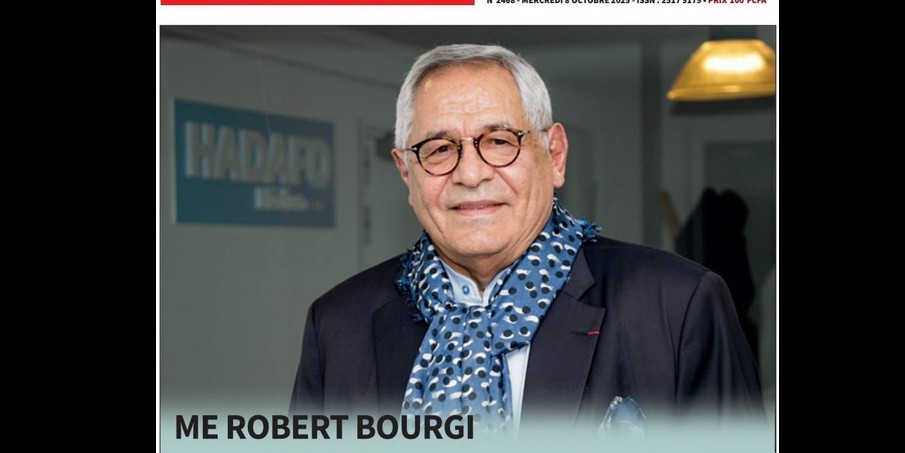
Robert Bourgi Turns on Paul Biya, Declares Him a Political Corpse
- News Team
- 10.Oct.2025
- Details
- Editorial
Heat in Maroua: What Biya’s Return Really Signals
- News Team
- 08.Oct.2025
- Details
- Editorial

Issa Tchiroma: Charles Mambo’s “Change Candidate” for Cameroon
- News Team
- 11.Sep.2025
- Details
- Editorial


