Headlines
- Details
- Headlines

The President of the Republic Paul Biya and his wife Chantal Biya left Yaounde on Tuesday, February 23 to an unknown destination in Europe. The aircraft having on board the presidential couple took off from Yaoundé-Nsimalen airport at 11 h 40 am. Biya held brief audiences with some dignitaries of the CPDM regime including the Senate President Marcel Niat Njifenji, President of the National Assembly, Cavaye Yeguie Djibril, the Prime Minister, Head of Government, Philemon Yang, and the minister, secretary General of the Republic, Ferdinand Ngoh Ngoh.
- Details
- Ngwa Bertrand
- Hits: 1831
- Details
- Headlines

The leadership of the Social Democratic Front (SDF) has made it public that the SDF does not want early presidential elections in Cameroon. The so called main oppostition party in Cameroon also did observe that the SDF will not accept any modification of the Constitution. The SDF big pronouncements came after a National Executive Committee meeting that held on February 20, 2016 in Bamenda.
- Details
- Ngwa Bertrand
- Hits: 1882
- Details
- Headlines

British Prime Minister David Cameron says a deal reached with the European Union will give the UK "special status", vowing to campaign with his "heart and soul" to remain in the bloc. Following two days and nights of talks in the Belgian capital Brussels, the EU leaders unanimously supported Cameron’s proposed reforms on Friday night to keep his country in the EU, avoiding a much-feared "Brexit." "I have negotiated a deal to give the UK special status in the EU," Cameron said during a press conference in Brussels after the deal was clinched. "Britain will never join the euro and we've secured vital protections for our economy and a full say over the rules of the free trade single market while remaining outside the euro," he stated, adding that the UK "will be permanently out of 'ever closer union'," one of the EU's founding principles.
The agreement paves the way for the UK's EU referendum, expected to be held in June, and guarantees that Britain will never be forced to bail out members of the eurozone. Cameron also called on the people in the UK to vote in favor of remaining in the EU. "This is enough for me to recommend that Britain remain in the European Union." The deal also gives Britain the right to supervise financial institutions and markets to preserve financial stability. The premier also noted that there will be "tough new restrictions on access" to the British welfare system for EU refugees and migrants, adding that London has secured an "emergency brake" that can be applied for seven years to restrict access to British in-work benefits.
Cameron must now sell his hard-earned deal to eurosceptics in his party and to the Britons before the in-out referendum on UK membership of the EU. 'Oliver Twist asking for seconds' A number of British politicians slammed Cameron’s new deal with EU officials. During a Friday rally organized by EU exit campaign Grassroots Out in Westminster, UK Independence Party (UKIP) leader Nigel Farage said that “what has happened over the last 48 hours is the British prime minister has gone to meet 27 other heads of state, and frankly given an impression of Oliver Twist by saying please gentlemen, can I have some more concessions.” "This deal that he’s done does not address the fundamental issues that the British people care about,” Farage added. Matthew Elliott, chief executive of the Vote Leave campaign, said the premier "will now declare victory but it is an entirely hollow one." Eastern European countries have expressed concern that Cameron’s plans against migrants in the UK, a large number of whom hail from Europe’s east, are discriminatory and violate the EU principle of freedom of movement.
- Details
- Ngwa Bertrand
- Hits: 1827
- Details
- Headlines
French President François Hollande says Moscow must stop supporting Syrian President Bashar al-Assad as the West rejects a Russian-drafted UN resolution aimed at halting Turkey's military actions in northern Syria. “Russia will not succeed by unilaterally backing Bashar al-Assad. It's not possible, we all see it. Because there will be no results on the ground, there won't be negotiations and there will always be war,” Hollande told France Inter radio on Friday. He added that "there must be pressure on Moscow” so that it helps resume Syria peace talks. The latest round of talks between the Syrian government and the Saudi-backed opposition -- known as the High Negotiations Committee (HNC) -- which was being held in the Swiss city of Geneva, was suspended on February 3 after the opposition refused to attend the sessions. The next round was slated for February 25; however, UN Special Envoy for Syria Staffan de Mistura said on Friday that the resumption of the talks on the planned date is not realistic. On February 12, the International Syria Support Group (ISSG) agreed in the German city of Munich to seek a nationwide ceasefire in Syria beginning in a week's time. It also decided to accelerate and expand humanitarian aid deliveries to the country.
According to the ISSG statement, the truce in Syria does not include areas held by groups designated as terrorist organizations by the UN Security Council, including Daesh and the al-Qaeda-linked al-Nusra Front. Russia began its air campaign in Syria on September 30, 2015 at the request of the Damascus government. The air raids have expedited the advances of Syrian forces against foreign-backed militants operating in the country. Regarding Ankara’s escalating involvement in the Syrian crisis, the French president said it was creating a risk of war between Turkey and Russia. Ankara has been targeting the positions of fighters of the Kurdish People’s Protection Units (YPG) and its umbrella group Democratic Union Party (PYD) in northern Syria for nearly a week in an attempt to stop Kurdish forces from reaching the Syrian border with Turkey, while Syrian forces have been making steady gains. Turkey is also among the few countries insisting that the only way to stop the war in Syria is to deploy ground forces in the Arab country’s northern regions. "Turkey is involved in Syria... There, there is a risk of war," Hollande told France Inter radio. "That is why the Security Council is meeting," Hollande noted.
The Security Council held an emergency meeting on Friday afternoon at Moscow's request to discuss Syrian-related developments, including the Russian-drafted resolution calling on the council to express "its grave alarm at the reports of military buildup and preparatory activities aimed at launching foreign ground intervention into the territory of the Syrian Arab Republic." It also called on countries to "refrain from provocative rhetoric and inflammatory statements inciting further violence and interference into internal affairs of the Syrian Arab Republic." The draft was, however, rejected by the representatives of France, the US and Britain at the meeting. Russia Deputy UN Ambassador Vladimir Safronkov holds a press briefing in New York after attending a Security Council meeting on Syria, February 19, 2016. (AP) "Russia must understand that its unconditional support to Bashar al-Assad is a dead end, and a dead end that could be extremely dangerous," French Ambassador to the UN François Delattre said ahead of the meeting. "We are facing a dangerous military escalation that could easily get out of control and lead us to uncharted territory," he added.
US Ambassador to the UN Samantha Power said Russia is "trying to distract the world" with the draft resolution, calling on Moscow to focus on implementing a UN resolution agreed by the 15-member council in December last year that endorsed an international road map for a Syria peace process. The resolution, adopted on December 18, called for a nationwide ceasefire in Syria and the formation of a “credible, inclusive and non-sectarian” government within six months and UN-supervised “free and fair elections” within 18 months. Syria has been gripped by foreign-backed militancy since March 2011. According to a new report by the Syrian Center for Policy Research, the conflict has claimed the lives of over 470,000 people, injured 1.9 million others, and displaced nearly half of the country’s pre-war population of about 23 million within or beyond its borders.
- Details
- Elangwe Pauline
- Hits: 1986
- Details
- Headlines
Uganda’s President Yoweri Museveni has won the East African nation’s presidential election, extending his three decades in power. Uganda’s electoral commission announced on Saturday that Museveni secured 60.8 percent of votes, while his main rival and opposition candidate Kizza Besigye garnered 35.4 percent. Besigye, who is currently under house arrest, rejected Museveni's victory, saying the poll was a “sham.” “We have just witnessed what must be the most fraudulent electoral process in Uganda,” Besigye said in a statement, calling for an independent audit of the results. The opposition candidate was detained several times over the past days.
Meanwhile, European Union observers criticized the poll, saying the East African nation's electoral commission is not independent, adding that the vote was conducted in an intimidating atmosphere. The electoral commission “lacks independence, transparency and the trust of stakeholders,” Eduard Kukan, chief observer for the EU mission said. He said the dominance of the political space by President Museveni's ruling National Resistance Movement (NRM) party “distorted the fairness of the campaign and state actors created an intimidating atmosphere for both voters and candidates.” The Thursday elections were marred by late delivery of polling materials, sporadic violence and a government shutdown of social media.
Shortly before declaring Museveni the winner, Badru Kiggundu, the electoral commission chief, appealed for calm, saying “the outcome of an elections can either tear or build a country... as Ugandans let us be prepared to exhibit more tolerance.” Ugandan elections in 2006 and 2011 were marred by violence over the results, sparking widespread protests in the East African country, particularly in the capital, Kampala. Museveni, who came to power in 1986 after waging a five-year guerrilla war, is hailed by many Ugandans as providing decades of relative peace and economic stability.
- Details
- Elangwe Pauline
- Hits: 2022
- Details
- Headlines

A scared, emaciated and naked Nigerian child was found and rescued by a Danish aid worker, eight months after he was abandoned to his fate by his family, who accused him of being a witch. During the past eight months, the worm-ridden boy, who is now called Hope, slept rough and scavenged on whatever he could find on every nook and cranny of streets in a town in the southern Nigerian state of Akwa Ibom.
“When we heard that the child was only two to three years old we did not hesitate. A child that young cannot survive a long time alone on the streets. We immediately prepared a rescue mission,” said Anja Ringgren Lovén, the founder of the African Children's Aid Education and Development Foundation. After a few days of nutritional and medical treatment, Hope, who is now being cared for by Anja, attained a stable condition, but he needed blood transfusion and an urgent treatment for his worms.
According to Anja, thousands of Nigerian children are accused of practicing witchcraft and rejected by their families. “I travelled alone to Nigeria where I met children who had been tortured and beaten almost to death because they were accused of being witches and therefore left alone on the street,” she said, adding that “education is the key in the fight against superstition.”
Nigeria has a growing economy but the proportion of Nigerians living in poverty is increasing every year. Poverty leads to the lack of education, which in turn fuels superstitions. The country also has a hard time fighting the Boko Haram terrorist group, which is wreaking havoc in its northern regions.
- Details
- Ngwa Bertrand
- Hits: 1880
Breaking News Article Count: 2
# Breaking News
Get the latest and most urgent news from Cameroon and the world with our breaking news section. We deliver you the news as it happens, with live updates, alerts, and analysis. You'll find out about the major events and incidents that affect Cameroon and its people, such as conflicts, disasters, elections, and protests. Our breaking news section also provides you with the reactions and responses from the authorities, experts, and the public. Stay tuned and stay informed with our breaking news section.
Out of Cameroon Article Count: 10
# Top Stories out of Cameroon
Don't miss the most important and trending news out of Cameroon and beyond Africa with our top stories section. We bring you the latest and breaking news from various domains, such as politics, economy, health, security, and diplomacy. You'll also find exclusive reports, investigations, and features that showcase the diversity and challenges of Cameroonians in the diaspora. Our top stories section is updated regularly to keep you informed and aware of the current affairs and developments in the world.
Local News
- Details
- Society
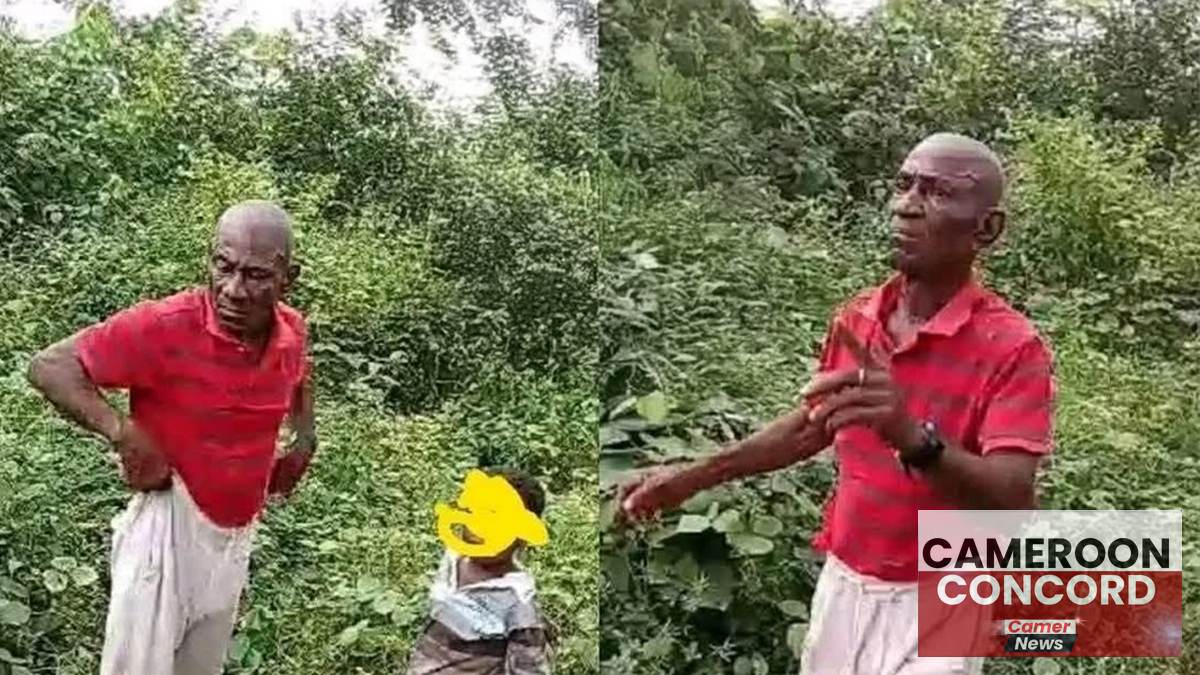
Kribi II: Man Caught Allegedly Abusing Child
- News Team
- 14.Sep.2025
- Details
- Society

Back to School 2025/2026 – Spotlight on Bamenda & Nkambe
- News Team
- 08.Sep.2025
- Details
- Society

Cameroon 2025: From Kamto to Biya: Longue Longue’s political flip shocks supporters
- News Team
- 08.Sep.2025
- Details
- Society

Meiganga bus crash spotlights Cameroon’s road safety crisis
- News Team
- 05.Sep.2025
EditorialView all
- Details
- Editorial
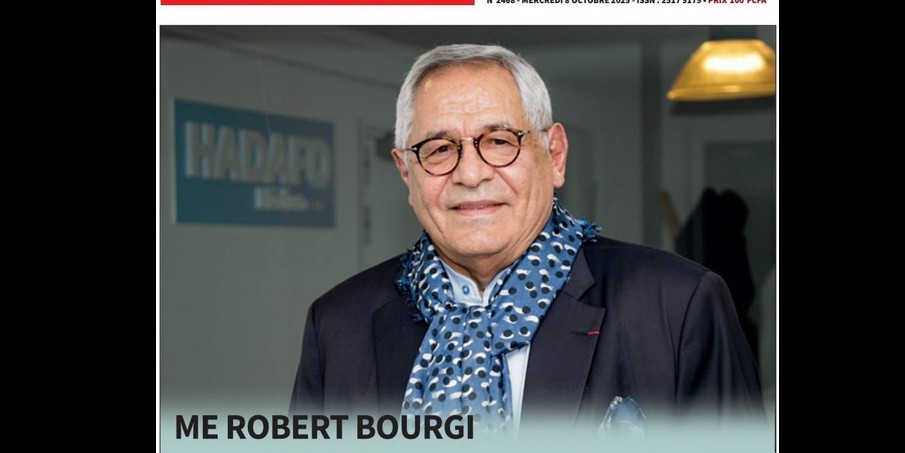
Robert Bourgi Turns on Paul Biya, Declares Him a Political Corpse
- News Team
- 10.Oct.2025
- Details
- Editorial
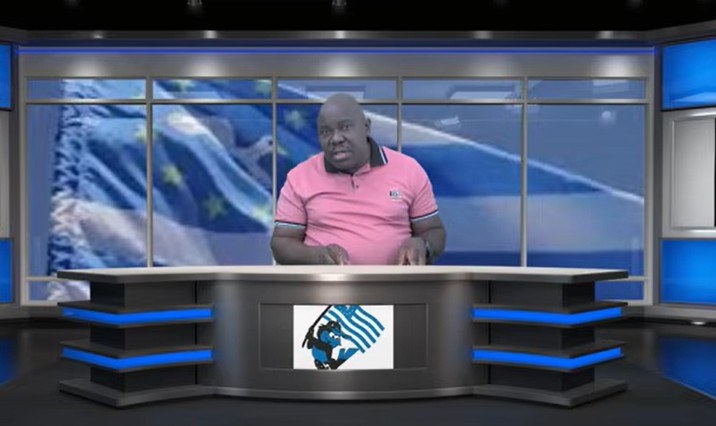
Heat in Maroua: What Biya’s Return Really Signals
- News Team
- 08.Oct.2025
- Details
- Editorial

Issa Tchiroma: Charles Mambo’s “Change Candidate” for Cameroon
- News Team
- 11.Sep.2025
- Details
- Editorial


