- Details
- Sports
Cameroonian-Born Weightlifters Elevate France's Medal Hopes at Paris 2024
As Cameroon returns home from the Paris 2024 Olympics without a medal, there's a significant yet overlooked contribution: athletes of Cameroonian origin who chose to represent France.
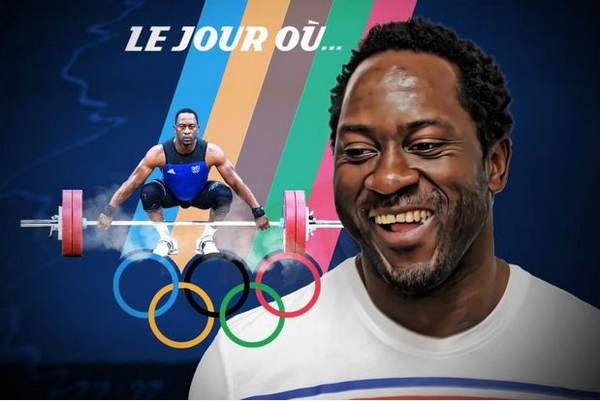
These athletes are making notable impacts, particularly in weightlifting, where they have significantly bolstered France's medal count.
The Paris 2024 weightlifting competitions began this Thursday, revealing an impressive fact: three out of the four athletes on the French team have Cameroonian roots. This successful collaboration between the two nations dates back to the early 1990s.
A key figure in this story is Vencelas Dabaya. On August 12, 2008, during the Beijing Olympics, Dabaya competed in the -69 kg category and attempted to lift 197 kg, which would have been a world record in the clean and jerk. Although an elbow injury forced him to withdraw, his effort earned him a silver medal—France's first Olympic weightlifting medal in 32 years. Born in Kumba, Cameroon, Dabaya had represented Cameroon at the 2004 Athens Olympics before naturalizing as a French citizen in 2004. Reflecting on his journey, Dabaya remarked, “Initially, it was a typical migration for a better life. Later, I chose to represent the country that welcomed me and helped me achieve my dreams.”
Dabaya's journey inspired a new wave of Cameroonian-born French weightlifters. For the Paris 2024 Games, the French team includes three athletes with Cameroonian origins, most notably Marie-Josèphe Fegue in the -71 kg category. Fegue, a top medal contender, described her difficult journey from Cameroon to France via England. Despite her talent, training in Cameroon was challenging due to the lack of proper equipment and facilities. “In Cameroon, I was already performing well, but it was tough to train and reach the highest level,” Fegue said. “We trained outdoors without proper equipment. France provided all the necessary conditions.”
This collaboration between Cameroon and France began in the early 1990s when Cameroonian athletes started migrating to France under Olympic scholarships. The proximity and historical ties between the two countries made France a natural choice for these athletes. Some chose to stay in France to pursue more ambitious sports careers. Michel Raynaud, president of the French Weightlifting Federation, described these athletes as having ideal physical and morphological qualities for weightlifting, combining flexibility, speed, and explosiveness.
Despite potential concerns about talent drain, there has been no conflict over these naturalizations. Dabaya assured that no Cameroonian athlete has faced restrictions on changing nationality, as Cameroonian authorities recognize the lack of infrastructure for developing their athletes' potential and are focused on providing opportunities. Moreover, the French federation offers technical assistance to Cameroon, sending missions to train coaches and develop the sport.
France benefits doubly from this arrangement. When these athletes' competitive careers end, they often transition into coaching roles within the French team. For instance, after three Olympic appearances, Samson N’Dicka Matam joined the French coaching staff in 2008, followed by Dabaya, who now serves as an assistant coach.
Dabaya emphasized that the choice to represent France has always been made by the athletes themselves. "It has always been the choice of Cameroonian weightlifters to say: We represent France. But our defeats and victories are celebrated equally in France and Cameroon."
Through this unique partnership, Cameroonian-born athletes continue to shape the future of French weightlifting, ensuring that both nations share in the glory of their achievements.
- Details
- News Team
- Hits: 1744
