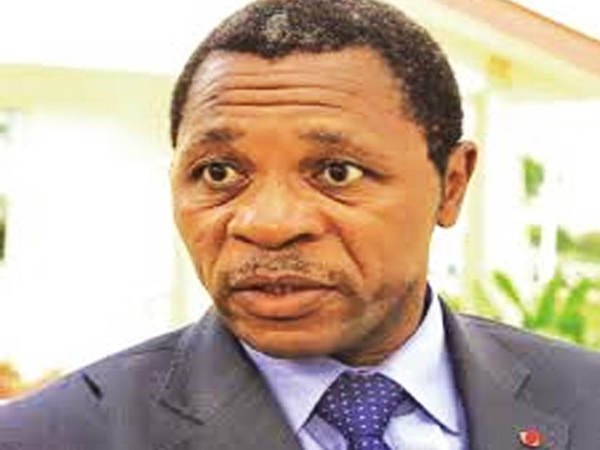
Every decaying political system eventually produces a figure who embodies its worst instincts. In Cameroon, that figure is Paul Atanga Nji. Not because he is uniquely powerful or intellectually formidable, but because he is uniquely willing to perform the regime’s ugliness in public, loudly and without shame.
Ekinneh Agbaw-Ebai’s intervention is not an exercise in rhetoric for its own sake. It is a political diagnosis. By focusing on Atanga Nji, he exposes how power now operates in Cameroon: not through institutions, law, or legitimacy, but through noise, menace, and spectacle. The minister’s voice has become the audible signature of a regime in advanced decay — shrill because it is insecure, authoritarian because it has lost consent.
Atanga Nji is portrayed not as an exceptional strongman, but as a familiar authoritarian archetype: the small man elevated far beyond his intellectual and moral depth. His compulsive need to announce himself, to remind the public that he “belongs” in the corridors of power, betrays anxiety rather than confidence. This is not authority grounded in competence; it is insecurity amplified by a microphone. In functional states, power speaks sparingly. In failing ones, it shouts.
What makes Atanga Nji particularly revealing is how thoroughly he personalizes the state. Public order becomes an extension of his temperament. Administrative authority mutates into emotional enforcement. Dissent is no longer a constitutional reality but a personal provocation. In this environment, the rule of law does not disappear overnight — it is slowly suffocated by impulse and ego. Cameroon is no longer governed by systems; it is policed by moods.
Ekinneh’s analysis sharpens when it turns to language — the minister’s obsession with crushing, grinding, pulverizing. These are not careless metaphors. They are ideological tells. Dehumanization is always the prelude to repression. When citizens are spoken of as material to be processed, the moral distance required for abuse has already been established. Atanga Nji’s rhetoric is not excess; it is preparation.
The essay makes clear that Atanga Nji’s relevance has nothing to do with democratic legitimacy or intellectual contribution. It is transactional. He has acquired stature by renting out loyalty, tying his political survival entirely to President Paul Biya. This explains both his aggression and his indispensability. In a regime that fears reform more than stagnation, men like Atanga Nji are valuable precisely because they absorb public anger while shielding the presidency. Biya governs through distance; Atanga Nji governs through abrasion.
Nowhere is this moral vacancy more exposed than in the minister’s response to the death in custody of Anicet Ekane. Faced with a moment demanding restraint, empathy, and accountability, Atanga Nji chose sermonizing arrogance. He moralized death, delegitimized the deceased, and absolved the state by fiat. In doing so, he revealed a governing philosophy that collapses law into power: if the state arrests you, you are guilty; if you suffer, you deserve it. This is not governance. It is authoritarian superstition.
Ekinneh rightly treats the infamous “Moulinex” remark not as a gaffe but as a confession. By likening himself to a machine designed to grind indiscriminately, Atanga Nji articulated the regime’s governing ethic with startling honesty. Machines do not deliberate. They do not judge. They do not hesitate. They execute. That this metaphor was embraced rather than disowned tells us everything about how the Biya system understands authority: mechanical, brutal, and indifferent.
The essay further dismantles the mythology Atanga Nji has constructed around his personal history. Inflated credentials, unverifiable career claims, and a carefully curated technocratic persona dissolve under scrutiny. This is not incidental embellishment; it is survival strategy in a political culture where image replaces substance and longevity is mistaken for merit. When lies go unchallenged long enough, they harden into official truth.
The minister’s memoir, which should have been a reckoning, instead becomes a self-indictment. Bloated with self-praise and historical distortion, it inadvertently records a career defined not by service but by sabotage. Peripheral involvement is inflated into central command; repression is reframed as patriotism. The book does not secure legacy — it fossilizes delusion. It reveals a man desperate to be remembered in a system terrified of the future.
Cameroon Concord’s position is unambiguous: Atanga Nji is not the problem; he is the symptom. He exists because the Biya regime requires men willing to mistake cruelty for strength, intimidation for authority, and noise for power. Removing him without dismantling the system that produced him would change nothing.
History does not remember enforcers kindly. Often, it barely remembers them at all. Cameroon will outlast Paul Atanga Nji, just as it will outlast the regime that deployed him. When the shouting finally stops, what will remain is not the threats, the sermons, or the self-mythology — but the damage, and the judgment.
Read Ekenneh's full opinion below
Keeping them Honest
Atanga Nji and his Delusional Moulinex Fantasies
The Blender of Yaoundé is grinding the nation with bluster, cruelty and a ludicrous faith in his own infallibility.
By Ekinneh Agbaw-Ebai, Boston, USA
There are moments in a nation’s decay when one man’s voice becomes the sonic emblem of its collapse. In Cameroon today, that singular, shrill, authoritarian soundtrack is provided by Paul Atanga Nji, the Minister of Territorial Administration, whose vocabulary is so drenched in intimidation, whose tone is so steeped in belligerence, and whose conception of public office is so profoundly distorted that one wonders how the regime has not already crumbled under the weight of his hubris. Petty, pompous, erratic, pugnacious and perilously enamored to the sound of his own voice, Atanga Nji is a textbook specimen of the narcissistic small man in a big chair who, by accident or utility, stumbled into high public office, far above his intellectual capacity. To which end, he misses no opportunity to tell the world, and himself that he belongs to the corridors of power. Brash, abrasive and cantankerous with the mind of a dotard, he appears to relish his role as the regime’s enforcer and attack dog.
As MINAT boss, he has deployed the full arsenal of administrative coercion reducing the entire nation to the emotional thermostat of a man, who cannot distinguish public order from personal insecurity. He revels in pulverization; gloats about crushing political opponents, and fetishizes grinding Cameroonians as though they were culinary debris. His language is irreverent, callous, uncouth, sub-intellectual, and catastrophically beneath the dignity of his office. Elevated by an ossified regime desperate for loyalty over competence, he confuses appointment with achievement, loyalty with capacity, and proximity to power with possession of it. His bureaucratic tantrums criminalize dissent, and shrink the public sphere to the dimensions of his bloated ego. The result is the familiar tragedy of arrogance where he should be thoughtful, cruelty where empathy is demanded, and bombastic when wisdom would advise silence. A man with a checkered past, limited intellectual grounding; without a democratic mandate, has acquired stature and relevance by simply renting out his loyalty, and tying his fate to President Biya.
Atanga Nji is the sort of man who would be entirely unremarkable in obscurity, but who, once entrusted with power, compensates with bluster, cruelty and a ludicrous faith in his own importance. With the pomposity of a feudal vassal, he has rebranded himself as the Minister of Territorial Intimidation; a role he performs with operatic gusto and bureaucratic clumsiness. Each public appearance is an audition for relevance in a system where loyalty must forever shout to be noticed. His distinctive contribution to governance is the belief that order is best maintained through menace and verbosity. He is never happier than when issuing threats, and intimidating political opponents. Few public officials have managed to combine sycophancy with delusions of grandeur.
Far above his moral pay grade
What distinguishes Atanga Nji is not just his enthusiasm for repression, but the pedantic solemnity with which he performs it. Faced with a moment that called for empathy, compassion and basic human decency, following the death in custody of Anicet Ekane, Atanga Nji instead offered a sermon and vilified the deceased. Ekane, he proclaimed, was “not a hero”. Martyrdom, he explained with a confidence inversely proportional to his theological vacuity, was the exclusive intellectual property of Jesus Christ. Ekane by contrast, was a “troublemaker.” Illness, he noted, was “not a free pass” from punishment for detainees; some of whom, he added sarcastically, may have their feet chained even while receiving care.
What Atanga Nji demonstrated painfully and publicly, was a catastrophic misunderstanding of law, morality and the basic optics of power.
The tragedy of Atanga Nji is not malevolence - Cameroon has known worse - but inadequacy. The vilification of Anicet Ekane reveals a deeper problem: Atanga Nji is not merely abrasive; he is plainly unequal to the moral and intellectual demands of his office. The death of a political detainee transcends international law, constitutional safeguards, and state responsibility. Already, the UN and EU have called for a thorough and impartial investigation. Atanga Nji responded instead with bellicose grandstanding and bureaucratic sadism. His casual conflation of illness with guilt (“if the state arrests you, you are guilty, so you pay the price”) collapses centuries of jurisprudence into a single thudding tautology: the state is right because it is the state.
The Moulinex delusion
Atanga Nji’s most memorable contribution to political vocabulary remains his infamous self-description as the regime’s “Moulinex” - a kitchen blender designed to grind ingredients into pulp with mechanical efficiency. Rarely has a Minister so perfectly captured his own mediocrity with such accuracy and candor. The blender does not think or reason. It simply pulverizes until everything looks the same. And it requires no intelligence; only force and repetition. The humor would be harmless if Atanga Nji’s Moulinex fantasies were not welded to state authority. But he intends, quite literally, to grind dissenters into obedient paste. That he finds this analogy flattering betrays his parochial addiction to garrison politics, where citizens are ingredients to be processed; and power exists to crush resistance into uniformity. Men like Atanga Nji flourish because the regime rewards obedience, and loyalty. His posthumous assault on Ekane was performative. In dying regimes, relevance is always in question. Each public act of cruelty is a résumé line, a signal of usefulness to the palace. Atanga Nji’s outburst thus serves two audiences: the public, who are warned not to look at Biya’s power; and the presidency, which is reassured that he remains tireless, shameless and available for further service. To this he added “Sheriff” as if he is the nation’s custodian of law and order. That he thinks this reflects strength only confirms how far above his intellectual ceiling the state has lifted him. Although few citizens relish the prospect of a minister who imagines governance as an act of grinding, Cameroon, to its detriment, has grown accustomed to the conflation of political authority with his personal infallibility.
A Pathological liar with a checkered past
There is a striking pattern of fabrication at the core of Atanga Nji’s public persona. He claims to be a seasoned banker with a Master’s degree in Banking and Finance and decades of financial leadership. He cannot cite even one of his classmates, and no university has acknowledged ever awarding him a Master’s degree; and his official biographies carefully avoid naming any institution. His signature claim that he began his career in 1982 as Director of Global Finance, then General Manager of Highland Corporation Bank is chronologically impossible. That bank did not exist in 1982; it emerge only in the mid-1990s as a clandestine money laundering outfit with one corporate office at the Yaoundé Hilton Hotel; it never appears in any BEAC records as a licensed institution, until COBAC shut it down. Global Finance, also has no registration trail, regulatory license, no record of operations or consulting contracts with African governments. The evidence does not depict a seasoned financial expert but a political jobber who constructed a technocratic myth to mask a career built on utility, and lies.
A Hollow Man Pretending to Be a Pillar of State
There are vanity projects, and then there is Atanga Nji’s new memoir; a book swollen with vanity, bloated with distortions, and so determined to elevate and varnish his name for posterity, that it ends up engraving into the public record, the very catalogue of his own moral disintegration. The tragedy of the book is not merely its dishonesty; it is its delusion. The memoir, in its verbosity, attempts to polish a legacy that does not exist. Every page is a shrine to a man desperate not to be forgotten; every episode is an Olympic event of self-praise; every chapter is an altar to himself, and every anecdote is a balloon of exaggeration. Worse still, the memoir's bravado confesses to a long chronicle of sabotaging reform movements; from the 1990 ghost towns to the All-Anglophone Conferences, to the 2008 dismantling of presidential term limits. He recounts with unsettling pride his role in actions that, if true, should evoke shame; and claims central roles in events where he was just a background prop and minor footnote.
A peripheral figure hovering at the fringes of Cameroon’s political machinery now casts himself as its principal axis: chief strategist, indispensable troubleshooter, central protagonist; statesman of great consequence and an omnipresent custodian of the Republic. In this strange universe that Atanga Nji crafted, history revolves around him, crises obey his command, and Cameroon’s political evolution was choreographed entirely by him. It inadvertently reveals a man obsessed with his own myth, blind to the devastation his actions abetted, convinced that longevity in office equals legacy, and determined to portray sabotage as service. The result is a book so sanitized that; it should come with a public-service warning: “Not Based on Actual Events.” No memoir has ever been so simultaneously weighty and weightless; dense in self-importance, hollow in substance. Atanga Nji is one of the many political accidents who will not be remembered for the grandiosity he asserts, but for the democratic derailment his actions facilitated. He may cling to his self-mythology, but history will judge him, not his memoir.
Obituary for a Minister not yet departed
There are men whose political lives end before their biological ones; figures so entirely exhausted of purpose, judgment and proportion that history, impatient, writes their epitaph while they are still alive. Paul Atanga Nji will not be remembered as a technocrat, statesman or intellectual. He will be recalled, if at all, as a man who usurped virtually all cabinet portfolios – interior minister, government spokesman, police boss, gendarmerie boss, electoral umpire. His obituary, written ahead of schedule, would close thus: Paul Atanga Nji: Former custodian of public order (Sheriff); undertaker of political dissent (Moulinex) - a man who mistook cruelty for strength, intimidation for authority, censorship for governance, loyalty for greatness, fear for respect, noise for power, and the suffering of others for proof of relevance. History noticed and moved on. Cameroon will, too.