Editorial
Violent extremism is probably the toughest challenge to not only the Middle East but the entire world, where boundless forms of threats exist. This serious threat, which has so far wreaked huge havoc in Iraq and Syria, has cast its evil shadow on the four corners of the region. That extremism is widespread and that its global practitioners are many have already shown what detrimental impacts it can have on the geopolitical and security environment not just in our region but also in many other areas in the world. The crimes committed thus far by the extremists and their violent efforts aimed at destruction and ethnic cleansing in Syria and Iraq has shocked the world. Terrorist attacks in Europe by cells affiliated with al-Qaeda, what is known as the 2015 Baga massacre by Boko Haram, the terrorist attack in Tunisia’s national museum, the suicide attack against civilians in Afghanistan’s Jalalabad, the beheading of 21 Egyptian Coptic Christians in Libya, and the abhorrent massacre of 147 students in Kenya only in the recent months have laid bare more than ever before the proportions of the increasing threat originating from violent extremism.
This phenomenon first came to attention following the invasion of Afghanistan by the former Soviet Union, which led to the formation of al-Qaeda and Taliban; it took new dimensions with the US invasion of Iraq and the formation of various groups affiliated to al-Qaeda in that country and ultimately the emergence of Daesh. The numerous crimes – such as murders, rapes, forced conversions, torture and slavery – that are shamelessly being propagated by Daesh on social media have laid bare the types and extent of threats posed by the outfit. Recruitments by Daesh from 90 countries worldwide, including from Western industrial “democracies,” is a warning, which speaks to the fact that there are many structural and social disorders. The Takfiri tendencies of this group have allowed it to simply justify raids on an increasing number of social groups and even boast of them (the raids) and target those groups with murder, plunder and slavery.
Their crimes have gone even beyond their initial goals, and have targeted other rival Takfiri groups as well. The moves by the two groups of Daesh and Jibhat al-Nusra to behead members of one another on numerous occasions are indicative of such tendencies in these groups. In one such instance, in March 2014, infighting between the two groups in northern Syria left over a thousand individuals dead. The systematic destruction of historical mosques, holy shrines, ancient gravesites and temples, as well as acts of sacrilege, and the brazen demolition of historical artifacts – signs of the rich cultural heritage of the region – reveal what kind of future these extremists have in mind for the region.
The extensive crimes that were committed against Izadis are indicative of the extremists’ behavior and their evil plans for minorities. The mass murder of 1,700 Iraqi Air Force officers in Tikrit in 2014, and using social media to display these serious crimes and to boast about them showed what kind of future would await the people of Iraq if they failed to defeat these extremists. These acts constitute all-out attacks on the region’s social structure and the rich, diversified and honorable social structure.
Where does violent extremism originate from? Such human values as affection, love for fellow human beings, patience and forgiveness have always been the fundamental components of the message that all religions, especially Islam, have been trying to spread throughout history. Nevertheless, over the past two centuries, a small group of demagogues with suspicious backgrounds and with the pretext of reforming religion, have begun offering a distorted and unreal image of Islam. With political goals and to advance their short-sighted agenda, they made efforts to alter the message of Islam and distort religious teachings and attempted to take affection away from religion. Thus, the Takfiris and their followers took a harsh stance – more than before – toward those who refused to accept such an interpretation of religion, and the former regarded the latter as being “out of religion.”
Based on such unfounded interpretations, they rejected the narratives that diverged from theirs and engaged in takfiring all of those who either held different beliefs or belonged to a different population. They claim they are the only ones who have a right understanding of Islam, and that truth is in their possession in its entirety. Such a viewpoint is the essence of Takfirism; and in my mind, the current challenges in the region and the existing extremism are rooted in that viewpoint. As long as such an interpretation of religion was and is confined to a small group of individuals, these individuals could and can have their own beliefs.
Problem emerged when certain individuals, in possession of wealth and power, took up the task to spread these ignorant interpretations in Islamic countries far and near, and to impose them on people in poor nations through money and propaganda. This time around, the priority of this wealthy and powerful group was no more “religious purity;” rather, their activities were based on certain political goals and a number of short-sighted strategic calculations. Thus, unfortunately, individuals and groups that were susceptible to radical ideologies because of their social and economic conditions were lured.
On the other hand, while the majority of those who believe in Takfiri interpretations have always refrained from resorting to force to spread and enforce their beliefs, some of them took up arms, and in some cases, even rebelled against their own masters. It was exactly at this point where violent extremism was born.
The vicious cycle of foreign intervention, radicalism and regional instability
While it is necessary to investigate the roots of Daesh and Company in the historical trajectory of offering distorted interpretations of Islam, as described above, one should also pay heed to the important role of the bloody developments in Iraq in the past decade in the formation and growth of existing extremist groups, too. Political and military interventions in the Islamic world, particularly in the 2000s, caused many difficulties, provided fertile ground for extremist demagogues, allowed the most radical of them to dominate others and thus, the ground was paved for violent extremist groups to take shape.
Daesh is not a new phenomenon. There is now consensus that violent extremists have exploited the chaos in Iraq during the occupation of the country by the US. A group like Daesh, which feeds on turmoil and chaos, grew thanks to the instability and upheaval that emerged following the US invasion of Iraq in 2003. Extremists also found opportunities in the Syrian crisis and through the support they received from individuals, circles and governments in the region; they made up some fake cause, and turned into such monsters that they now sometimes even threaten their own masters and supporters.
Their call on the deprived youths in Arab countries following the relative failure of the “Arab Spring” and in Western countries enabled them to strengthen their ranks and grow rapidly. Military intervention and crude efforts aimed at the social engineering of Middle Eastern societies are reflective of the depth of illusions in the policy-making of the US and some other Western powers vis-à-vis the region. What was referred to as the “Greater Middle East Initiative,” and was aimed at the engineering of Middle Eastern societies along social and political lines with the ultimate goal of exporting “democracy” had provided the theoretical framework for military interventions.
This “initiative” prompted intense resistance in the region, and only managed to entail more extensive instability. Those who devised this plan were incapable of understanding that democracy can neither be imposed on a nation through brute force, nor can it take root in a society under the rule of an occupying military. The damage done to Iraq and the region while attempts were being made to enforce this illusory scheme has been so extensive and deep that years of endeavors to undo it have had little effect.
The objective of these policies, that were formed based on utter ignorance toward the innate dynamism of the region, was to impose on it a model completely alien to the region and in contradiction to the traditions, cultures and ways of life of native societies.
The continual instability that befell a number of societies in the region as a result of this process paved the ground for the empowerment of violent extremists, and caused a vicious cycle in which foreign occupation and radicalism fed one another, in such a way that extremists were enabled to exploit the social and cultural gaps that have been caused. Predicting such a scenario was not very difficult.
In a speech in the Security Council in February 2003, I said, “Today, the extent of instability in the region and uncertainty about the future in Iraq is beyond our imagination. Given the conditions of the Iraqi society, and in view of the situation in the entire region, ambiguities abound; and none of the sides can factor in these ambiguities in advance with any degree of certainty. But one outcome is almost certain, that extremism will massively benefit from this irresponsible adventurism in Iraq.”
Today, no one can deny that extremists and terrorists are way more powerful than what their demagogue masters could imagine in 2001, and are operating in more areas in the Middle East.
- Details
- Ngwa Bertrand
- Hits: 2155

On the 4th of June 2015 and following Decision No. 00015 / NCC, the National Communication Council, NCC headed by veteran Anglophone Cameroon journalist, Peter Essoka in his dual capacity as vice president and "acting president" announced the suspension of some media organizations in Cameroon including some journalists. The popular pan-African television channel was banned from broadcasting for a period of one month while two of its journalists: Juliana Magne Tadda and Bashir Ladan were suspended for six-months.
Some few days after the Peter Essoka-NCC sanctions were made public,a senior official at African Media lampooned the decision, claiming CRTV and Canal 2 cannot compete in the market place of ideas and were using Peter Esoka and his CPDM acolytes to stifle free speech and freedom of press. The pan African TV official Mr. Albert Patrick Eya'a observed that his media organization will continue business as usual until "it receives the suspension letter." The National Communication Council made its decision on June the 4th 2015 as earlier stated but it was only on Thursday the 6th of August 2015 that a man call Sub Prefect of Yaounde II decided to shut down the station.
Peter Essoka, echoed the view that the role of the board was to ensure the profession's ethics. The honorary minister of communication as he is now being referred to was quoted recently as saying "The sub-prefect of Yaoundé II has done his work and the television building is now sealed." But just last night and as we write, the TV channel is going on with business and broadcasting more than ever before including a 24 hours news coverage. So, who now is fooling who here?
The reasons for the penalty imposed on African Media in the month of June, ranges from plain fiction to the most absurd. The members of the National Communication Council noted a recurrence of professional blunders on Pan-African television, revealed Mr. Essoka and guests on the channel were accused of uttering unjustified accusations and hate speech intended to harm the image and hard earn reputation of highly placed Cameroon government officials, foreign institutions and countries.
So, after more than two months, Hon. Peter Essoka is now satisfied that the doors of a French Cameroun television channel has been sealed by a retired Anglophone journalist. Great achievement for the Southern Cameroons National Council. The facilities of the Africa Media under the direct supervision of Police Commissioner Evelyn Ngoe Besumbu accompanied by some elements of her unit on the instructions of the sub-prefect of the district of Yaoundé II and in the presence of Gustave Sing, the Director of Africa Media "closed" the building while broadcasting was still going on inside. This is the journalism and its ethics that Peter Essoka brought from the US to Cameroon with his English With A Difference. We of this publication are saying that the gentleman needs rest.
- Details
- Ngwa Bertrand
- Hits: 2842

On the 4th of June 2015 and following Decision No. 00015 / NCC, the National Communication Council, NCC headed by veteran Anglophone Cameroon journalist, Peter Essoka in his dual capacity as vice president and "acting president" announced the suspension of some media organizations in Cameroon including some journalists. The popular pan-African television channel was banned from broadcasting for a period of one month while two of its journalists: Juliana Magne Tadda and Bashir Ladan were suspended for six-months.
Some few days after the Peter Essoka-NCC sanctions were made public,a senior official at African Media lampooned the decision, claiming CRTV and Canal 2 cannot compete in the market place of ideas and were using Peter Esoka and his CPDM acolytes to stifle free speech and freedom of press. The pan African TV official Mr. Albert Patrick Eya'a observed that his media organization will continue business as usual until "it receives the suspension letter." The National Communication Council made its decision on June the 4th 2015 as earlier stated but it was only on Thursday the 6th of August 2015 that a man call Sub Prefect of Yaounde II decided to shut down the station.
Peter Essoka, echoed the view that the role of the board was to ensure the profession's ethics. The honorary minister of communication as he is now being referred to was quoted recently as saying "The sub-prefect of Yaoundé II has done his work and the television building is now sealed." But just last night and as we write, the TV channel is going on with business and broadcasting more than ever before including a 24 hours news coverage. So, who now is fooling who here?
The reasons for the penalty imposed on African Media in the month of June, ranges from plain fiction to the most absurd. The members of the National Communication Council noted a recurrence of professional blunders on Pan-African television, revealed Mr. Essoka and guests on the channel were accused of uttering unjustified accusations and hate speech intended to harm the image and hard earn reputation of highly placed Cameroon government officials, foreign institutions and countries.
So, after more than two months, Hon. Peter Essoka is now satisfied that the doors of a French Cameroun television channel has been sealed by a retired Anglophone journalist. Great achievement for the Southern Cameroons National Council. The facilities of the Africa Media under the direct supervision of Police Commissioner Evelyn Ngoe Besumbu accompanied by some elements of her unit on the instructions of the sub-prefect of the district of Yaoundé II and in the presence of Gustave Sing, the Director of Africa Media "closed" the building while broadcasting was still going on inside. This is the journalism and its ethics that Peter Essoka brought from the US to Cameroon with his English With A Difference. We of this publication are saying that the gentleman needs rest.
- Details
- Ngwa Bertrand
- Hits: 2208

On the 4th of June 2015 and following Decision No. 00015 / NCC, the National Communication Council, NCC headed by veteran Anglophone Cameroon journalist, Peter Essoka in his dual capacity as vice president and "acting president" announced the suspension of some media organizations in Cameroon including some journalists. The popular pan-African television channel was banned from broadcasting for a period of one month while two of its journalists: Juliana Magne Tadda and Bashir Ladan were suspended for six-months.
Some few days after the Peter Essoka-NCC sanctions were made public,a senior official at African Media lampooned the decision, claiming CRTV and Canal 2 cannot compete in the market place of ideas and were using Peter Esoka and his CPDM acolytes to stifle free speech and freedom of press. The pan African TV official Mr. Albert Patrick Eya'a observed that his media organization will continue business as usual until "it receives the suspension letter." The National Communication Council made its decision on June the 4th 2015 as earlier stated but it was only on Thursday the 6th of August 2015 that a man call Sub Prefect of Yaounde II decided to shut down the station.
Peter Essoka, echoed the view that the role of the board was to ensure the profession's ethics. The honorary minister of communication as he is now being referred to was quoted recently as saying "The sub-prefect of Yaoundé II has done his work and the television building is now sealed." But just last night and as we write, the TV channel is going on with business and broadcasting more than ever before including a 24 hours news coverage. So, who now is fooling who here?
The reasons for the penalty imposed on African Media in the month of June, ranges from plain fiction to the most absurd. The members of the National Communication Council noted a recurrence of professional blunders on Pan-African television, revealed Mr. Essoka and guests on the channel were accused of uttering unjustified accusations and hate speech intended to harm the image and hard earn reputation of highly placed Cameroon government officials, foreign institutions and countries.
So, after more than two months, Hon. Peter Essoka is now satisfied that the doors of a French Cameroun television channel has been sealed by a retired Anglophone journalist. Great achievement for the Southern Cameroons National Council. The facilities of the Africa Media under the direct supervision of Police Commissioner Evelyn Ngoe Besumbu accompanied by some elements of her unit on the instructions of the sub-prefect of the district of Yaoundé II and in the presence of Gustave Sing, the Director of Africa Media "closed" the building while broadcasting was still going on inside. This is the journalism and its ethics that Peter Essoka brought from the US to Cameroon with his English With A Difference. We of this publication are saying that the gentleman needs rest.
- Details
- Ngwa Bertrand
- Hits: 2117
On the 4th of June 2015 and following Decision No. 00015 / NCC, the National Communication Council, NCC headed by veteran Anglophone Cameroon journalist, Peter Essoka in his dual capacity as vice president and "acting president" announced the suspension of some media organizations in Cameroon including some journalists. The popular pan-African television channel was banned from broadcasting for a period of one month while two of its journalists: Juliana Magne Tadda and Bashir Ladan were suspended for six-months.
Some few days after the Peter Essoka-NCC sanctions were made public,a senior official at African Media lampooned the decision, claiming CRTV and Canal 2 cannot compete in the market place of ideas and were using Peter Esoka and his CPDM acolytes to stifle free speech and freedom of press. The pan African TV official Mr. Albert Patrick Eya'a observed that his media organization will continue business as usual until "it receives the suspension letter." The National Communication Council made its decision on June the 4th 2015 as earlier stated but it was only on Thursday the 6th of August 2015 that a man call Sub Prefect of Yaounde II decided to shut down the station.
Peter Essoka, echoed the view that the role of the board was to ensure the profession's ethics. The honorary minister of communication as he is now being referred to was quoted recently as saying "The sub-prefect of Yaoundé II has done his work and the television building is now sealed." But just last night and as we write, the TV channel is going on with business and broadcasting more than ever before including a 24 hours news coverage. So, who now is fooling who here?
The reasons for the penalty imposed on African Media in the month of June, ranges from plain fiction to the most absurd. The members of the National Communication Council noted a recurrence of professional blunders on Pan-African television, revealed Mr. Essoka and guests on the channel were accused of uttering unjustified accusations and hate speech intended to harm the image and hard earn reputation of highly placed Cameroon government officials, foreign institutions and countries.
So, after more than two months, Hon. Peter Essoka is now satisfied that the doors of a French Cameroun television channel has been sealed by a retired Anglophone journalist. Great achievement for the Southern Cameroons National Council. The facilities of the Africa Media under the direct supervision of Police Commissioner Evelyn Ngoe Besumbu accompanied by some elements of her unit on the instructions of the sub-prefect of the district of Yaoundé II and in the presence of Gustave Sing, the Director of Africa Media "closed" the building while broadcasting was still going on inside. This is the journalism and its ethics that Peter Essoka brought from the US to Cameroon with his English With A Difference. We of this publication are saying that the gentleman needs rest.
- Details
- Ngwa Bertrand
- Hits: 2577

Political commentators in the nation's capital Yaounde have unanimously observed that President Biya is going to announce a major cabinet shakeup in the coming days. The 82 years old leader has made public several presidential decrees in recent days which according to our chief political correspondent indicates that something serious is about to happen. On Tuesday the 21st of July, Paul Biya sacked Mohaman Sani Tanimou the Director-General of Elections Cameroon (ELECAM) and replaced him with an old ally, Abdoulaye Babale. Although retaining his post as chairman of the Electoral Council, some reports have suggested that the days of Samuel Fonkam Azu'u are drawing to a close. On July 28, President Biya again dismissed the Public Prosecutor of the Special Criminal Court Emile Zephyrin Nsoga replacing him with Madam Justine Ngounou Aimee.
In his last address to the nation, Paul Biya who is heading a consortium of crime syndicates spoke of injecting new life into the government team to make it dynamic. People on the know including those who are following up the Cameroon political story have told Cameroon Concord that there are whispers insistently that a new government will soon be announced in Yaounde.
Some of our highly placed CPDM sources that we have spoken too are talking about this week, others say next week, some have even suggested next month. However, we of this publication can now reveal that the long-awaited reshuffle could fall at any time, depending on the secret agenda of the big man himself. It will not be a surprise if Mr Biya decides to merge some ministries to improve efficiency.
The heads of our security services including the Minister-Delegate at the presidency in charge of Defence were all in the Far North region to finalize security arrangements for Biya to visit Maroua- recently targeted by suicide bombers. We are yet to confirm if the head of state will travel to New York to take part in the United Nations General Assembly meeting. But what we do know is that after the Nigerian president visit, Biya is already preparing to welcome President Mohamadou Issoufou of Niger in Yaounde.
Read and succeed with Cameroon Concord because we believe and fervently too that "You are what you read"
- Details
- Ngwa Bertrand
- Hits: 2097
Local News
- Details
- Society
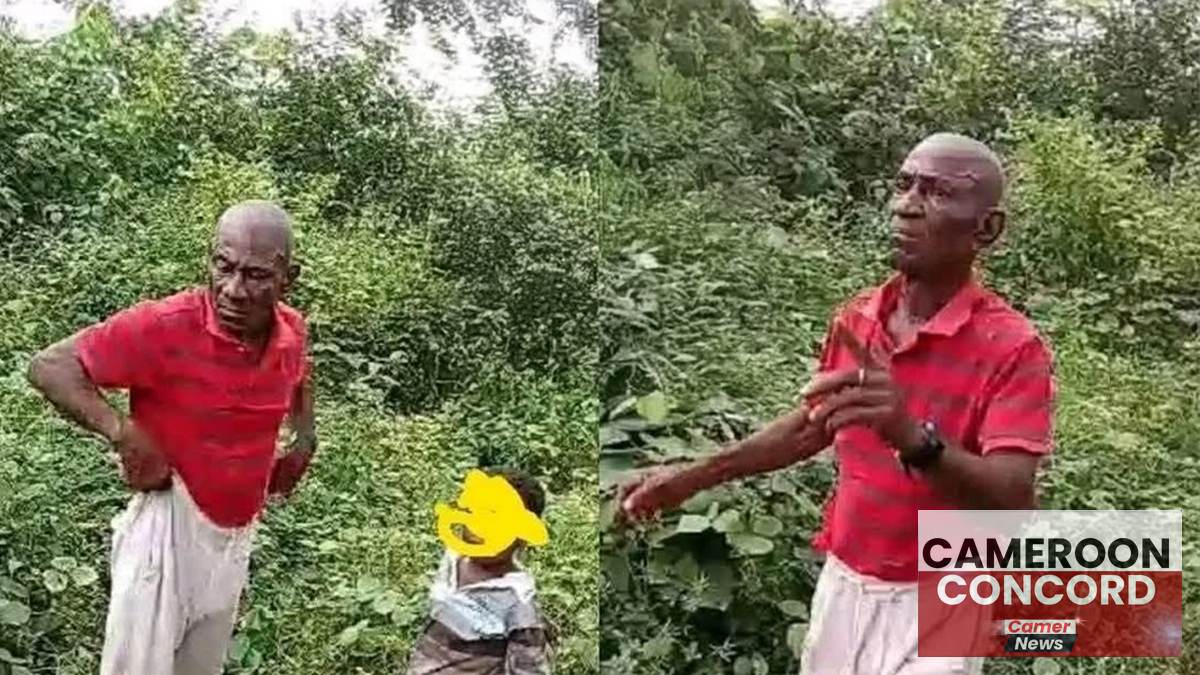
Kribi II: Man Caught Allegedly Abusing Child
- News Team
- 14.Sep.2025
- Details
- Society

Back to School 2025/2026 – Spotlight on Bamenda & Nkambe
- News Team
- 08.Sep.2025
- Details
- Society

Cameroon 2025: From Kamto to Biya: Longue Longue’s political flip shocks supporters
- News Team
- 08.Sep.2025
- Details
- Society

Meiganga bus crash spotlights Cameroon’s road safety crisis
- News Team
- 05.Sep.2025
EditorialView all
- Details
- Editorial
When Power Forgets Its Limits: Reading Atanga Nji Through Ekinneh Agbaw-Ebai’s Lens
- News Team
- 17.Dec.2025
- Details
- Editorial
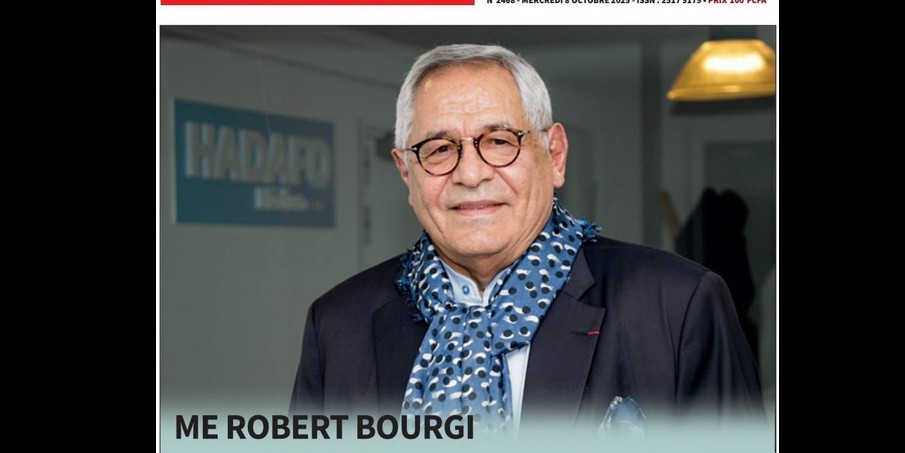
Robert Bourgi Turns on Paul Biya, Declares Him a Political Corpse
- News Team
- 10.Oct.2025
- Details
- Editorial
Heat in Maroua: What Biya’s Return Really Signals
- News Team
- 08.Oct.2025
- Details
- Editorial

Issa Tchiroma: Charles Mambo’s “Change Candidate” for Cameroon
- News Team
- 11.Sep.2025


