Cameroun vs Anglophone Cameroonians: Which way forward?
The political impasse in Cameroon may have been recently triggered by the actions of the English-speaking Common Lawyers' Association and Anglophone teachers late last year, but it has been buttressed by many Anglophone Cameroonians' longstanding resentment to the decades of marginalization and various forms of injustice they have suffered at the hands of the powers that be in the Republic of Cameroon.
Regarding the way forward, some have proposed holding an All-Anglophone Conference III, where representatives of all interest groups will, in theory, gather to deliberate and seek a common ground. But, then, no matter how broadly representative such an AAC III could be, it will be better for Anglophone Cameroonians themselves to directly determine how best they will prefer to proceed – via a referendum, perhaps, such as that of 1961.
George Ngwane, Buea-based renowned writer and Pan Africanist favors a referendum. In a recent Cameroon Concord interview, he said, "Would most Anglophones prefer a federalist structure or go for outright independence? I think the way to either of them can only be through a referendum and it is incumbent on the powers that be or the policy makers to understand that there is a possibility of creating a referendum like it was done in 1961 and 1972." Similarly, as indicated by the resolutions of their January 13 meeting in Kumba, the Cameroon Common Law Lawyers' Association have called for a referendum to be, as they opined, "reserved exclusively for those who voted (South West and North West Regions) in the United Nations' supervised plebiscite of 1961 on the form of government that will be suit their aspirations and way of life."
Which is why, while a group like the Cameroon Anglophone Civil Society Consortium (CACSC) may have helped raise awareness regarding Anglophones' plight, prior to being outlawed by the government, and using their civil society status, they should ideally have focused squarely on the advocacy for a referendum. It was never enough for the CACSC to denounce violence; the fact is, some of their wordings were subversive and, some would say, treasonous. It was only a matter of time before a repressive regime like Paul Biya's used that as a premise to stage a crackdown. Legally constituted governments, especially in Africa, don't take acts of subversion lightly. Any condemnation of a legally constituted government for perceived injustice must be careful not to be seen as subversive or lawless, as that would only give the state grounds for a crackdown – which then complicates attempts at dialogue between the state and the protesting parties. What is worth doing, it has been said, is worth doing well!
Meantime, the Common Law Lawyers' Association also set up a commission to draft "a Federal Constitution to revisit a two-state Federation". Two things are wrong here: First, you can't advocate for a referendum and at the same time propose constitutional reforms based upon what you assume will be the result of that referendum. It is rational and pragmatic to first focus on making the referendum happen. They can only propose questions that should be put to the Anglophone Cameroon population in the referendum. Second, it is not the duty of any non-elected professional body, including a body of lawyers, in a functioning republic, to draft a constitution. That legislative duty falls to the republic's legally constituted parliament. Should Anglophones ultimately vote for federalism, via a referendum, only then can any person or group of persons propose the constitutional reforms that will be needed to actualize that choice.
Whenever such a referendum materializes, the respective camps will make their cases to the Anglophone Cameroon electorate. Now, assuming the choice will be between a federal system in the Republic of Cameroon or outright independence for the two Anglophone Cameroon regions, I would argue in favor of federalism, for the following reasons.
Firstly, resolving the issues of marginalization, such as is the plight of Anglophone Cameroonians in the Republic of Cameroon essentially requires good governance. Minority marginalization and every injustice associated with it more often derives from bad governance and poor leadership. So, the best solution to it is good governance, first, by legitimately defeating the accused government and leader, in an election. The fact is, assuming Anglophone Cameroon becomes independent, for instance, similar issues of discord that currently exist at the government establishment level between English and French-speaking Cameroon will surely crop up between the North-Western and South-Western regions, and, in some ways, should an incompetent leader rise to power, there will still be some marginalization of some minority groups. South Sudan, for example, won independence from Sudan on July 9, 2011, thanks, in large part, to long-running civil wars between both sides, but then the newly independent country has been entangled in its own civil war since 2013 and ranked second highest on the 2016 Fragile States Index. And then, there is South Africa's President Jacob Zuma, who, despite being one of the key figures of their anti-apartheid struggle was found guilty, in 2016, of using state funds (over R246 million) to refurbish his private Nkandla home while millions of his fellow black South Africans wallow in joblessness and poverty. Which is to say, the ultimate objective of social justice craved and prized by revolutionary movements can only be sustained via good governance.
Secondly, even a casual comparison of the regional, multilateral and larger international contexts within which the Republic of Cameroon exists and that within which a prospective independent Anglophone Cameroon will exist, clearly shows that the status quo is much more advantageous. How? Well, thanks to its strategic geographical location and its dual Anglophone and Francophone cultural backgrounds, the Republic of Cameroon has direct boundary access to both the Central African market and the largest market in the ECOWAS region: Nigeria. With growing enthusiasm for, and steps being gradually taken to improve intra-regional trade among African countries, forward-thinking persons will immediately see the huge economic potential for Cameroon in having those direct boundary access lines. Same cannot be said of an independent Anglophone Cameroon. For one, the resulting distrust from seceding from the current Republic of Cameroon will surely hamper trade and bilateral ties with the remaining Francophone Cameroon republic. And two, Nigeria will keep an independent Anglophone Cameroon at arm's length for the simple reason that its success at independence will spur the pro-Biafra movement – not good for its stability.
In fact, Cameroon is rightly described as "Africa in miniature" because of its unique pan-African multifarious geographical, climatic and cultural endowments: diverse flora and fauna, rainforest and savanna, coastal plains and sparse deserts, Semi-Bantu and Bantu, etc. As Ousmanou Kouotou, Country Manager of DHL Express Cameroon once put it, "[In Cameroon], you have all of Africa in one country." Again, any forward-thinking person will immediately spot the huge touristic and national branding potential in that collective, especially ahead of Cameroon's hosting of an important continental event such as the 2019 African Cup of Nations. Sadly, but obviously, the same cannot be said of two separate Cameroons. And, by the way, the victory of the Indomitable Lions at the 2017 African Cup of Nations constitutes a good reminder of the great potential that Cameroon – the collective Cameroon – has in the beautiful game of football.
Thirdly, because the stability of nations is vital for world peace and progress, the process whereby component parts of existing states can make a case for and successfully gain independence, with international recognition, including by the United Nations, is never easy or straightforward. That is why, most often than not, the UN, the major UN Security Council veto-wielding powers, and the AU mainly advocate for dialogue and inclusiveness within such states. If it were easy to push for and gain independence with international recognition, marginalized component parts of many countries would do so as a first option, without exhausting other avenues for redress. And that's a recipe for instability within nations, which is definitely not something the international community favors. That explains why the two most recent cases of successful internationally-recognized independence movements – Kosovo from Serbia on February 17, 2008 and South Sudan from Sudan on July 9, 2011 – were both preceded by the compelling case of ethnic violence and civil wars. That scenario doesn't exist in the case of Cameroon and there is, thankfully, no indication that Cameroon will get there any time soon.
By the way, among those advocating for outright independence, has anyone wondered where a future capital city for an independent Anglophone Cameroon will be sited? South-Westerners are very likely not to accept Bamenda. North-Westerners, similarly, are likely not to accept Buea. The new republic will lack the capability and luxury to build a new capital city from scratch. This crucial issue alone clearly has the potential to rupture whatever independence agreements there may be between both regions, so much so that, before long, there will surely be further calls for going separate ways. Anyway, that's food for thought for the independence enthusiasts.
For those who prefer federalism, to devolve powers from the center to the regions, especially regarding such issues as the dual educational and legal systems, the first place to begin could be demanding a total, effective implementation of the 1996 Constitution of the Republic of Cameroon. If anyone feels the provisions of the 1996 Constitution don't go far enough, they can then demand the needed amendments and reforms.
Ultimately, as earlier stated, Cameroon's key problem is that of bad governance and bad leadership under Biya. Indeed, instead of acknowledging Anglophones' grievances and pursuing sincere dialogue to resolve them, the government has chosen a heavy-handed crackdown on dissent, even if somewhat subversive. Worse, the government has stupidly blocked the internet in the Anglophone regions, for more than a fortnight now!
The logical way out of this cycle of bad governance – to defeat Biya and his CPDM party at the next presidential election – is for democratic, forward-thinking opposition forces to rally behind a single candidate with some kind of wide appeal. That's what Senegal's opposition did to defeat Abdoulaye Wade in 2012. It's what Nigeria's opposition did to defeat Goodluck Jonathan in 2015 and it's what Gambia's opposition did to defeat Yahya Jammeh late last year. For Cameroon's 2018 presidential election, the opposition should rally behind someone like Joshua Osih, the SDF's first vice president and parliamentarian. Fluent in English and French and currently 48 years old (born on December 9, 1968), Osih's relative youthfulness, as well as national and international renown would make him a good candidate. And, though Cameroon doesn't currently have a two-round presidential election where, in case no one has a 50%+ victory margin in the first round, the top two candidates face off in the second round, it's the duty of the proposed opposition coalition to persistently demand them until they come to fruition, as that would greatly boost their chances of victory and set Cameroon on a path to its bright future. GOD bless Cameroon!
Raymond Eyo is an African political analyst. His articles and views have featured in publications such as New African magazine, The Africa Report, Think Africa Press, and African Arguments (the political news platform of The Royal African Society), among others. He can be reached via email at
- Details
- Raymond Eyo
- Hits: 4224
Local News
- Details
- Society
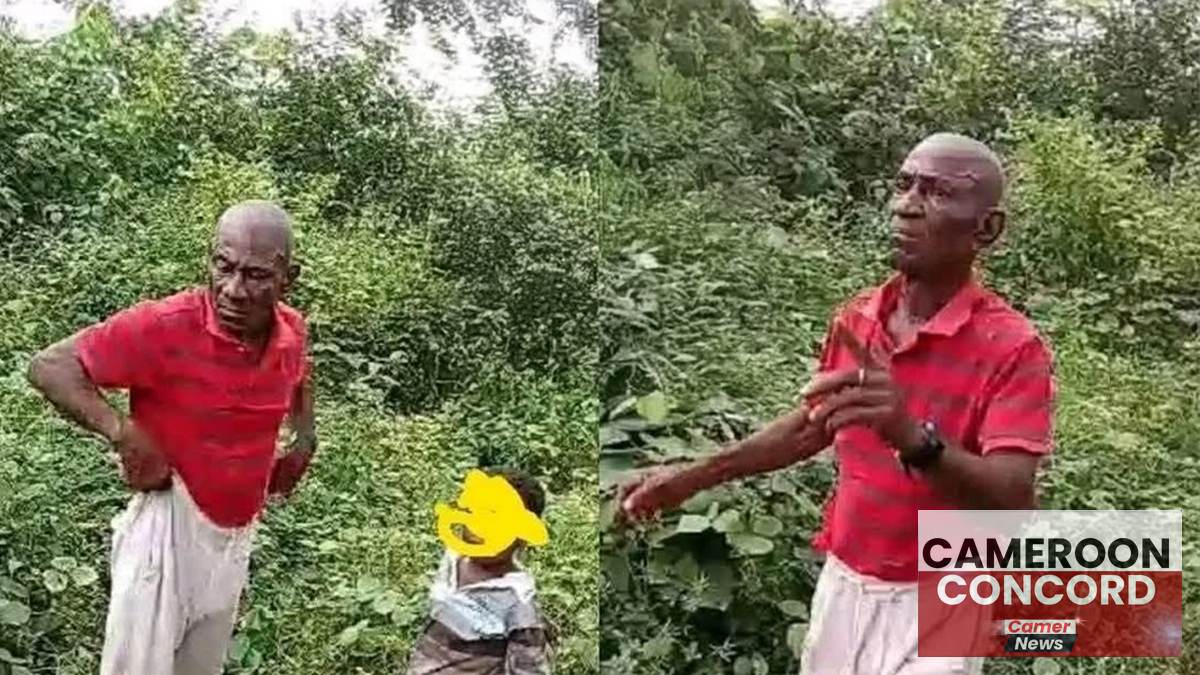
Kribi II: Man Caught Allegedly Abusing Child
- News Team
- 14.Sep.2025
- Details
- Society

Back to School 2025/2026 – Spotlight on Bamenda & Nkambe
- News Team
- 08.Sep.2025
- Details
- Society

Cameroon 2025: From Kamto to Biya: Longue Longue’s political flip shocks supporters
- News Team
- 08.Sep.2025
- Details
- Society

Meiganga bus crash spotlights Cameroon’s road safety crisis
- News Team
- 05.Sep.2025
EditorialView all
- Details
- Editorial
When Power Forgets Its Limits: Reading Atanga Nji Through Ekinneh Agbaw-Ebai’s Lens
- News Team
- 17.Dec.2025
- Details
- Editorial
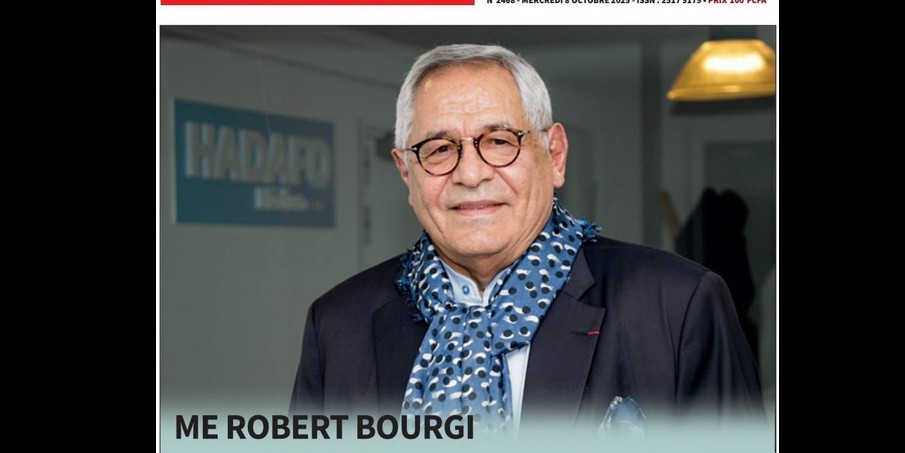
Robert Bourgi Turns on Paul Biya, Declares Him a Political Corpse
- News Team
- 10.Oct.2025
- Details
- Editorial
Heat in Maroua: What Biya’s Return Really Signals
- News Team
- 08.Oct.2025
- Details
- Editorial

Issa Tchiroma: Charles Mambo’s “Change Candidate” for Cameroon
- News Team
- 11.Sep.2025


