Editorial
Ordinary citizens that we are cannot lay claim to being privy to the way and manner ordinary government business is carried out. But even without any substantive material to work on, we can make do with perceptions, many of which end up as the truth as can be attested by the regular scoops our tabloids feed us with from time to time. Government reshuffles, as the one of last October 2, sometimes confirm popular perceptions about what is happening within government. Even if guesses are not always a hundred percent right, some happenings inexorably lead us to believe that those who hold the knife and the yam are conscious of the yearnings of the ordinary people. Of course, the nuts and bolts around the performance of government ministers are, in the first place, felt by ordinary people because they are there to serve them and not necessary by the appointing officer who has to wait to ensure that the people’s aspirations or the urgent developmental needs, as is the case with Cameroon, are met. It is probably after a long period of time that the supreme decision-maker may come to realize that the minister was not actually working for the interests for which he or she was appointed. This, of course, explains the exacerbated dispiritedness sometimes shown by ordinary citizens towards the President of the Republic whom many hold accountable for their everyday woes.
Before the recent reshuffle of the government, anxiety had grown very high as issues of discipline and the noticeable absence of team spirit had become very perceptible in the functioning mode of the government. No issue had actually been brought to the public domain, let alone any of the aggrieved members of government complaining about their colleagues to the higher instances of the government architecture. But as time went on things continue to degenerate, causing the blocking of the required cohesion any government – especially one supposed to be working round the clock within the framework of an emergency plan in order to meet the requirements of the Vision ’35 target. Even after the reshuffle, no formal word came out to tell the citizenry that the bad weeds in the garden had been uprooted and thrown out of the garden. It was the President of the Republic who, two weeks later, literally threw a tool into the works by bursting open the abscess of government indiscipline which seemed to have grown too big, requiring the necessary purging to remove the nauseating pus. Hear the President as he addressed the council of ministers last Thursday: “you should constantly apply the following principles which are the driving force of senior State servants and nation-builders: discipline, team spirit, dedication, loyalty, integrity and patriotism.” Are we together with the President? Certainly not!
The President underscored the need to get Ministers-Delegate and Secretaries of State more involved in the running of government business. For too long, substantive ministers have taken these senior decision-makers in their own right, simply as presidential appointees to serve political objectives rather as nation-builders they are supposed to be? Their presence in many ministries is seen as an obstacle and their bosses make it a point of duty to ridicule them by never associating them in the running of the house. Sometimes the staff is even divided over loyalty to the Minister or to the Minister-Delegate or Secretary of State, creating an atmosphere of stalemate which is not conducive for progress. Many government projects have been known to be stalling simply because of the bad humour of cabinet colleagues. How can one expect good results from a government within which there are ministers who do not respect the head of government, going sometimes to even ridicule him or those who are not even in talking terms, who cannot answer a phone call or who simply do not answer official correspondence on issues which are sometimes crucial for the economic and social advancement of the country? The President of the Republic has reset the agenda, the goals to attain and the necessary discipline required to attain those goals. The Prime Minister and Head of Government, by these presidential pronouncements, has been given back all his prerogatives as the government’s master of discipline. No more excuses about erring ministers because, before the nation, he has been reminded of his responsibilities to keep the government flock under check.
- Details
- Ngwa Bertrand
- Hits: 1508

With the notable exception of Cameroonians, the announced deployment of American soldiers to Cameroon to combat Boko Haram terrorists should not come as a surprise to keen observers. First the Americans have been around for a while under supposedly different circumstances. There can be no gainsaying that the United States stated policy has always been to protect American economic and strategic interests where ever they are located or threatened. The Chad-Cameroon pipeline project and the Pecten Cameroon offshore oil exploitation and others fall within this category.
Additionally US strategic interests in the sub-region, particularly in the oil rich Gulf of Guinea, in Equatorial Guinea, Sao Tome and Principe and the Great Lakes region warrant an American security presence. There is no doubt that terrorist groups like Boko Haram which has publicly declared its allegiance to ISIS and others like Al Qaeda in the Maghreb and other criminal gangs in Africa Sahel have publicly declared and have the capacity to strike US interests in the sub-region or from basis in the sub-region. The US decision to deploy its soldiers in Cameroon to enable it participate in the ongoing war against Boko Haram is the clearest evidence that either terrorist groups have set up basis in Cameroon warranting US direction intervention.
Also, the US might have found sufficient factors and indicia of reliability that Cameroon is or potentially a sanctuary of internal and international terrorism. To this extent, there is no reason to blame the US for taking measures to protect its regional and global strategic interests. The United States policy in this regard is well known and should therefore not surprise anyone. The problem however lies with Cameroon. There is no gainsaying that Boko Haram and the threats of international terrorism posed grave danger requiring appropriate response. The response included urgent remedial tactical and strategic military action.
However the declaration of war from a foreign capital by President Paul Biya was an unprecedented violation of the constitution he swore to defend and an assault on the sovereignty of Cameroon. To this extent, both the Boko Haram that the President declared war against from a foreign capital to combat and the President can be said of being culpable of crimes against the sovereignty of the nation. Added to this, his prosecution of the war betrays a despicable lack of leadership and respect for the victims of the war and the sacrifices in life and limb of our valiant men and women in combat for the defense of the fatherland. Worse, President Paul Biya rushed through the National Assembly a liberticidal law against terrorism whose purport is to support his perpetuation of eternal power through the suppression of civil liberties and fundamental freedoms.
This law places the country under emergency rule and gives tacit blessings to the very culture of fear that Boko Haram hoped to instill in the citizenry. Inviting the USA into the war as he did the French before without informing his people and seeking a mandate to do so from the National Assembly is proof of a potential treasonable violation of the constitution and disregard for sovereign will of the people. The Americans are thus deploying in a war and war zone of potential distinct strategic interests. Observers have not lost sight of the fact that the war in both the US and France forces are deployed or are deploying was in part fueled by arms indiscriminately dropped by France under Sarkozy to criminal gangs in the Libya and African Sahel. These were intended, according to that Sarkozy, to combat the forces of Muammar Ghadaffi.
There can therefore be no doubt that by the participation of the US and NATO in the war for regime change in Libya the US and France raised the profile of terrorists in parts of Africa, Boko Haram being one of the most visible. In Libya and elsewhere as we see in Syria, the US , France and Great Britain have characterized terrorist groups into good terrorists and bad terrorists, although the difference between both categories can easily be conflated or even tenuous to ascertain. The transmutation from good rebels to bad rebels indeed is hard to ascertain as the US, NATO in the world has come to learn in Libya where the criminal gangs they left in place after Ghhadaffi have invited ISIS to take control of the state and opened a floodgate of unprecedented migration to Europe. So far thousands are dying in the Mediterranean on the watch of the supposed moral guarantors of the supposed civilized world.
Coming back to the US intended deployment to Cameroon, there is no doubt that the mission as announced is genuine but the signals it sends are obvious. Regarding these signals, we must first consider the cacophony of actors in the field. There are a recently constituted regional forces with Head Quarters in Ndjamena, French supposedly reconnaissance Units a euphemism for a French military presence and now the US. Only a person with jaundiced eyes will doubt the fact that French colonial military and economic pact with Cameroon makes the polity under potential French military control. The US military deployment will alter the balance of power and influence in Cameroon and the sub-region.
One obvious fact which must be stated is that with this deployment, the US will remain in Cameroon for a long time to come. Inviting the US to deploy its forces seemed easy for Mr Paul Biya but asking them to park and go home may be problematic in the future. Rather than put a time frame for it to execute and end its mandate, it will be re-enforced and given a more robust mandate with time. The deployment also may be construed as a rare signal that President Biya’s more than three decades of personal power may be coming to an end. If this deployment and other international and internal dynamics do not end it, the French will conclude that he no longer serves their interest and kick him out from power. There are emerging signs that the end of President Paul Biya may plunge the country into a potential blood bath due to a paucity of a viable constitutional arrangement for a smooth transition.
Overtime Paul Biya and the international community by neglect and insufficient attention have allowed the Southern Cameroons problem to snowball into a potential time bomb that may explode drawing in communities in neighbouring Nigeria and international involvement. The complexity of the Southern Cameroons problem makes France an unlikely country to intervene once it explodes. The presence of the US forces may be construed as a potential stabilization force that may caution the potential fallout and obviate a needless bloodletting. Many Cameroonians fear that the presence of American soldiers will invite American enemies far and wide worldwide to the Cameroon warfront. Cameroonians are however divided whether the deployment will attenuate or put brakes to the vampirism of French colonial and neocolonial policies that plunged the sub-region in the bloodletting that is ongoing.
No matter from which perspective one may see it, this deployment marks the beginning of a potential new era and the end of one. None echoes the independence that most Cameroonians and African crave for. But both put the spotlight on those who profess to effectively rule Cameroon. It is from this perspective that we should anxiously consider this significant development. Let the truth which President lacks the courage to admit to inform his country men and women be told, this deployment by the greatest superpower on earth marks a significant development worth noting. Lest we forget, Cameroon is at war, an international armed conflict. That fact and the deployment place its sovereignty and destiny in the hands of foreign powers. There is need therefore for a change of guard at the helm of the state to manage this and other developments. The time for the Cameroon Army to be tele-commanded from foreign holiday resorts and hotels may be coming to end. The deployment of US forces carries symbolic weight. One thing that this deployment may beacon is that the time of directing the war effort while foreign forces and those from the super power are on the ground may soon be over.
- Details
- Ngwa Bertrand
- Hits: 1792

With the notable exception of Cameroonians, the announced deployment of American soldiers to Cameroon to combat Boko Haram terrorists should not come as a surprise to keen observers. First the Americans have been around for a while under supposedly different circumstances. There can be no gainsaying that the United States stated policy has always been to protect American economic and strategic interests where ever they are located or threatened. The Chad-Cameroon pipeline project and the Pecten Cameroon offshore oil exploitation and others fall within this category.
Additionally US strategic interests in the sub-region, particularly in the oil rich Gulf of Guinea, in Equatorial Guinea, Sao Tome and Principe and the Great Lakes region warrant an American security presence. There is no doubt that terrorist groups like Boko Haram which has publicly declared its allegiance to ISIS and others like Al Qaeda in the Maghreb and other criminal gangs in Africa Sahel have publicly declared and have the capacity to strike US interests in the sub-region or from basis in the sub-region. The US decision to deploy its soldiers in Cameroon to enable it participate in the ongoing war against Boko Haram is the clearest evidence that either terrorist groups have set up basis in Cameroon warranting US direction intervention.
Also, the US might have found sufficient factors and indicia of reliability that Cameroon is or potentially a sanctuary of internal and international terrorism. To this extent, there is no reason to blame the US for taking measures to protect its regional and global strategic interests. The United States policy in this regard is well known and should therefore not surprise anyone. The problem however lies with Cameroon. There is no gainsaying that Boko Haram and the threats of international terrorism posed grave danger requiring appropriate response. The response included urgent remedial tactical and strategic military action.
However the declaration of war from a foreign capital by President Paul Biya was an unprecedented violation of the constitution he swore to defend and an assault on the sovereignty of Cameroon. To this extent, both the Boko Haram that the President declared war against from a foreign capital to combat and the President can be said of being culpable of crimes against the sovereignty of the nation. Added to this, his prosecution of the war betrays a despicable lack of leadership and respect for the victims of the war and the sacrifices in life and limb of our valiant men and women in combat for the defense of the fatherland. Worse, President Paul Biya rushed through the National Assembly a liberticidal law against terrorism whose purport is to support his perpetuation of eternal power through the suppression of civil liberties and fundamental freedoms.
This law places the country under emergency rule and gives tacit blessings to the very culture of fear that Boko Haram hoped to instill in the citizenry. Inviting the USA into the war as he did the French before without informing his people and seeking a mandate to do so from the National Assembly is proof of a potential treasonable violation of the constitution and disregard for sovereign will of the people. The Americans are thus deploying in a war and war zone of potential distinct strategic interests. Observers have not lost sight of the fact that the war in both the US and France forces are deployed or are deploying was in part fueled by arms indiscriminately dropped by France under Sarkozy to criminal gangs in the Libya and African Sahel. These were intended, according to that Sarkozy, to combat the forces of Muammar Ghadaffi.
There can therefore be no doubt that by the participation of the US and NATO in the war for regime change in Libya the US and France raised the profile of terrorists in parts of Africa, Boko Haram being one of the most visible. In Libya and elsewhere as we see in Syria, the US , France and Great Britain have characterized terrorist groups into good terrorists and bad terrorists, although the difference between both categories can easily be conflated or even tenuous to ascertain. The transmutation from good rebels to bad rebels indeed is hard to ascertain as the US, NATO in the world has come to learn in Libya where the criminal gangs they left in place after Ghhadaffi have invited ISIS to take control of the state and opened a floodgate of unprecedented migration to Europe. So far thousands are dying in the Mediterranean on the watch of the supposed moral guarantors of the supposed civilized world.
Coming back to the US intended deployment to Cameroon, there is no doubt that the mission as announced is genuine but the signals it sends are obvious. Regarding these signals, we must first consider the cacophony of actors in the field. There are a recently constituted regional forces with Head Quarters in Ndjamena, French supposedly reconnaissance Units a euphemism for a French military presence and now the US. Only a person with jaundiced eyes will doubt the fact that French colonial military and economic pact with Cameroon makes the polity under potential French military control. The US military deployment will alter the balance of power and influence in Cameroon and the sub-region.
One obvious fact which must be stated is that with this deployment, the US will remain in Cameroon for a long time to come. Inviting the US to deploy its forces seemed easy for Mr Paul Biya but asking them to park and go home may be problematic in the future. Rather than put a time frame for it to execute and end its mandate, it will be re-enforced and given a more robust mandate with time. The deployment also may be construed as a rare signal that President Biya’s more than three decades of personal power may be coming to an end. If this deployment and other international and internal dynamics do not end it, the French will conclude that he no longer serves their interest and kick him out from power. There are emerging signs that the end of President Paul Biya may plunge the country into a potential blood bath due to a paucity of a viable constitutional arrangement for a smooth transition.
Overtime Paul Biya and the international community by neglect and insufficient attention have allowed the Southern Cameroons problem to snowball into a potential time bomb that may explode drawing in communities in neighbouring Nigeria and international involvement. The complexity of the Southern Cameroons problem makes France an unlikely country to intervene once it explodes. The presence of the US forces may be construed as a potential stabilization force that may caution the potential fallout and obviate a needless bloodletting. Many Cameroonians fear that the presence of American soldiers will invite American enemies far and wide worldwide to the Cameroon warfront. Cameroonians are however divided whether the deployment will attenuate or put brakes to the vampirism of French colonial and neocolonial policies that plunged the sub-region in the bloodletting that is ongoing.
No matter from which perspective one may see it, this deployment marks the beginning of a potential new era and the end of one. None echoes the independence that most Cameroonians and African crave for. But both put the spotlight on those who profess to effectively rule Cameroon. It is from this perspective that we should anxiously consider this significant development. Let the truth which President lacks the courage to admit to inform his country men and women be told, this deployment by the greatest superpower on earth marks a significant development worth noting. Lest we forget, Cameroon is at war, an international armed conflict. That fact and the deployment place its sovereignty and destiny in the hands of foreign powers. There is need therefore for a change of guard at the helm of the state to manage this and other developments. The time for the Cameroon Army to be tele-commanded from foreign holiday resorts and hotels may be coming to end. The deployment of US forces carries symbolic weight. One thing that this deployment may beacon is that the time of directing the war effort while foreign forces and those from the super power are on the ground may soon be over.
- Details
- Ngwa Bertrand
- Hits: 1409

With the notable exception of Cameroonians, the announced deployment of American soldiers to Cameroon to combat Boko Haram terrorists should not come as a surprise to keen observers. First the Americans have been around for a while under supposedly different circumstances. There can be no gainsaying that the United States stated policy has always been to protect American economic and strategic interests where ever they are located or threatened. The Chad-Cameroon pipeline project and the Pecten Cameroon offshore oil exploitation and others fall within this category.
Additionally US strategic interests in the sub-region, particularly in the oil rich Gulf of Guinea, in Equatorial Guinea, Sao Tome and Principe and the Great Lakes region warrant an American security presence. There is no doubt that terrorist groups like Boko Haram which has publicly declared its allegiance to ISIS and others like Al Qaeda in the Maghreb and other criminal gangs in Africa Sahel have publicly declared and have the capacity to strike US interests in the sub-region or from basis in the sub-region. The US decision to deploy its soldiers in Cameroon to enable it participate in the ongoing war against Boko Haram is the clearest evidence that either terrorist groups have set up basis in Cameroon warranting US direction intervention.
Also, the US might have found sufficient factors and indicia of reliability that Cameroon is or potentially a sanctuary of internal and international terrorism. To this extent, there is no reason to blame the US for taking measures to protect its regional and global strategic interests. The United States policy in this regard is well known and should therefore not surprise anyone. The problem however lies with Cameroon. There is no gainsaying that Boko Haram and the threats of international terrorism posed grave danger requiring appropriate response. The response included urgent remedial tactical and strategic military action.
However the declaration of war from a foreign capital by President Paul Biya was an unprecedented violation of the constitution he swore to defend and an assault on the sovereignty of Cameroon. To this extent, both the Boko Haram that the President declared war against from a foreign capital to combat and the President can be said of being culpable of crimes against the sovereignty of the nation. Added to this, his prosecution of the war betrays a despicable lack of leadership and respect for the victims of the war and the sacrifices in life and limb of our valiant men and women in combat for the defense of the fatherland. Worse, President Paul Biya rushed through the National Assembly a liberticidal law against terrorism whose purport is to support his perpetuation of eternal power through the suppression of civil liberties and fundamental freedoms.
This law places the country under emergency rule and gives tacit blessings to the very culture of fear that Boko Haram hoped to instill in the citizenry. Inviting the USA into the war as he did the French before without informing his people and seeking a mandate to do so from the National Assembly is proof of a potential treasonable violation of the constitution and disregard for sovereign will of the people. The Americans are thus deploying in a war and war zone of potential distinct strategic interests. Observers have not lost sight of the fact that the war in both the US and France forces are deployed or are deploying was in part fueled by arms indiscriminately dropped by France under Sarkozy to criminal gangs in the Libya and African Sahel. These were intended, according to that Sarkozy, to combat the forces of Muammar Ghadaffi.
There can therefore be no doubt that by the participation of the US and NATO in the war for regime change in Libya the US and France raised the profile of terrorists in parts of Africa, Boko Haram being one of the most visible. In Libya and elsewhere as we see in Syria, the US , France and Great Britain have characterized terrorist groups into good terrorists and bad terrorists, although the difference between both categories can easily be conflated or even tenuous to ascertain. The transmutation from good rebels to bad rebels indeed is hard to ascertain as the US, NATO in the world has come to learn in Libya where the criminal gangs they left in place after Ghhadaffi have invited ISIS to take control of the state and opened a floodgate of unprecedented migration to Europe. So far thousands are dying in the Mediterranean on the watch of the supposed moral guarantors of the supposed civilized world.
Coming back to the US intended deployment to Cameroon, there is no doubt that the mission as announced is genuine but the signals it sends are obvious. Regarding these signals, we must first consider the cacophony of actors in the field. There are a recently constituted regional forces with Head Quarters in Ndjamena, French supposedly reconnaissance Units a euphemism for a French military presence and now the US. Only a person with jaundiced eyes will doubt the fact that French colonial military and economic pact with Cameroon makes the polity under potential French military control. The US military deployment will alter the balance of power and influence in Cameroon and the sub-region.
One obvious fact which must be stated is that with this deployment, the US will remain in Cameroon for a long time to come. Inviting the US to deploy its forces seemed easy for Mr Paul Biya but asking them to park and go home may be problematic in the future. Rather than put a time frame for it to execute and end its mandate, it will be re-enforced and given a more robust mandate with time. The deployment also may be construed as a rare signal that President Biya’s more than three decades of personal power may be coming to an end. If this deployment and other international and internal dynamics do not end it, the French will conclude that he no longer serves their interest and kick him out from power. There are emerging signs that the end of President Paul Biya may plunge the country into a potential blood bath due to a paucity of a viable constitutional arrangement for a smooth transition.
Overtime Paul Biya and the international community by neglect and insufficient attention have allowed the Southern Cameroons problem to snowball into a potential time bomb that may explode drawing in communities in neighbouring Nigeria and international involvement. The complexity of the Southern Cameroons problem makes France an unlikely country to intervene once it explodes. The presence of the US forces may be construed as a potential stabilization force that may caution the potential fallout and obviate a needless bloodletting. Many Cameroonians fear that the presence of American soldiers will invite American enemies far and wide worldwide to the Cameroon warfront. Cameroonians are however divided whether the deployment will attenuate or put brakes to the vampirism of French colonial and neocolonial policies that plunged the sub-region in the bloodletting that is ongoing.
No matter from which perspective one may see it, this deployment marks the beginning of a potential new era and the end of one. None echoes the independence that most Cameroonians and African crave for. But both put the spotlight on those who profess to effectively rule Cameroon. It is from this perspective that we should anxiously consider this significant development. Let the truth which President lacks the courage to admit to inform his country men and women be told, this deployment by the greatest superpower on earth marks a significant development worth noting. Lest we forget, Cameroon is at war, an international armed conflict. That fact and the deployment place its sovereignty and destiny in the hands of foreign powers. There is need therefore for a change of guard at the helm of the state to manage this and other developments. The time for the Cameroon Army to be tele-commanded from foreign holiday resorts and hotels may be coming to end. The deployment of US forces carries symbolic weight. One thing that this deployment may beacon is that the time of directing the war effort while foreign forces and those from the super power are on the ground may soon be over.
- Details
- Ngwa Bertrand
- Hits: 1564
With the notable exception of Cameroonians, the announced deployment of American soldiers to Cameroon to combat Boko Haram terrorists should not come as a surprise to keen observers. First the Americans have been around for a while under supposedly different circumstances. There can be no gainsaying that the United States stated policy has always been to protect American economic and strategic interests where ever they are located or threatened. The Chad-Cameroon pipeline project and the Pecten Cameroon offshore oil exploitation and others fall within this category.
Additionally US strategic interests in the sub-region, particularly in the oil rich Gulf of Guinea, in Equatorial Guinea, Sao Tome and Principe and the Great Lakes region warrant an American security presence. There is no doubt that terrorist groups like Boko Haram which has publicly declared its allegiance to ISIS and others like Al Qaeda in the Maghreb and other criminal gangs in Africa Sahel have publicly declared and have the capacity to strike US interests in the sub-region or from basis in the sub-region. The US decision to deploy its soldiers in Cameroon to enable it participate in the ongoing war against Boko Haram is the clearest evidence that either terrorist groups have set up basis in Cameroon warranting US direction intervention.
Also, the US might have found sufficient factors and indicia of reliability that Cameroon is or potentially a sanctuary of internal and international terrorism. To this extent, there is no reason to blame the US for taking measures to protect its regional and global strategic interests. The United States policy in this regard is well known and should therefore not surprise anyone. The problem however lies with Cameroon. There is no gainsaying that Boko Haram and the threats of international terrorism posed grave danger requiring appropriate response. The response included urgent remedial tactical and strategic military action.
However the declaration of war from a foreign capital by President Paul Biya was an unprecedented violation of the constitution he swore to defend and an assault on the sovereignty of Cameroon. To this extent, both the Boko Haram that the President declared war against from a foreign capital to combat and the President can be said of being culpable of crimes against the sovereignty of the nation. Added to this, his prosecution of the war betrays a despicable lack of leadership and respect for the victims of the war and the sacrifices in life and limb of our valiant men and women in combat for the defense of the fatherland. Worse, President Paul Biya rushed through the National Assembly a liberticidal law against terrorism whose purport is to support his perpetuation of eternal power through the suppression of civil liberties and fundamental freedoms.
This law places the country under emergency rule and gives tacit blessings to the very culture of fear that Boko Haram hoped to instill in the citizenry. Inviting the USA into the war as he did the French before without informing his people and seeking a mandate to do so from the National Assembly is proof of a potential treasonable violation of the constitution and disregard for sovereign will of the people. The Americans are thus deploying in a war and war zone of potential distinct strategic interests. Observers have not lost sight of the fact that the war in both the US and France forces are deployed or are deploying was in part fueled by arms indiscriminately dropped by France under Sarkozy to criminal gangs in the Libya and African Sahel. These were intended, according to that Sarkozy, to combat the forces of Muammar Ghadaffi.
There can therefore be no doubt that by the participation of the US and NATO in the war for regime change in Libya the US and France raised the profile of terrorists in parts of Africa, Boko Haram being one of the most visible. In Libya and elsewhere as we see in Syria, the US , France and Great Britain have characterized terrorist groups into good terrorists and bad terrorists, although the difference between both categories can easily be conflated or even tenuous to ascertain. The transmutation from good rebels to bad rebels indeed is hard to ascertain as the US, NATO in the world has come to learn in Libya where the criminal gangs they left in place after Ghhadaffi have invited ISIS to take control of the state and opened a floodgate of unprecedented migration to Europe. So far thousands are dying in the Mediterranean on the watch of the supposed moral guarantors of the supposed civilized world.
Coming back to the US intended deployment to Cameroon, there is no doubt that the mission as announced is genuine but the signals it sends are obvious. Regarding these signals, we must first consider the cacophony of actors in the field. There are a recently constituted regional forces with Head Quarters in Ndjamena, French supposedly reconnaissance Units a euphemism for a French military presence and now the US. Only a person with jaundiced eyes will doubt the fact that French colonial military and economic pact with Cameroon makes the polity under potential French military control. The US military deployment will alter the balance of power and influence in Cameroon and the sub-region.
One obvious fact which must be stated is that with this deployment, the US will remain in Cameroon for a long time to come. Inviting the US to deploy its forces seemed easy for Mr Paul Biya but asking them to park and go home may be problematic in the future. Rather than put a time frame for it to execute and end its mandate, it will be re-enforced and given a more robust mandate with time. The deployment also may be construed as a rare signal that President Biya’s more than three decades of personal power may be coming to an end. If this deployment and other international and internal dynamics do not end it, the French will conclude that he no longer serves their interest and kick him out from power. There are emerging signs that the end of President Paul Biya may plunge the country into a potential blood bath due to a paucity of a viable constitutional arrangement for a smooth transition.
Overtime Paul Biya and the international community by neglect and insufficient attention have allowed the Southern Cameroons problem to snowball into a potential time bomb that may explode drawing in communities in neighbouring Nigeria and international involvement. The complexity of the Southern Cameroons problem makes France an unlikely country to intervene once it explodes. The presence of the US forces may be construed as a potential stabilization force that may caution the potential fallout and obviate a needless bloodletting. Many Cameroonians fear that the presence of American soldiers will invite American enemies far and wide worldwide to the Cameroon warfront. Cameroonians are however divided whether the deployment will attenuate or put brakes to the vampirism of French colonial and neocolonial policies that plunged the sub-region in the bloodletting that is ongoing.
No matter from which perspective one may see it, this deployment marks the beginning of a potential new era and the end of one. None echoes the independence that most Cameroonians and African crave for. But both put the spotlight on those who profess to effectively rule Cameroon. It is from this perspective that we should anxiously consider this significant development. Let the truth which President lacks the courage to admit to inform his country men and women be told, this deployment by the greatest superpower on earth marks a significant development worth noting. Lest we forget, Cameroon is at war, an international armed conflict. That fact and the deployment place its sovereignty and destiny in the hands of foreign powers. There is need therefore for a change of guard at the helm of the state to manage this and other developments. The time for the Cameroon Army to be tele-commanded from foreign holiday resorts and hotels may be coming to end. The deployment of US forces carries symbolic weight. One thing that this deployment may beacon is that the time of directing the war effort while foreign forces and those from the super power are on the ground may soon be over.
- Details
- Ngwa Bertrand
- Hits: 2329

For over a decade, 18 African nations have been ravaged by war, exposing military personnel and civilians to violence and trauma. As a result, one hundred million Africans now suffer from post-traumatic stress disorder (PTSD), and in parts of Africa, 50 percent or more of the population is afflicted with PTSD. Its effects debilitate individuals and ripple into their families and communities. PTSD affects not only military combatants but also anyone who witnesses or experiences extremely terrifying, tragic or traumatic events such as natural disasters, rape, torture or kidnapping.
PTSD comes with a variety of symptoms, including inability to sleep, horrific and intense flashbacks to high-stress combat experiences, depression, and difficulty relating to friends, family and spouse, etc. The brains and personalities of those with PTSD simply have not been able to process the intensity of past trauma. These experiences continue to haunt and debilitate the lives of those suffering from its effects.
Research has shown that the practice of the Transcendental Meditation (TM) technique can result in large reductions in PTSD symptoms in short periods of time. In a study on Congolese refugees, 90% of subjects improved into the "non-symptomatic" range within 30 days and stayed that way throughout the 135 days of the research (2). A follow-up study replicated those findings and showed that two thirds of the benefit occurred within 10 days of learning the TM technique (3). Effect sizes were larger than those seen with other behavioral and meditation, relaxation or stress management techniques.
American Vietnam-era veterans with PTSD were taught TM and showed significant reductions in anxiety, depression, and negative personality traits (4). Similarly, Iraq and Afghanistan veterans had a 50% reduction in PTS symptoms in a three-month period after learning the TM technique (5).
TM is a cost-effective, easily learned, effortless mental technique from the ancient meditative traditions of India. Over five million people worldwide have learned this non-religious technique. It is taught in a systematic, highly structured and standardized manner by trained teachers. Over 350 peer-reviewed studies have documented its positive effects on mental and physical health.
The efficacy of TM practice has been confirmed by the American Heart Association, which concluded that TM is the only behavioral technique that can be recommended for lowering hypertension (6). Previous meta-analyses have also shown TM to be the most effective behavioral technique in reducing anxiety (7).
TM practice produces a state of "restful alertness" - deep rest that allows for a kind of passive processing of trauma. TM dissolves the deep stresses incurred by trauma on the physiological level and thereby attenuates identification with the trauma on the mental level.
During TM practice brain wave activity becomes highly coherent, an indicator of orderliness and brain integration. Biological age and stress hormones such as cortisol, epinephrine and norepinephrine decrease. Indices of relaxation and well-being such as serotonin levels, galvanic skin resistance, and immune-modulatory effects all increase (8). Although conventional approaches to PTSD can improve self-confidence, sense of mastery and coping mechanisms, TM practice apparently goes deeper. It provides a broader spectrum of benefits, including increases in ego development, executive functioning, personality integration, creativity, problem-solving abilities and intelligence. More "side benefits" of TM practice include significant global improvement in psychological functioning and well-being beyond disorder-specific symptom reduction (8).
In addition, African military personnel and veterans may be hesitant to seek PTSD treatment because doing so might be viewed as a sign of weakness. TM is a self-sufficient technique, free from the possible stigma of mental health services. The faces and words of people with PTSD whose lives have been changed by TM practice can reveal far more than this article.
- Details
- Ngwa Bertrand
- Hits: 1761
Local News
- Details
- Society

Kribi II: Man Caught Allegedly Abusing Child
- News Team
- 14.Sep.2025
- Details
- Society

Back to School 2025/2026 – Spotlight on Bamenda & Nkambe
- News Team
- 08.Sep.2025
- Details
- Society

Cameroon 2025: From Kamto to Biya: Longue Longue’s political flip shocks supporters
- News Team
- 08.Sep.2025
- Details
- Society

Meiganga bus crash spotlights Cameroon’s road safety crisis
- News Team
- 05.Sep.2025
EditorialView all
- Details
- Editorial
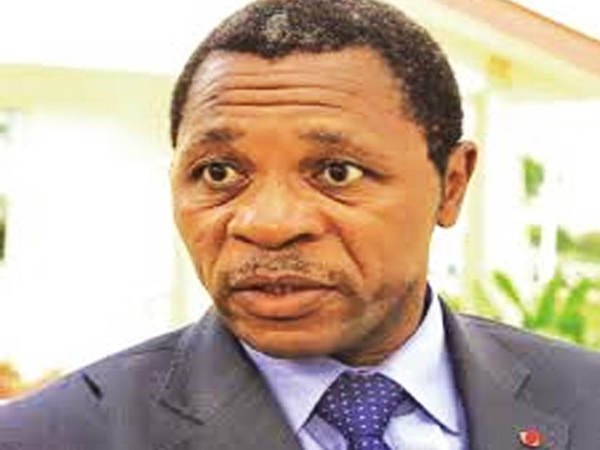
When Power Forgets Its Limits: Reading Atanga Nji Through Ekinneh Agbaw-Ebai’s Lens
- News Team
- 17.Dec.2025
- Details
- Editorial
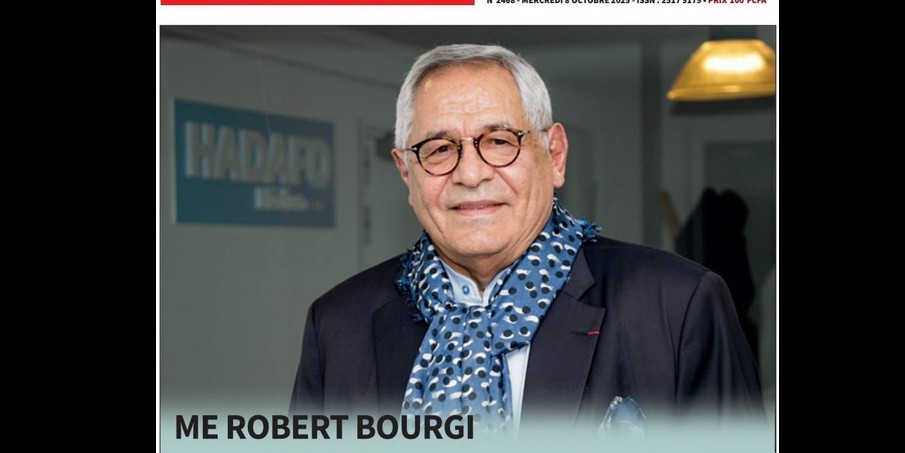
Robert Bourgi Turns on Paul Biya, Declares Him a Political Corpse
- News Team
- 10.Oct.2025
- Details
- Editorial
Heat in Maroua: What Biya’s Return Really Signals
- News Team
- 08.Oct.2025
- Details
- Editorial

Issa Tchiroma: Charles Mambo’s “Change Candidate” for Cameroon
- News Team
- 11.Sep.2025


