Editorial
It is five years now since the bank created to boost agricultural activities in the country was announced. Cameroonian farmers are certainly taken aback to see that such a long period has elapse without any possibility of them rushing to the bank to get the necessary finances to fund their activities. As the days pass by, hopes are rekindled with the setting up of the structures therein to enable the bank effectively go operational. The bank’s administration has been set up and the initial capital put in place to enable the institution functional. But on the ground, nothing has changed.
This state of affairs has been troubling Cameroonians, considering that agriculture represents more than half of the country’s non-oil export revenue and employs almost 60 per cent of the working population. Ninety per cent of rural households are, in one way or another, employed in agriculture, and approximately one-third of them earn their living from export crops. The announcement by the Chamber of Agriculture, Fisheries, Livestock and Forestry of the setting up of microfinance in charge of supporting farmers and ensuring their social security is another welcome initiative.
Farmers, in effect, received the news with mixed feeling especially as they haven’t been able to reap the fruit of the much pampered agriculture bank. In any case, they have continued to operate within their historic precincts financing their activities with their meagre savings, Njangis, contributions, common initiative groups and cooperative societies. In addition, pending the effective functioning of the agricultural bank and the microfinance institutions, government has not stopped providing subventions to farmers through their various cooperatives and other groups. This is being done through the various projects in the Ministry of Agriculture and Rural Development. Some of them include: projects in charge of in-puts such as fertilizers, chemicals (insecticides, herbicides, fungicides) and seedlings. But this has not been enough to solve the problem.
Agriculture, it should be recalled, is more of a private sector economic activity. Government’s action should in the real sense constitute assistance. Unfortunately, many Cameroonians continue to think that government must play a primordial role in developing the sector. This entails that the creation of financial institutions ought not to be the sole source of funding for many a farmer. That said, local financial institutions of the private sector have not been of great assistance to the agric sector. Commercial banks for instance, continue to see agriculture as a highly risky sector and so, are not ready to give out loans to farmers. The conditions remain draconian. And whenever such loans do come in, there is sometimes lack of follow up to ensure that such projects are effectively implemented. It is not the first time a bank is being created to promote agriculture in Cameroon.
The faith of the Rural Development Fund (FONADER) remains engraved in many minds. Created for farmers, the bank became a financial haven for the well-to-do. At the end of the day, loans were disbursed to people who were neither agriculturalists nor potential ones. The announcement of another bank brought back minds to the woes of FONADER and this explains why many continue to think and wish that the slow takeoff of the new structure should be a measure to avoid the errors of the past.
- Details
- Ngwa Bertrand
- Hits: 1639

Cameroon’s Deputy Prime Minister at the Presidency of the Republic in charge of Relations with the Assemblies, Ahmadou Ali has since October 14, 2015 been in a hospital in France. Mr Amadou Ali was evacuated aboard an air ambulance on the instructions of the Head of State Paul Biya.
With age telling on most of the members of the CPDM crime syndicate, the Vice Prime Minister is not the only highly placed government official who is seeking medical care in the West. The Deputy Secretary General at the Presidency of the Republic, Peter Agbor Tabi, who has a special role in the central administration and the coordination of intelligence, was also taken to a French hospital.
Many ageing cabinet ministers and senior state officials shuttle between Europe and Cameroon for treatment at the expense of the Cameroonian taxpayer. Recently, the Secretary of State, Jean Baptiste Bokam and General Dagafounansou of the Cameroon army were also flown abroad for medical reasons including the late Madam Foning.
When they do not collapse in official ceremonies such as the cases of premiers Philemon Yang, Peter Mafany Musonge and Minister Emmanuel Bonde, these CPDM gurus enjoy medical evacuation by our new national carrier known as Air France. The average age of the CPDM team and their acolytes in power is around 65, which is a factor of physical and physiological instability.
- Details
- Ngwa Bertrand
- Hits: 1513

Cameroon’s Deputy Prime Minister at the Presidency of the Republic in charge of Relations with the Assemblies, Ahmadou Ali has since October 14, 2015 been in a hospital in France. Mr Amadou Ali was evacuated aboard an air ambulance on the instructions of the Head of State Paul Biya.
With age telling on most of the members of the CPDM crime syndicate, the Vice Prime Minister is not the only highly placed government official who is seeking medical care in the West. The Deputy Secretary General at the Presidency of the Republic, Peter Agbor Tabi, who has a special role in the central administration and the coordination of intelligence, was also taken to a French hospital.
Many ageing cabinet ministers and senior state officials shuttle between Europe and Cameroon for treatment at the expense of the Cameroonian taxpayer. Recently, the Secretary of State, Jean Baptiste Bokam and General Dagafounansou of the Cameroon army were also flown abroad for medical reasons including the late Madam Foning.
When they do not collapse in official ceremonies such as the cases of premiers Philemon Yang, Peter Mafany Musonge and Minister Emmanuel Bonde, these CPDM gurus enjoy medical evacuation by our new national carrier known as Air France. The average age of the CPDM team and their acolytes in power is around 65, which is a factor of physical and physiological instability.
- Details
- Ngwa Bertrand
- Hits: 1304

Cameroon’s Deputy Prime Minister at the Presidency of the Republic in charge of Relations with the Assemblies, Ahmadou Ali has since October 14, 2015 been in a hospital in France. Mr Amadou Ali was evacuated aboard an air ambulance on the instructions of the Head of State Paul Biya.
With age telling on most of the members of the CPDM crime syndicate, the Vice Prime Minister is not the only highly placed government official who is seeking medical care in the West. The Deputy Secretary General at the Presidency of the Republic, Peter Agbor Tabi, who has a special role in the central administration and the coordination of intelligence, was also taken to a French hospital.
Many ageing cabinet ministers and senior state officials shuttle between Europe and Cameroon for treatment at the expense of the Cameroonian taxpayer. Recently, the Secretary of State, Jean Baptiste Bokam and General Dagafounansou of the Cameroon army were also flown abroad for medical reasons including the late Madam Foning.
When they do not collapse in official ceremonies such as the cases of premiers Philemon Yang, Peter Mafany Musonge and Minister Emmanuel Bonde, these CPDM gurus enjoy medical evacuation by our new national carrier known as Air France. The average age of the CPDM team and their acolytes in power is around 65, which is a factor of physical and physiological instability.
- Details
- Ngwa Bertrand
- Hits: 1467
Cameroon’s Deputy Prime Minister at the Presidency of the Republic in charge of Relations with the Assemblies, Ahmadou Ali has since October 14, 2015 been in a hospital in France. Mr Amadou Ali was evacuated aboard an air ambulance on the instructions of the Head of State Paul Biya.
With age telling on most of the members of the CPDM crime syndicate, the Vice Prime Minister is not the only highly placed government official who is seeking medical care in the West. The Deputy Secretary General at the Presidency of the Republic, Peter Agbor Tabi, who has a special role in the central administration and the coordination of intelligence, was also taken to a French hospital.
Many ageing cabinet ministers and senior state officials shuttle between Europe and Cameroon for treatment at the expense of the Cameroonian taxpayer. Recently, the Secretary of State, Jean Baptiste Bokam and General Dagafounansou of the Cameroon army were also flown abroad for medical reasons including the late Madam Foning.
When they do not collapse in official ceremonies such as the cases of premiers Philemon Yang, Peter Mafany Musonge and Minister Emmanuel Bonde, these CPDM gurus enjoy medical evacuation by our new national carrier known as Air France. The average age of the CPDM team and their acolytes in power is around 65, which is a factor of physical and physiological instability.
- Details
- Ngwa Bertrand
- Hits: 1811

Cameroon has always placed socio-economic development at the core of its national policy. In its current vision, Cameroon is making development efforts with the goal of becoming an emerging country by 2035.
Emergence is considered to be the intermediate stage between development and underdevelopment. It has an economic dimension, as well as a social and political one. Thus, emerging countries are those that are able to increase their economic growth and where the country’s standard of living and its political structures converge to be closer to the standards of developed countries. Examples of such countries include Brazil, China, South Africa, India, Turkey, and Singapore.
Cameroon has several assets to help it achieve economic growth. It’s for good reason that the country is sometimes called “Miniature Africa”, due to the rich diversity of its soil, climate, relief, demography, fauna, flora and natural resources. With incredible potential (the second in Africa, just behind the Democratic Republic of Congo), one could say that Cameroon has enough comparative advantages to promote a thriving economy, with the help of its subsoil. Each component in its geography constitutes an important lever to promote its development and economic growth.
The Cameroonian subsoil is densely rich and in harmony with the prospect of a sustainable development. The Lomié deposit of nickel-cobalt-manganese has reserves valued at 54.7 million tons in the Nkamouna reserve. The partial reserves of iron ore in Mbalam are evaluated to be 200 million tones of rich iron and 1.2 billion of poor iron. The bauxite deposit of Minim-Martap and Ngaoundal has more than a billion tones of reserves. There are also the diamond deposits in Mobilong, uranium in Poli and rutile in Akonolinga, which are, respectively, estimated to be 750 million carats, 13125 tones and 3 million tones. (Les Atouts Economiques du Cameroun, ed. 2012, 147 ff).
Paradoxical abundance and the resource curse
Paradoxically, Cameroon suffers from an energy and infrastructure deficit. This disadvantage affects economic and industrial activity, with a negative impact on growth. This deficit concerns both households and businesses generating employment and wealth. This therefore results in a mortgage on the long march towards growth.
The mere availability of these resources is not enough to take advantage of them. In Africa, several countries with high potential in natural resources—like the DRC, Angola, Niger, Chad, Zambia and Central African Republic—belong to the group of countries known as less industrialized. This gap between natural resources and the low level of development has led some authors, such as Richard Auty and Gilles Carbonnier, to speak of the “resource curse” or “abundance paradox” (regarding this matter, see R. Auty, Resource-Based Industrialization: Sowing the Oil in Eight Developing Countries, Clarendon Press, Oxford, 1990; G. Carbonnier, « Comment conjurer la malédiction des ressources naturelles ? », Annuaire Suisse de Politique de Développement, vol 26, 2007, 83ff ; and the African Development Bank, « l’Afrique et ses Ressources naturelles : le paradoxe de l’abondance », in African Development Report 2007, chap 4). Therefore, the way in which the exploitation of Cameroon’s natural resources can contribute to its economic development should be questioned.
Platform for growth and sustainable development
Cameroon’s natural resources can be the platform for its emergence. Their optimal use can have a positive impact on the economy. Without being exhaustive, we can mention the creation of jobs, reduction of poverty, the trade balance equilibrium, competitiveness of the national economy in a context of globalization, the absorption of the energy deficit, the infrastructure boom and the creation of high labor-intensive industries (see the HIMO initiative). In fact, the exploitation of natural resources could solve the issues of growth and employment, which are the two main objectives of the Strategy Document for Growth and Employment (DSCE).
Considering the advances in the field of natural resource exploitation in Cameroon, we can identify a real consideration of this potential as an engine for development, since the goals to be obtained in this area aim to benefit the transformation of natural resources needed for the socio-economic development of the country. Several structural projects were initiated, such as the mining project of Balam’s iron, the gas station of Mekin (on the river Dja), and the Mpolongwé (Kribi) gas station, the Tchad-Cameroon pipeline, the deepwater port of Kribi, just to name a few.
Institutionally, a whole ministerial department is responsible for mining, industry and technological development. Some reforms have also been undertaken on the mining code and the sustainable management of resources.
Advocacy for optimal use of natural potential
Nevertheless, it would be simplistic to say that the existing potential in terms of natural resources is fully valued. For now, petroleum accounts for 50% of the country’s exports. In addition, the export of these products, when unprocessed, does not allow Cameroon to benefit from the added value that could bring their local transformation. The lack of modern and efficient infrastructures is one of the difficulties to face for an advantageous use of this natural resources’ potential.
One of the major problems here is therefore the non-competitiveness of the industrial sector. The development of industries, whether extractive or manufacturing, requires investments. To this end, there is a lot to do to attract Foreign Direct Investment and develop Public/Private Partnerships (PPP). This requires good governance, improving the knowledge of foreign and domestic investors of the country’s potential and making available reliable geological and socioeconomic data. This also raises the problem of identifying sites hosting these natural resources, those of the execution of studies, and those of equitable distribution and allocation of produced wealth. Furthermore, it should be noted that the value of these resources is generally set in international institutions, reducing the country’s margin. In addition, these natural resources are perishable; hence the urgent need for diversifying sectors of economic growth.
Some theorists, including certain physiocrats, consider natural resources to be the main source of wealth expected to satisfy the vital needs of societies. In order to become emergent, Cameroonian stakeholders should explore both endogenous and exogenous means. For this purpose, exploring Cameroon’s natural resources is likely to have a positive impact on its development, regarding the goal of emergence in 2035. This operation is in progress, but it remains some difficulties that could be solved for an optimal contribution. Moreover, the emergence as a global objective requires multiple and diverse contributions in all areas of the economy. To do this, improving the national industrial sector and solving the problems of energy and infrastructural deficit are crucial.
Culled from Denis/Lenora Foretia Foundation
- Details
- Ngwa Bertrand
- Hits: 2246
Local News
- Details
- Society

Kribi II: Man Caught Allegedly Abusing Child
- News Team
- 14.Sep.2025
- Details
- Society

Back to School 2025/2026 – Spotlight on Bamenda & Nkambe
- News Team
- 08.Sep.2025
- Details
- Society

Cameroon 2025: From Kamto to Biya: Longue Longue’s political flip shocks supporters
- News Team
- 08.Sep.2025
- Details
- Society

Meiganga bus crash spotlights Cameroon’s road safety crisis
- News Team
- 05.Sep.2025
EditorialView all
- Details
- Editorial
When Power Forgets Its Limits: Reading Atanga Nji Through Ekinneh Agbaw-Ebai’s Lens
- News Team
- 17.Dec.2025
- Details
- Editorial
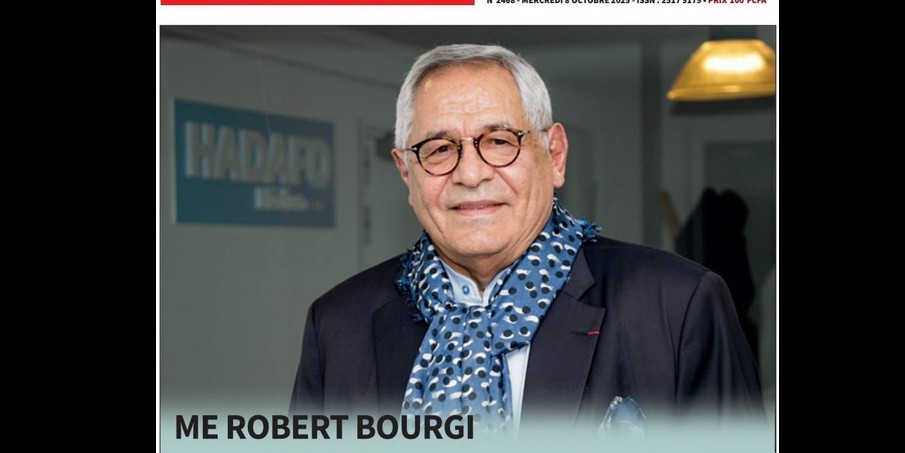
Robert Bourgi Turns on Paul Biya, Declares Him a Political Corpse
- News Team
- 10.Oct.2025
- Details
- Editorial

Heat in Maroua: What Biya’s Return Really Signals
- News Team
- 08.Oct.2025
- Details
- Editorial

Issa Tchiroma: Charles Mambo’s “Change Candidate” for Cameroon
- News Team
- 11.Sep.2025


