Inside Cameroon
The Rwandan government has offered to take in thousands of African migrants trapped in Libya under enslaved conditions, its foreign ministry chief said on Wednesday.
Louise Mushikiwabo told a local media portal that the government was ready to find space for Africans in Libya even though Rwanda was a small place.
In an official statement, the government joined the world to condemn the CNN report that exposed the human slavery enterprise in the north African country.
The African Union Commission chair, Moussa Faki Mahamat, expressed appreciation at Rwanda’s gesture and called on other African governments and private sector to play a role in helping out those trapped.
“I am deeply appreciative of the offer made by the government of Rwanda to resettle up to 30,000 African migrants languishing in Libya or transport those who wish to return to their countries of origin.
“I call on all African Member States, private sector and African citizens to pool resources and add the voices to support our brothers and sisters suffering in Libya,” he said in tweets sent out on Wednesday.
- Details
- Rita Akana
- Hits: 1953
Media reports about alleged migrant slave markets in Libya have resulted in strong reactions across the continent. African politicians demand an investigation and the prosecution of those responsible.
Who's the highest bidder? 800 Dinar! 1,000 Dinar! 1,100 Dinar! In the end, the winning bid is 1,200 Libyan Dinar – the equivalent of $800 (€680). A done deal; however, this isn't just any auction for a car or a piece of art. What's being sold here is a group of frightened young men from Sub-Saharan Africa.
The low-resolution images, apparently taken at a market in Libya earlier in 2017 were shown on the US-based network CNN last week, which looked further into the issue. Journalists working for CNN discovered several such slave markets in the country's interior, proving what experts had feared for a long time: migrants trying to reach Europe via Libya continue to be subject to abuse.
Heavy criticism across Africa
Politicians in Africa have expressed their outrage at the scandal – especially in West Africa where most African migrants originate. President of Niger Mahamadou Issoufou felt particularly revolted by the reports, summoning the Libyan ambassador to Niger and demanding the International Court of Justice investigate Libya for trading slaves.
Meanwhile the foreign minister of Burkina Faso, Alpha Barry, told the press that he had also summoned the Libyan ambassador to the capital Ouagadougou for consultations. The issue has since been added to the agenda of next week's African Union meeting in Ivory Coast, to take place on November 29 and 30.
The issue has made waves in the Ivory Coast itself — 155 Ivorian refugees, including 89 women and underage migrants, were returned from Libya to the Ivory Coast earlier this week as part of a reintegration initiative launched by the European Union. Representatives of the Ivorian government, however, said that the health of those migrants returned from Libya was in a "deplorable state."
Libya vows to cooperate with UN investigation
Protests meanwhile took place outside the Libyan embassies in several other African capital cities including Bamako, Mali and Conakry, Guinea over the weekend. Another protest is planned in London later this week. A protest outside the Libyan embassy in Paris spilled out into the famous Arc De Triomphe roundabout at the heart of the French capital.
UN Secretary-General Antonio Guterres said in New York on Monday that "slavery has no place in our world and these actions are among the most egregious abuses of human rights and may amount to crimes against humanity," appealing to the Libyan leadership to investigate these cases and bring those responsible for the slave trade to justice.
He said that he had asked all relevant UN departments to investigate the issue further.
Guterres added that all countries should join the United Nations Office on Drugs and Crime (UNODC) and sign its 2004 optional protocol on human trafficking. Libya's internationally recognized government, which is also supported by the UN, has announced that it will launch an investigation. Ahmed Omar Maiteeq, vice chairman of the presidential council of Libya, announced the establishment of a commission to that end.
The foreign ministry in a statement added: "If these allegations are confirmed, all implicated persons will be punished."
'Libya was hell'
Most refugees stranded in Libya come from West Africa, from countries such as Nigeria, Guinea, Burkina Faso or Ivory Coast. Additionally, many Eritreans and Somalians are also among those who hope to find a better future in Europe. Oftentimes they use a route crossing Niger's desert city of Agadez, where they encounter human traffickers, who promise to get them to the Mediterranean Coast and on to Europe. That journey, however, often ends in Libya.
"Libya was hell," says Souleymane, a young migrant from the Ivory Coast. He told DW that he was held captive in the North African country for month. Only by chance did he manage to return home with the help of an initiative launched by the UN's International Organization for Migration (IOM).
"I had to live in permanent fear of being picked up by a militia group and sold off as a slave."
Complete dependence
Fighting human trafficking in northern Africa has been a top priority for the UN for years. However, there's little progress; on the contrary, the practice appears to have intensified in recent years, says Othman Belbeisi, the IOM Chief of Mission in Libya.
Belbeisi told DW that local militias often held refugees for up to three months in dungeons in Libya in order to exploit them: "The problem is that most economic migrants don't have any kind of documentation on them and therefore do not cross official borders into Libya but rather make themselves completely dependent on people smugglers. It isn't rare that they end up being kidnapped, and if their ransom isn't paid they'll be sold off, tortured or even murdered."
He added that as long as legal ways of migration into Europe weren't facilitated, many young Africans would remain motivated to take such risks. According to the IOM, more than 160,000 migrants have so far managed to cross the Mediterranean Sea this year alone. Hundreds of thousands, however, are still waiting to make the sea journey to Europe. Nearly 3,000 refugees died since the beginning of this year on the perilous sea route.
DW
- Details
- Rita Akana
- Hits: 2174
Former Vice President Emmerson Mnangagwa has been inaugurated as Zimbabwe’s new leader, taking over from his toppled predecessor Robert Mugabe. A large crowd gathered to witness an historic transition of power.
Tens of thousands of people gathered at Zimbabwe's National Sports Stadium, to see former Vice President Emmerson Mnangagwa swear his oath on Friday.
Mnangagwa, who was sacked from his role as Mugabe's deputy earlier this month, is only the second president in Zimbabwe's 37-year existence as an independent nation.
"I will be faithful to Zimbabwe and obey, uphold and defend the constitution and all other laws of Zimbabwe," said Mnangagwa, as he took the oath of office before the country's chief justice. Mnangagwa then received his chain and sash of office, before taking salutes and pledges of allegiance from military chiefs.
In his inaugural speech, Mnangagwa:
— praised Mugabe, declaring him "the only surviving, founding fathers of our nation."
— said that Zimbabwean domestic politics has become "poisoned and polarized."
— vowed to compensate farmers whose land was confiscated under Mugabe's bitterly contested land redistribution program.
— pledged to fight corruption. "Acts of corruption must stop forthwith. Where these occur, swift justice must be served," said Mnangawa.
Mugabe, who ruled for the entire period since independence from white-minority rule in 1980, did not attend.
DW
- Details
- Rita Akana
- Hits: 2000
The lifeless body of a retired reverend pastor of the Presbyterian church in Ebolowa, has been found in a 7 metre deep well.
- Details
- Emergency Admin
- Hits: 2433
Parliamentarians of Cameroon's leading opposition party SDF have forced the National Assembly to suspend it's ordinary session for today, Thursday, November 23 2017.The disruption comes as a result of the parliament's unwillingness to address the ongoing Anglophone struggle that has gripped the nation over a year now with over 100 deaths.
Parliamentarians from the ruling CPDM party, including a handful from the affected English speaking regions of the country all staged a walk out of the Assembly as their colleagues from the SDF chanted songs against the ills of the Biya regime. A source at the National Assembly reports to Cameroon Concord that the Interim Vice Prime Minister, Minister Delegate at the Presidency in charge of relations with Parliament is currently holding talks with the striking MPs. The disruption all began at about 11 am Thursday morning when Joseph Banadzem of the main opposition party raised the Anglophone crisis.
This was reportedly given a deaf ear, prompting serious chanting from the opposition MPs. Unable to react in the face of the chanting MPs, the speaker of parliament who appeared to have no powers to bring forth the issues to be discussed had no other option, but to walk out, accompanied by other colleagues.SDF parliamentarians had initially refused to attend this final ordinary session as long as the Anglophone crisis is not looked into.
- Details
- Emergency Admin
- Hits: 2321
Authorized sources revealed that Equatorial Guinea’s government closed the country’s border, with Cameroon, located at Kyé-Ossi in Southern Cameroon, last week.
This occurs barely a month after Equatorial Guinea, which was very resilient to free-movement within CEMAC, finally suppressed the visa requirements for citizens of the community for stays that do not exceed 90 days.
Up till now, the authorities of Malabo have not explained this decision. This raises questions about the feasibility of free-movement within CEMAC despite the suppression of visa requirements by the member countries.
BIC
- Details
- Emergency Admin
- Hits: 2074
Zimbabwe’s new leader Emmerson Mnangagwa told a cheering crowd in Harare on Wednesday that the country was entering a new stage of democracy following Robert Mugabe’s removal as president after nearly four decades in power.
Mnangagwa returned to the country earlier in the day, having fled for his safety when the 93-year-old former leader sacked him as vice president two weeks ago to smooth a path to the succession for his much younger wife Grace.
“The people have spoken. The voice of the people is the voice of God,” Mnangagwa told thousands of supporters gathered outside the ruling ZANU-PF party’s offices in the capital.
“Today we are witnessing the beginning of a new and unfolding democracy.”
Zimbabwe was once one of Africa’s most promising economies but suffered decades of decline as Mugabe pursued policies that included the violent seizure of white-owned commercial farms and money-printing that led to hyperinflation.
Most of its 16 million people remain poor and face currency shortages and sky-high unemployment, something Mnangagwa promised to address.
“We want to grow our economy, we want peace in our country, we want jobs, jobs, jobs,” he told the crowd, adding: “The will of the people will always, always succeed.”
Mnangagwa’s dismissal was the trigger for the army and former political allies to move against Mugabe, feted as an independence hero when Zimbabwe broke with former colonial power Britain in 1980 but later feared as a despot. He resigned as president on Tuesday as parliament began an impeachment process, after resisting pressure to do so for a week.
People danced in the streets following his downfall, some brandishing posters of Mnangagwa and army chief General Constantino Chiwenga, who led the takeover.
Parliamentary speaker Jacob Mudenda said on Wednesday that Mnangagwa would be sworn in as president on Friday after being nominated by ZANU-PF to fill the vacancy left by Mugabe.
‘LET‘S GIVE HIM TIME’
The demise of Mugabe leaves Zimbabwe in a different situation to a number of other African countries where veteran leaders have been toppled in popular uprisings or through elections.
The army appears to have engineered a trouble-free path to power for Mnangagwa, who was for decades a faithful lieutenant of Mugabe and member of his elite. He was also in charge of internal security when rights groups say 20,000 civilians were killed in the 1980s.
“Mugabe has gone but I don’t see Mnangagwa doing anything different from that old man. This is not the change I expected but let us give him time,” said security guard Edgar Mapuranga, who sat by a bank cash machine that was out of money.
Restoring the country’s fortunes and international standing will be a challenge. Alleged human rights abuses and flawed elections prompted many Western countries to impose sanctions in the early 2000s that further hurt the economy, even with Chinese investment to soften the blow.
Staging clean elections next year will be key to winning fresh funds.
‘OLD ELITES’
Although Mnangagwa is almost certain to win any vote, German Chancellor Angela Merkel’s personal representative for Africa, Guenther Nooke, said it would be a victory for Zimbabwe’s “old elites” with the help of China.
“He will manage to get elected using fear or many tricks, and then we’ll have a succession from one tyrant to the next,” Nooke told broadcaster SWR2.
China’s foreign ministry said on Wednesday it respected Mugabe’s decision to resign.
In London, Prime Minister Theresa May said Britain wanted Zimbabwe to rejoin the international community now that Mugabe has resigned. Mnangagwa met neighbouring South Africa’s President Jacob Zuma before his return on Wednesday.
Mugabe is one of the last of a generation of African leaders who led their countries to independence and then ruled, among them Ghana’s Kwame Nkrumah, Jomo Kenyatta in Kenya, Felix Houphouet-Boigny in Ivory Coast and South Africa’s Nelson Mandela.
The African Union said he would be remembered “as a fearless pan-Africanist liberation fighter and the father of the independent Zimbabwean nation” and that his decision to step down would enhance his legacy.
But he also stifled democracy en route to winning a series of elections. His government is accused by the opposition and human rights groups of persecuting and killing opponents.
The forced takeover of white-owned farms from around 2000 aimed to bolster his popular support but crippled foreign exchange earnings from agriculture.
Mnangagwa’s human rights record also stirs hostility in many Zimbabweans.
“The dark past is not going to disappear. They will be following him around like a piece of chewing gum on his shoe,” International Crisis Group’s southern Africa senior consultant Piers Pigou said.
“For him to really be seen to be doing the right thing, he’s going to have to introduce policies that fundamentally undermine the power structures of ZANU-PF, through a shift to genuine political pluralism and a decoupling of the party and state.”
Reuters
- Details
- Emergency Admin
- Hits: 1620
Subcategories
Regional Updates Article Count: 21
Regional Updates: Stay Informed and Aware of the Latest News and Events in Cameroon’s Regions
Do you want to know more about the news and events that affect the different regions of Cameroon? Do you want to learn about the diversity and richness of Cameroon’s regional cultures, languages, and traditions? If so, you are in the right place. Welcome to the regional updates category of Cameroon Concord, the leading news website in Cameroon.
In this category, you will find articles, reports, podcasts, videos, and more featuring the latest news, trends, and analysis on regional topics and issues. You will discover the achievements, challenges, and opportunities of the regional authorities and communities in Cameroon. You will also explore the impact and implications of regional developments on the national and international level. You will get tips and advice on how to travel, work, and live in the different regions of Cameroon.
Whether you are interested in the political, economic, social, or cultural aspects of the regions, you will find something informative and relevant in this category. Regional updates is a vital and dynamic topic that reflects the reality and diversity of Cameroon. Join us in this journey of regional updates and become part of a community that stays informed and aware of the latest news and events in Cameroon’s regions.
Society Article Count: 272
Local News
- Details
- Society
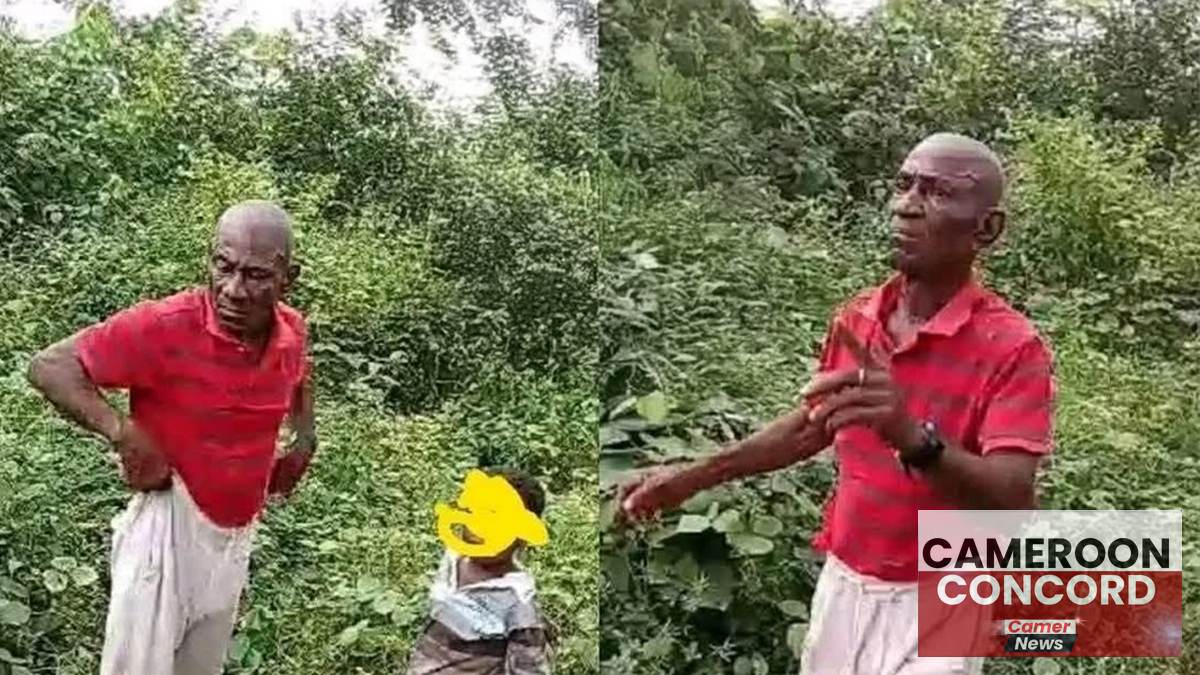
Kribi II: Man Caught Allegedly Abusing Child
- News Team
- 14.Sep.2025
- Details
- Society

Back to School 2025/2026 – Spotlight on Bamenda & Nkambe
- News Team
- 08.Sep.2025
- Details
- Society

Cameroon 2025: From Kamto to Biya: Longue Longue’s political flip shocks supporters
- News Team
- 08.Sep.2025
- Details
- Society

Meiganga bus crash spotlights Cameroon’s road safety crisis
- News Team
- 05.Sep.2025
EditorialView all
- Details
- Editorial
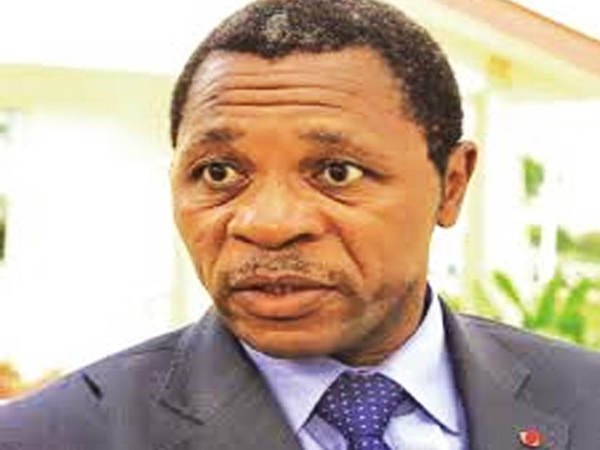
When Power Forgets Its Limits: Reading Atanga Nji Through Ekinneh Agbaw-Ebai’s Lens
- News Team
- 17.Dec.2025
- Details
- Editorial
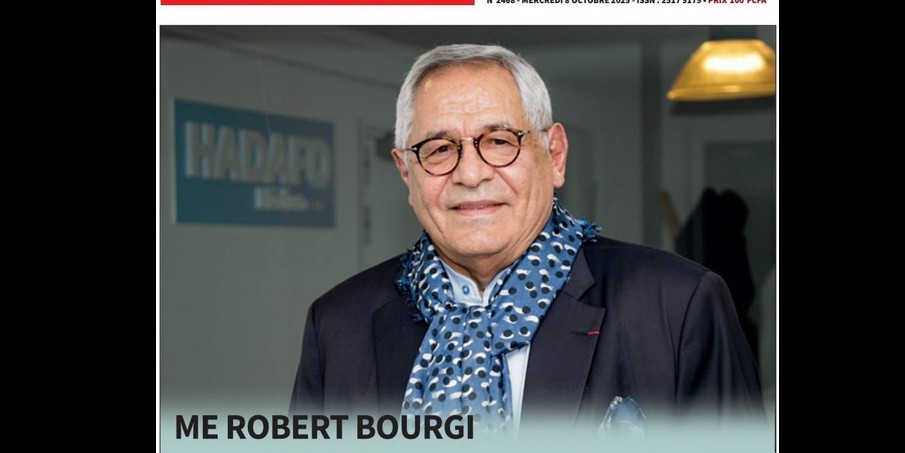
Robert Bourgi Turns on Paul Biya, Declares Him a Political Corpse
- News Team
- 10.Oct.2025
- Details
- Editorial
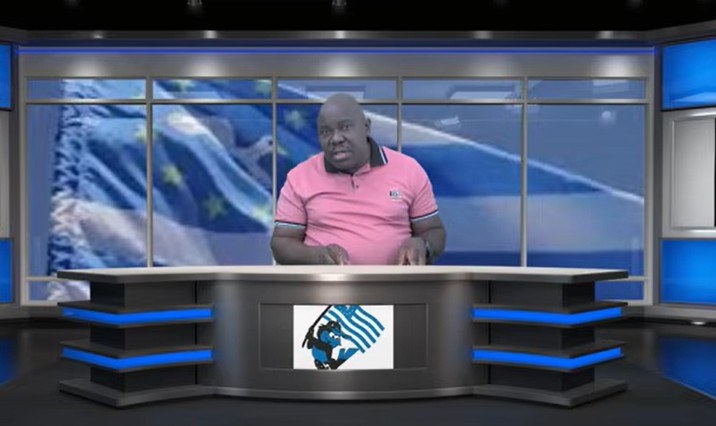
Heat in Maroua: What Biya’s Return Really Signals
- News Team
- 08.Oct.2025
- Details
- Editorial

Issa Tchiroma: Charles Mambo’s “Change Candidate” for Cameroon
- News Team
- 11.Sep.2025


