Editorial
In Nigeria, the lack of improved healthcare facilities has led to high rate of medical tourism while the poor masses who cannot afford the resources for such medical travels become victims of poor health management. Few who leave school as doctors and nurses cannot concentrate to work at home; travelling to the West becomes a key in their plans, as the available opportunities are limited, due to lack of good healthcare facilities. Addressing these issues is most paramount as it is of great concern to global health. Nigeria, and most other African countries have the resources to assure their citizens of the best medical conditions in the world today. The inability of so many countries in Africa to improve healthcare and healthcare facilities is a major problem for global health security. The problem of our leaders and their cabinets to do tangible things at the level of global health is attributed to bad governance characterized by corruptive practices.
The problem with Nigeria is that corruption has become part and parcel of the country’s agenda. Corruption in Nigeria is like a cankerworm that has eaten into the bone marrows of the leaders of the Nigerian government. The amalgamation of the northern and southern protectorates in 1914 stands as a key historical moment that put Nigeria in the present cynical condition. The military governments destroyed Nigeria, and in a country that is made up of different ethnic groups, emancipation of ethnic and tribal strife becomes the order of the day. At the inception of democracy, people do not vote based on transparency or character of those seeking elective posts but tribal and ethnic interests. No matter how good you are, if you are not from my ethnic group or my zone, you are not qualified to have my vote. The poor masses suffer these anomalies more and poverty, marginalization, segregation and sectionalism rules Nigeria today.
This decay as seen in the discussion so far has caused Nigerians the loss of basic facilities that are prerequisites for making life bearable and for authentic human existence. There is decay in all facets of the Nigerian government; the education sector, health, personnel management, oil and gas sector, aviation and so on. This collapse has penetrated into the healthcare system in Nigeria, leaving its marks there. These negative marks can only be salvaged if people are ready to cooperate in fighting corruption. The Nigerian healthcare system has witnessed a gradual decline in recent years due to the inability of the government to provide the essential facilities that help in the better running of a healthcare system. In discussing improvement of healthcare facilities, it is important to note that healthcare and healthcare facilities are two complementary points. Looking at the decadence in healthcare facilities in Nigeria, it has to do with all the facets of healthcare, personnel management, good hospitals, emergency services, keeping data sensitivity, health pharmaceutical companies and so on. At the heart of the improvement of healthcare facilities in Nigeria and other developing countries is the importance of a well-equipped hospital. Since the oil relapse in Nigeria in the early 70s and 80s, instead of witnessing a considerable growth in the health system, a considerable decline in budgetary allocation to the health ministry has been noticed. Budgetary specification on the healthcare system in Nigeria hardly exceeds 3% of the overall national budgetary outlay. Primary attention cannot be given to healthcare improvement as politicians loot and embezzle billions of dollars from the national treasury without being charged for embezzlement.
Due to the negligible attention to healthcare system in Nigeria, there is an explosion of private health practitioners in Nigeria that has made the populace more vulnerable than ever. People now rely more on private healthcare systems than government provided health schemes. Since there is a demeaning attention toward healthcare system, most of the available places are either too costly or not functional. This leads to the pluralization of health care in Nigeria with so many getting into the business of patent medicine sellers in order to alleviate the health conditions of the poor. In some states, 75 percent of the healthcare facilities are provided by the private sector. Private medical practice is also on the increase in Nigeria; fewer medical doctors opt to work with the government. Some who work for the government also use the opportunity to manipulate patients by inducing them into visiting their private clinics instead of the government hospitals. Meanwhile, in their private clinics, they do not have the standard facilities needed for the treatment of that particular illness.
The practice of selling and buying medications without prescriptions in Chemist shops in Nigeria has become an opening for many dealers to extort money from the people. The intention originally was to help the poor but at this level, so many ill actions troop in and poor people are exploited. The healthcare system is porous, and the poor become more vulnerable. The doctors who invite them to their personal clinics exploit them, and when they cannot finance it, they purchase behind the counter medicine, where they are exploited all the more. It is important to note that all the payments made for the purchases are out of pocket payments as most times, you are expected to pay for the service before receiving the service. There are few hospitals in Nigeria where the health insurance scheme is active. The Federal ministry of health estimates that over 70 percent of healthcare payments are made out-of-pocket. I remember taking a young accident victim to the hospital for treatment and he was refused treatment until I made some deposits. For life to improve in Nigeria and other developing countries, healthcare facilities must be improved, beginning with the rehabilitation of our hospitals with the most recent and sophisticated healthcare facilities for sustainability of good health. Not just that, our pharmaceutical companies are to be upgraded too, to avoid fake and substandard drugs from entering the healthcare market. Poor quality drugs enter the healthcare market through the back door and this poses a big problem to healthcare security in Nigeria. The National Agency for Food and Drug Administration and Control (NAFDAC) in Nigeria has fought this ailment since 1993 and has actually helped to safeguard the lives of Nigerians through the constant war it wages against fake and substandard drugs and medications in the Nigerian healthcare market.
Another factor about the Nigeria health care system is the growing phenomenon of medical tourism and brain drain problems as byproducts of failing healthcare facilities and delivery in Nigeria. Nigeria and some other developing countries witness a massive embrace for medical treatments overseas. I remember a politician friend who made it clear to me that; “I cannot visit a Nigerian hospital for medical treatment, when I am sick,” and just as he told me, earlier this year, he told me that he is in United States for his routine checks. I remember asking him a question: “if my grandmother in the village is sick, can she make it to the United States too for treatment?” I cannot blame him for coming to the US on a medical trip because he has to take care of his health, but I blame people like him in the government who have not done enough to guarantee safety of life and properties for the poor masses.
The Nigeria of my dream is a Nigeria that is structured on mutual interdependence, love, justice and equity, a country laying its foundation on respect for human dignity, human needs and embellished with the protection of human rights. The poor masses have a life to protect, they have a right to live and this life should be protected. Provision of healthcare facilities is paramount in an effort to restore the dignity and empty life of the poverty-ridden people of Nigeria. Resources are to be distributed equally to all corners of the country, and special attention should be given to the rights of women in the far north who suffer in the hands of their husbands. Equity in health cannot be achieved if clear and conscious efforts to promote population health and to protect the welfare of all people do not become a political imperative. Fighting the Ebola virus and succeeding in that venture is an indication that the Nigerian government can conquer corruption to a reasonable extent if it decides to do that in order to hand over a better life to the ageing and a bright future to the young.
At the heart of the Millennium Development Goals (MDGs) are health related issues; hunger, child mortality, maternal health, HIV/AIDS and Malaria. The year is already half spent, though two thirds of the goals have not been realized. It is still not late because it is never late to save lives. Catholic Social teaching stresses the dignity of every human life and the universal common good. Our leaders need to stand up in the face of the present injustice to guarantee all citizens justice in all fairness. The rehabilitation of the lost glories of our hospitals, emancipated in an ethic of life flourishing, in a nation blessed with so many natural resources, equity will be achieved through distributive justice. All the rural villages neglected for so long will be given attention, and the health workers will begin to have a better attitude toward the sick entrusted to their care. The improvement of the financial strength of the Community health centers, and the early payment of medical health workers’ wages is a prerequisite to guarantee the lives of the poor masses that depend on their services for good life. The life of each one of us is unique; humans are created in the image and likeness of God. The life of every one of us in Nigeria is as important as the life of the president. May the government of Nigeria rise up to protect this Image of God through the provision of the essentials of healthcare and its facilities for the betterment of the citizens, especially the vulnerable populations in the society.
The Church’s teaching on liberation theology and option for the poor reminds us that: “it is important that numerous Christians, whose faith is clear and who are committed to live the Christian life in its fullness, become involved in the struggle for justice, freedom, and human dignity because of their love for their disinherited, oppressed, and persecuted brothers and sisters.” This is an invitation to fight for the common good of all, that those marginalized may be empowered again in their localities through the provision of affordable healthcare opportunities.
I call for a good medical insurance that will be accessible to all, both the rich and the poor alike, not what we had which covers only the rich without covering the poor in the society. By doing this, Nigeria will put the lives of its citizens first before every other thing, checkmating the excesses of some rich corrupt government officials who loot the collective basket of the nation.
I invite the Church to keep promoting the preferential option for the poor, where the government through the continuous knock on their doors from the leaders of the Church, will realize the necessity of upholding the rights of all the citizens, to good and adequate healthcare thereby, providing just means to see to the distributive efficiency of the health system. The Church should not relent, considering experiences of looting and corruption of the past; more young people should be trained in the Church owned hospitals so that they keep alleviating the hopelessness of the communities who have been forgotten by the government. Prayerfully, hoping on God who does not abandon his people, we hand over our leaders, asking for a change of heart and attitude from them in their leadership roles.
.
- Details
- Ngwa Bertrand
- Hits: 1523

The Assembly of States Parties is meeting this month in The Hague to review the work of the International Criminal Court and to discuss the ICC’s budget. The ASP is the International Criminal Court’s management oversight and legislative body. The Assembly also elects the judges and prosecutors and decides the Court's budget. The court’s proposed budget for 2016 amounts to €153.32 million, representing an increase of €22.66 million, or 17.3 per cent, over the 2015 approved budget. At face value, far from increasing the budget for the ICC, the Assembly of State Parties should be demanding a refund.
Established in 2002, the ICC is an impotent billion euro white elephant. 2015 has been a particularly bad year for the court. It has botched the Kenyan cases it has undertaken and its continuing alienation from Africa was centre stage internationally when South Africa, previously a keen member, publicly ignored ICC arrest warrants and appears on the verge of withdrawal from the organisation – something seen by observers as a death knell for the court.
The International Criminal Court has self-evidently failed across the board. In 2010 the ICC-friendly Economist had already found it necessary to publish an article about the ICC entitled "International justice: Courting disaster?" Things have worsened considerably since then. The ICC has consumed more than a billion euros in its 13-year existence and has only secured two deeply questionable convictions. The ICC’s claims to international jurisdiction and judicial independence are institutionally flawed and the court’s reputation has been irretrievably damaged by its racism, blatant double standards, hypocrisy, corruption and serious judicial irregularities. The Assembly of State Parties should also accept that it has grotesquely neglected its responsibility to manage the court. The ASP has turned a blind eye to systemic failure on the part of the ICC.
While the ICC pretends to be the world’s court this is simply not the case. Its members, however, represent under one-third of the world’s population: China, Russia, the United States, Pakistan and Indonesia are just some of the many countries that have remained outside the court’s jurisdiction. India, the world’s largest democracy, has chosen not to join the ICC because the court is subordinate to the United Nations Security Council and because it does not criminalise terrorism and the use of nuclear weapons. The United States has forcefully pointed out that the ICC is a kangaroo court, a travesty of justice open to political influence, and has said that no American citizen will ever come before it. That said, Washington is perfectly happy when it suits American foreign policy objectives to demand that black Africans appear before a deeply flawed court peddling sub-prime justice.
The ICC pretends to be independent. Far from being an independent and impartial court, the ICC grants special “prosecutorial” rights of referral and deferral to the UN Security Council – by default its five permanent members (three of which are not even ICC members). The court is also inextricably tied to the European Union which provides over 60 percent of its funding. The ICC has come to be seen within Africa very much as a European-funded and directed instrument of European foreign policy. The Office of the Prosecutor, for example, has to date received approximately 9,000 complaints about alleged crimes in 139 countries. From these almost nine thousand alleged instances of serious abuses of human rights, the ICC has acted in eight African “situations”, and indicted 39 Africans, to the exclusion of any complaints implicating white Europeans and North Americans or their protégés. The ICC has turned a blind eye to self-evident human rights abuses well within its jurisdiction in Iraq and Afghanistan. Afghanistan is an ICC member state. As a result the court can investigate alleged war crimes committed by citizens of any country, ICC Member State or not, within its borders. Tens of thousands of civilians have died and well over one hundred thousand have been injured in the conflict in Afghanistan, many of them at the hands of NATO and US forces. The ICC has however ignored any allegations of war crimes by NATO, US or EU citizens in Afghanistan.
The ICC promised “swift justice” but took several years to bring the first accused to trial for allegedly using child soldiers. The Nuremberg trials, which addressed infinitely more serious charges, were over and done within a year. The ICC pretends to be victim-centred yet Human Rights Watch has publicly criticised the ICC’s ambivalence toward victim communities. The court promised to usher in a new era of gender justice. Women’s rights specialists such as Professor Louise Chappell have noted that the ICC’s record in this respect “has been partial and inconsistent”, and that “The ICC’s legitimacy is fragile.”
Despite having consumed more than one billion euros the ICC has also shown itself to be stunningly dysfunctional. The court’s proceedings thus far have often been questionable where not simply farcical. At the heart of any judicial process is testimony provided by witnesses. The court has produced witnesses who recanted their testimony the moment they got into the witness box, admitting that they were coached by non-governmental organisations as to what false statements to make. In its first trial, that of Thomas Lubanga, a process that lasted seven years, the judges found all but one of the alleged former child soldiers presented as witnesses by the Prosecution to be unreliable. Dozens of other “witnesses” have either been similarly discredited or disavowed their “evidence”. This hallmark of incompetence continues to this day. Most recently the ICC prosecutor had to admit that one of its own star witnesses in its case against Kenyan Vice-President Ruto was “thoroughly unreliable and incredible”. In reality it is the Office of the Prosecutor that has been revealed to be thoroughly unreliable and unprofessional.
There have been scandalous examples of prosecutorial misconduct, not least of which the ICC Chief Prosecutor hiding hundreds of items of exculpatory evidence, which should have ended any trial because they would have compromised the integrity of any legal process. The ASP has simply stood by doing nothing.
That the International Criminal Court is corrupt is also self-evident. The Shorter Oxford English Dictionary defines "corrupt" as "destroyed in purity, debased; vitiated by errors or alterations." The Assembly of State Parties is responsible for the appointment of judges to the ICC. It is in the selection of judges that the ASP and ICC have been at their most corrupt. ICC judges – some of whom have never been lawyers, let alone judges – are the result of grubbily corrupt vote-trading within the Assembly of State Parties amongst member states and delegates. The relationship between appointments to the ICC and vote trading between states is an open secret. Selecting International Judges: Principle, Process, and Politics, a ground-breaking study of international judicial appointments, written by Professor Philippe Sands QC, and others as part of Oxford University Press’ International Courts and Tribunals Series, concluded that “the evidence leads unequivocally to the conclusion that merit is not the main driving factor in the election processes.” The study also revealed that “[m]any individuals who participate in the ICC process believe it to be even more politicized than other international judicial elections.” The sheer corruption of the process aside, the reality is that vote-trading results in mediocre judges which in turn leads to a dysfunctional, politicised court.
It is clear that the both the Assembly of States Parties and the International Criminal Court are simply unfit for purpose. Far from granting the ICC yet more money, both the ASP and the ICC should be defunded and disbanded.
- Details
- Ngwa Bertrand
- Hits: 1839

The Assembly of States Parties is meeting this month in The Hague to review the work of the International Criminal Court and to discuss the ICC’s budget. The ASP is the International Criminal Court’s management oversight and legislative body. The Assembly also elects the judges and prosecutors and decides the Court's budget. The court’s proposed budget for 2016 amounts to €153.32 million, representing an increase of €22.66 million, or 17.3 per cent, over the 2015 approved budget. At face value, far from increasing the budget for the ICC, the Assembly of State Parties should be demanding a refund.
Established in 2002, the ICC is an impotent billion euro white elephant. 2015 has been a particularly bad year for the court. It has botched the Kenyan cases it has undertaken and its continuing alienation from Africa was centre stage internationally when South Africa, previously a keen member, publicly ignored ICC arrest warrants and appears on the verge of withdrawal from the organisation – something seen by observers as a death knell for the court.
The International Criminal Court has self-evidently failed across the board. In 2010 the ICC-friendly Economist had already found it necessary to publish an article about the ICC entitled "International justice: Courting disaster?" Things have worsened considerably since then. The ICC has consumed more than a billion euros in its 13-year existence and has only secured two deeply questionable convictions. The ICC’s claims to international jurisdiction and judicial independence are institutionally flawed and the court’s reputation has been irretrievably damaged by its racism, blatant double standards, hypocrisy, corruption and serious judicial irregularities. The Assembly of State Parties should also accept that it has grotesquely neglected its responsibility to manage the court. The ASP has turned a blind eye to systemic failure on the part of the ICC.
While the ICC pretends to be the world’s court this is simply not the case. Its members, however, represent under one-third of the world’s population: China, Russia, the United States, Pakistan and Indonesia are just some of the many countries that have remained outside the court’s jurisdiction. India, the world’s largest democracy, has chosen not to join the ICC because the court is subordinate to the United Nations Security Council and because it does not criminalise terrorism and the use of nuclear weapons. The United States has forcefully pointed out that the ICC is a kangaroo court, a travesty of justice open to political influence, and has said that no American citizen will ever come before it. That said, Washington is perfectly happy when it suits American foreign policy objectives to demand that black Africans appear before a deeply flawed court peddling sub-prime justice.
The ICC pretends to be independent. Far from being an independent and impartial court, the ICC grants special “prosecutorial” rights of referral and deferral to the UN Security Council – by default its five permanent members (three of which are not even ICC members). The court is also inextricably tied to the European Union which provides over 60 percent of its funding. The ICC has come to be seen within Africa very much as a European-funded and directed instrument of European foreign policy. The Office of the Prosecutor, for example, has to date received approximately 9,000 complaints about alleged crimes in 139 countries. From these almost nine thousand alleged instances of serious abuses of human rights, the ICC has acted in eight African “situations”, and indicted 39 Africans, to the exclusion of any complaints implicating white Europeans and North Americans or their protégés. The ICC has turned a blind eye to self-evident human rights abuses well within its jurisdiction in Iraq and Afghanistan. Afghanistan is an ICC member state. As a result the court can investigate alleged war crimes committed by citizens of any country, ICC Member State or not, within its borders. Tens of thousands of civilians have died and well over one hundred thousand have been injured in the conflict in Afghanistan, many of them at the hands of NATO and US forces. The ICC has however ignored any allegations of war crimes by NATO, US or EU citizens in Afghanistan.
The ICC promised “swift justice” but took several years to bring the first accused to trial for allegedly using child soldiers. The Nuremberg trials, which addressed infinitely more serious charges, were over and done within a year. The ICC pretends to be victim-centred yet Human Rights Watch has publicly criticised the ICC’s ambivalence toward victim communities. The court promised to usher in a new era of gender justice. Women’s rights specialists such as Professor Louise Chappell have noted that the ICC’s record in this respect “has been partial and inconsistent”, and that “The ICC’s legitimacy is fragile.”
Despite having consumed more than one billion euros the ICC has also shown itself to be stunningly dysfunctional. The court’s proceedings thus far have often been questionable where not simply farcical. At the heart of any judicial process is testimony provided by witnesses. The court has produced witnesses who recanted their testimony the moment they got into the witness box, admitting that they were coached by non-governmental organisations as to what false statements to make. In its first trial, that of Thomas Lubanga, a process that lasted seven years, the judges found all but one of the alleged former child soldiers presented as witnesses by the Prosecution to be unreliable. Dozens of other “witnesses” have either been similarly discredited or disavowed their “evidence”. This hallmark of incompetence continues to this day. Most recently the ICC prosecutor had to admit that one of its own star witnesses in its case against Kenyan Vice-President Ruto was “thoroughly unreliable and incredible”. In reality it is the Office of the Prosecutor that has been revealed to be thoroughly unreliable and unprofessional.
There have been scandalous examples of prosecutorial misconduct, not least of which the ICC Chief Prosecutor hiding hundreds of items of exculpatory evidence, which should have ended any trial because they would have compromised the integrity of any legal process. The ASP has simply stood by doing nothing.
That the International Criminal Court is corrupt is also self-evident. The Shorter Oxford English Dictionary defines "corrupt" as "destroyed in purity, debased; vitiated by errors or alterations." The Assembly of State Parties is responsible for the appointment of judges to the ICC. It is in the selection of judges that the ASP and ICC have been at their most corrupt. ICC judges – some of whom have never been lawyers, let alone judges – are the result of grubbily corrupt vote-trading within the Assembly of State Parties amongst member states and delegates. The relationship between appointments to the ICC and vote trading between states is an open secret. Selecting International Judges: Principle, Process, and Politics, a ground-breaking study of international judicial appointments, written by Professor Philippe Sands QC, and others as part of Oxford University Press’ International Courts and Tribunals Series, concluded that “the evidence leads unequivocally to the conclusion that merit is not the main driving factor in the election processes.” The study also revealed that “[m]any individuals who participate in the ICC process believe it to be even more politicized than other international judicial elections.” The sheer corruption of the process aside, the reality is that vote-trading results in mediocre judges which in turn leads to a dysfunctional, politicised court.
It is clear that the both the Assembly of States Parties and the International Criminal Court are simply unfit for purpose. Far from granting the ICC yet more money, both the ASP and the ICC should be defunded and disbanded.
- Details
- Ngwa Bertrand
- Hits: 1727

The Assembly of States Parties is meeting this month in The Hague to review the work of the International Criminal Court and to discuss the ICC’s budget. The ASP is the International Criminal Court’s management oversight and legislative body. The Assembly also elects the judges and prosecutors and decides the Court's budget. The court’s proposed budget for 2016 amounts to €153.32 million, representing an increase of €22.66 million, or 17.3 per cent, over the 2015 approved budget. At face value, far from increasing the budget for the ICC, the Assembly of State Parties should be demanding a refund.
Established in 2002, the ICC is an impotent billion euro white elephant. 2015 has been a particularly bad year for the court. It has botched the Kenyan cases it has undertaken and its continuing alienation from Africa was centre stage internationally when South Africa, previously a keen member, publicly ignored ICC arrest warrants and appears on the verge of withdrawal from the organisation – something seen by observers as a death knell for the court.
The International Criminal Court has self-evidently failed across the board. In 2010 the ICC-friendly Economist had already found it necessary to publish an article about the ICC entitled "International justice: Courting disaster?" Things have worsened considerably since then. The ICC has consumed more than a billion euros in its 13-year existence and has only secured two deeply questionable convictions. The ICC’s claims to international jurisdiction and judicial independence are institutionally flawed and the court’s reputation has been irretrievably damaged by its racism, blatant double standards, hypocrisy, corruption and serious judicial irregularities. The Assembly of State Parties should also accept that it has grotesquely neglected its responsibility to manage the court. The ASP has turned a blind eye to systemic failure on the part of the ICC.
While the ICC pretends to be the world’s court this is simply not the case. Its members, however, represent under one-third of the world’s population: China, Russia, the United States, Pakistan and Indonesia are just some of the many countries that have remained outside the court’s jurisdiction. India, the world’s largest democracy, has chosen not to join the ICC because the court is subordinate to the United Nations Security Council and because it does not criminalise terrorism and the use of nuclear weapons. The United States has forcefully pointed out that the ICC is a kangaroo court, a travesty of justice open to political influence, and has said that no American citizen will ever come before it. That said, Washington is perfectly happy when it suits American foreign policy objectives to demand that black Africans appear before a deeply flawed court peddling sub-prime justice.
The ICC pretends to be independent. Far from being an independent and impartial court, the ICC grants special “prosecutorial” rights of referral and deferral to the UN Security Council – by default its five permanent members (three of which are not even ICC members). The court is also inextricably tied to the European Union which provides over 60 percent of its funding. The ICC has come to be seen within Africa very much as a European-funded and directed instrument of European foreign policy. The Office of the Prosecutor, for example, has to date received approximately 9,000 complaints about alleged crimes in 139 countries. From these almost nine thousand alleged instances of serious abuses of human rights, the ICC has acted in eight African “situations”, and indicted 39 Africans, to the exclusion of any complaints implicating white Europeans and North Americans or their protégés. The ICC has turned a blind eye to self-evident human rights abuses well within its jurisdiction in Iraq and Afghanistan. Afghanistan is an ICC member state. As a result the court can investigate alleged war crimes committed by citizens of any country, ICC Member State or not, within its borders. Tens of thousands of civilians have died and well over one hundred thousand have been injured in the conflict in Afghanistan, many of them at the hands of NATO and US forces. The ICC has however ignored any allegations of war crimes by NATO, US or EU citizens in Afghanistan.
The ICC promised “swift justice” but took several years to bring the first accused to trial for allegedly using child soldiers. The Nuremberg trials, which addressed infinitely more serious charges, were over and done within a year. The ICC pretends to be victim-centred yet Human Rights Watch has publicly criticised the ICC’s ambivalence toward victim communities. The court promised to usher in a new era of gender justice. Women’s rights specialists such as Professor Louise Chappell have noted that the ICC’s record in this respect “has been partial and inconsistent”, and that “The ICC’s legitimacy is fragile.”
Despite having consumed more than one billion euros the ICC has also shown itself to be stunningly dysfunctional. The court’s proceedings thus far have often been questionable where not simply farcical. At the heart of any judicial process is testimony provided by witnesses. The court has produced witnesses who recanted their testimony the moment they got into the witness box, admitting that they were coached by non-governmental organisations as to what false statements to make. In its first trial, that of Thomas Lubanga, a process that lasted seven years, the judges found all but one of the alleged former child soldiers presented as witnesses by the Prosecution to be unreliable. Dozens of other “witnesses” have either been similarly discredited or disavowed their “evidence”. This hallmark of incompetence continues to this day. Most recently the ICC prosecutor had to admit that one of its own star witnesses in its case against Kenyan Vice-President Ruto was “thoroughly unreliable and incredible”. In reality it is the Office of the Prosecutor that has been revealed to be thoroughly unreliable and unprofessional.
There have been scandalous examples of prosecutorial misconduct, not least of which the ICC Chief Prosecutor hiding hundreds of items of exculpatory evidence, which should have ended any trial because they would have compromised the integrity of any legal process. The ASP has simply stood by doing nothing.
That the International Criminal Court is corrupt is also self-evident. The Shorter Oxford English Dictionary defines "corrupt" as "destroyed in purity, debased; vitiated by errors or alterations." The Assembly of State Parties is responsible for the appointment of judges to the ICC. It is in the selection of judges that the ASP and ICC have been at their most corrupt. ICC judges – some of whom have never been lawyers, let alone judges – are the result of grubbily corrupt vote-trading within the Assembly of State Parties amongst member states and delegates. The relationship between appointments to the ICC and vote trading between states is an open secret. Selecting International Judges: Principle, Process, and Politics, a ground-breaking study of international judicial appointments, written by Professor Philippe Sands QC, and others as part of Oxford University Press’ International Courts and Tribunals Series, concluded that “the evidence leads unequivocally to the conclusion that merit is not the main driving factor in the election processes.” The study also revealed that “[m]any individuals who participate in the ICC process believe it to be even more politicized than other international judicial elections.” The sheer corruption of the process aside, the reality is that vote-trading results in mediocre judges which in turn leads to a dysfunctional, politicised court.
It is clear that the both the Assembly of States Parties and the International Criminal Court are simply unfit for purpose. Far from granting the ICC yet more money, both the ASP and the ICC should be defunded and disbanded.
- Details
- Ngwa Bertrand
- Hits: 1774
The Assembly of States Parties is meeting this month in The Hague to review the work of the International Criminal Court and to discuss the ICC’s budget. The ASP is the International Criminal Court’s management oversight and legislative body. The Assembly also elects the judges and prosecutors and decides the Court's budget. The court’s proposed budget for 2016 amounts to €153.32 million, representing an increase of €22.66 million, or 17.3 per cent, over the 2015 approved budget. At face value, far from increasing the budget for the ICC, the Assembly of State Parties should be demanding a refund.
Established in 2002, the ICC is an impotent billion euro white elephant. 2015 has been a particularly bad year for the court. It has botched the Kenyan cases it has undertaken and its continuing alienation from Africa was centre stage internationally when South Africa, previously a keen member, publicly ignored ICC arrest warrants and appears on the verge of withdrawal from the organisation – something seen by observers as a death knell for the court.
The International Criminal Court has self-evidently failed across the board. In 2010 the ICC-friendly Economist had already found it necessary to publish an article about the ICC entitled "International justice: Courting disaster?" Things have worsened considerably since then. The ICC has consumed more than a billion euros in its 13-year existence and has only secured two deeply questionable convictions. The ICC’s claims to international jurisdiction and judicial independence are institutionally flawed and the court’s reputation has been irretrievably damaged by its racism, blatant double standards, hypocrisy, corruption and serious judicial irregularities. The Assembly of State Parties should also accept that it has grotesquely neglected its responsibility to manage the court. The ASP has turned a blind eye to systemic failure on the part of the ICC.
While the ICC pretends to be the world’s court this is simply not the case. Its members, however, represent under one-third of the world’s population: China, Russia, the United States, Pakistan and Indonesia are just some of the many countries that have remained outside the court’s jurisdiction. India, the world’s largest democracy, has chosen not to join the ICC because the court is subordinate to the United Nations Security Council and because it does not criminalise terrorism and the use of nuclear weapons. The United States has forcefully pointed out that the ICC is a kangaroo court, a travesty of justice open to political influence, and has said that no American citizen will ever come before it. That said, Washington is perfectly happy when it suits American foreign policy objectives to demand that black Africans appear before a deeply flawed court peddling sub-prime justice.
The ICC pretends to be independent. Far from being an independent and impartial court, the ICC grants special “prosecutorial” rights of referral and deferral to the UN Security Council – by default its five permanent members (three of which are not even ICC members). The court is also inextricably tied to the European Union which provides over 60 percent of its funding. The ICC has come to be seen within Africa very much as a European-funded and directed instrument of European foreign policy. The Office of the Prosecutor, for example, has to date received approximately 9,000 complaints about alleged crimes in 139 countries. From these almost nine thousand alleged instances of serious abuses of human rights, the ICC has acted in eight African “situations”, and indicted 39 Africans, to the exclusion of any complaints implicating white Europeans and North Americans or their protégés. The ICC has turned a blind eye to self-evident human rights abuses well within its jurisdiction in Iraq and Afghanistan. Afghanistan is an ICC member state. As a result the court can investigate alleged war crimes committed by citizens of any country, ICC Member State or not, within its borders. Tens of thousands of civilians have died and well over one hundred thousand have been injured in the conflict in Afghanistan, many of them at the hands of NATO and US forces. The ICC has however ignored any allegations of war crimes by NATO, US or EU citizens in Afghanistan.
The ICC promised “swift justice” but took several years to bring the first accused to trial for allegedly using child soldiers. The Nuremberg trials, which addressed infinitely more serious charges, were over and done within a year. The ICC pretends to be victim-centred yet Human Rights Watch has publicly criticised the ICC’s ambivalence toward victim communities. The court promised to usher in a new era of gender justice. Women’s rights specialists such as Professor Louise Chappell have noted that the ICC’s record in this respect “has been partial and inconsistent”, and that “The ICC’s legitimacy is fragile.”
Despite having consumed more than one billion euros the ICC has also shown itself to be stunningly dysfunctional. The court’s proceedings thus far have often been questionable where not simply farcical. At the heart of any judicial process is testimony provided by witnesses. The court has produced witnesses who recanted their testimony the moment they got into the witness box, admitting that they were coached by non-governmental organisations as to what false statements to make. In its first trial, that of Thomas Lubanga, a process that lasted seven years, the judges found all but one of the alleged former child soldiers presented as witnesses by the Prosecution to be unreliable. Dozens of other “witnesses” have either been similarly discredited or disavowed their “evidence”. This hallmark of incompetence continues to this day. Most recently the ICC prosecutor had to admit that one of its own star witnesses in its case against Kenyan Vice-President Ruto was “thoroughly unreliable and incredible”. In reality it is the Office of the Prosecutor that has been revealed to be thoroughly unreliable and unprofessional.
There have been scandalous examples of prosecutorial misconduct, not least of which the ICC Chief Prosecutor hiding hundreds of items of exculpatory evidence, which should have ended any trial because they would have compromised the integrity of any legal process. The ASP has simply stood by doing nothing.
That the International Criminal Court is corrupt is also self-evident. The Shorter Oxford English Dictionary defines "corrupt" as "destroyed in purity, debased; vitiated by errors or alterations." The Assembly of State Parties is responsible for the appointment of judges to the ICC. It is in the selection of judges that the ASP and ICC have been at their most corrupt. ICC judges – some of whom have never been lawyers, let alone judges – are the result of grubbily corrupt vote-trading within the Assembly of State Parties amongst member states and delegates. The relationship between appointments to the ICC and vote trading between states is an open secret. Selecting International Judges: Principle, Process, and Politics, a ground-breaking study of international judicial appointments, written by Professor Philippe Sands QC, and others as part of Oxford University Press’ International Courts and Tribunals Series, concluded that “the evidence leads unequivocally to the conclusion that merit is not the main driving factor in the election processes.” The study also revealed that “[m]any individuals who participate in the ICC process believe it to be even more politicized than other international judicial elections.” The sheer corruption of the process aside, the reality is that vote-trading results in mediocre judges which in turn leads to a dysfunctional, politicised court.
It is clear that the both the Assembly of States Parties and the International Criminal Court are simply unfit for purpose. Far from granting the ICC yet more money, both the ASP and the ICC should be defunded and disbanded.
- Details
- Ngwa Bertrand
- Hits: 1471

Cameroon’s Minister for Sports and Physical Education, Pierre Ismael Bidoung Mkpatt, has insinuated that the Chamber of Conciliation and Arbitration of the National Olympic and Sports Committee is incompetent to determine the validity of elections at the Cameroon Football Federation, FECAFOOT. The Minister’s stand on the overdue electoral bickering at FECAFOOT was made known yesterday in Yaounde and broadcast nation-wide following fears that the perennial contesting faction of the federation led by former Vice President, John Begheni Nde was bracing up to take over management of FECAFOOT affairs less than 72 hours after the Chamber of Conciliation and Arbitration of the National Olympic and Sports Committee had ruled that the recent elections that brought current President Tombi Aroko Sidiki to power was null and void.
Can we therefore say the curtains have ultimately been drawn on the longstanding melodrama at FECAFOOT? We of this publication say NO! Needless taking you back to how we got to where we are now. Rather, let us take the cue from when Tombi Aroko was sworn in as FECAFOOT boss. As celebrations went underway at the FECAFOOT headquarters in the Tsinga neighbourhood in Yaounde, the brain trust of the distraught faction was meticulously putting together files to challenge the decision to uphold the validity of the elections. One file bungled, while the other one convinced the Conciliation and Arbitration Committee of the National Olympic and Sports Committee to nullify the deliberations of the last FECAFOOT General Assembly, by implication, declaring the elections null and void.
FECAFOOT had 21 days to appeal the decision. But three days into the appeal opening, Minister Bidoung Mkpatt, the same one who had been sacked from Government in 2004 in the heat of the stand off between FIFA and FECAFOOT over the Indomitable Lions single outfit, undertook to hoodwink a carefully chosen group of officials to come up with what is currently tearing apart the football family in the country. Can someone explain to us why Abdourhaman Amadou and Co. who seem to be a particularly clever lot could not be cowed into submission by a conglomerate of learned men of the law? Without being a football astrologer, Cameroon Concord can safely conclude that Abdourhaman and Co. are already whistling foul and are certainly taking the matter to the Court of Arbitration of Sport in Lausanne who, before any other thing else, will raise an objection as to what we will be reminded of as being government intervention in football management in Cameroon.
For a man whom President Biya, against all odds, decided to offer some political rehabilitation, it is regrettable that Minister Bidoung Mkpatt should consciously create more problems for an octogenarian leader suffering from insomnia. Which way out? It is a matter of common sense that in such a long drawn out problem, a lot has been wasted and destroyed in material, financial, ego-tripping considerations. For one thing, the Government will not allow itself to be dragged endlessly in the mud with impunity.
The incumbent is certainly unwilling to let go the golden fleece after coming so close yet so far. And Sheik Abdourhaman Amadou who has demonstrated with outstanding finesse how well to read and interpret mere texts will for nothing at all slant from being The Cameroonian of the Year to a toddler. However, the complicated polynomial which otherwise should necessitate mastery of the Binomial theorem takes just knowledge of a simple linear equation to resolve: Summon Tombi and Abdourhamann to an eyeball-to-eyeball closed door discussion and ask them to grant a press conference after the secret meeting during which they will announce the joint decision and subsequently jointly supervise its implementation. This is our medical prescription to cure the cancerous ulcer lethally gnawing away at the FECAFOOT substrate.
- Details
- Ngwa Bertrand
- Hits: 1874
Local News
- Details
- Society

Kribi II: Man Caught Allegedly Abusing Child
- News Team
- 14.Sep.2025
- Details
- Society

Back to School 2025/2026 – Spotlight on Bamenda & Nkambe
- News Team
- 08.Sep.2025
- Details
- Society

Cameroon 2025: From Kamto to Biya: Longue Longue’s political flip shocks supporters
- News Team
- 08.Sep.2025
- Details
- Society

Meiganga bus crash spotlights Cameroon’s road safety crisis
- News Team
- 05.Sep.2025
EditorialView all
- Details
- Editorial
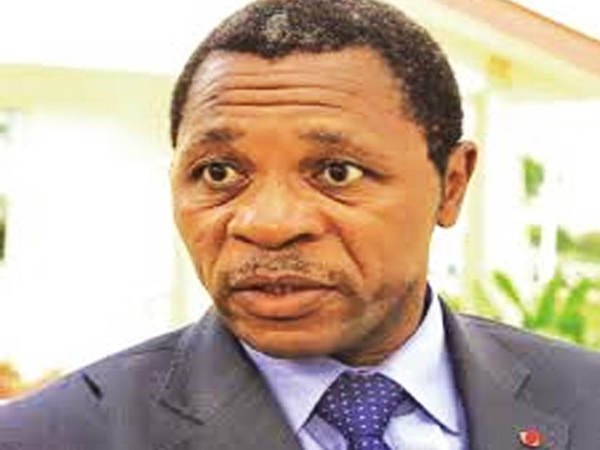
When Power Forgets Its Limits: Reading Atanga Nji Through Ekinneh Agbaw-Ebai’s Lens
- News Team
- 17.Dec.2025
- Details
- Editorial
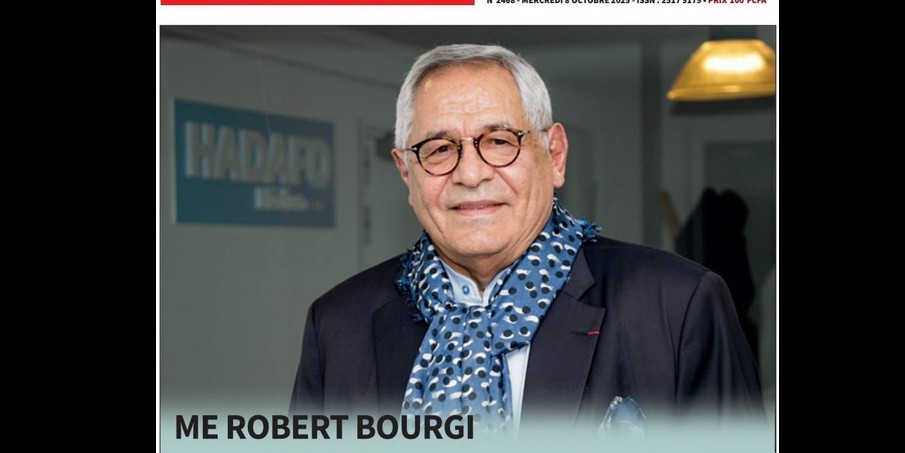
Robert Bourgi Turns on Paul Biya, Declares Him a Political Corpse
- News Team
- 10.Oct.2025
- Details
- Editorial

Heat in Maroua: What Biya’s Return Really Signals
- News Team
- 08.Oct.2025
- Details
- Editorial

Issa Tchiroma: Charles Mambo’s “Change Candidate” for Cameroon
- News Team
- 11.Sep.2025


